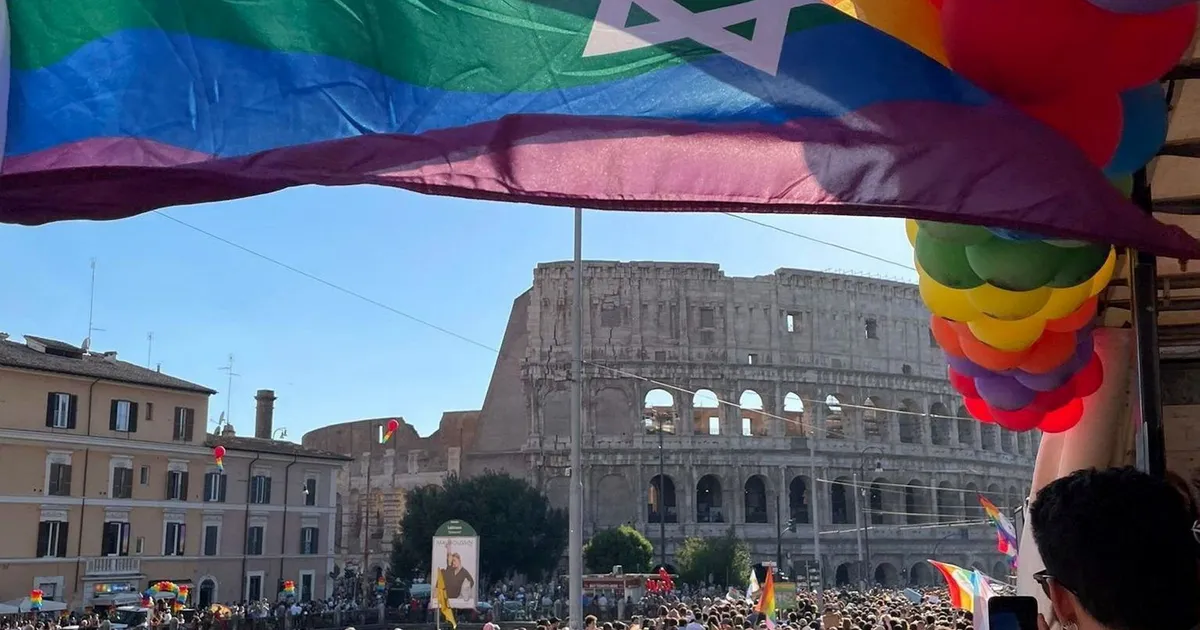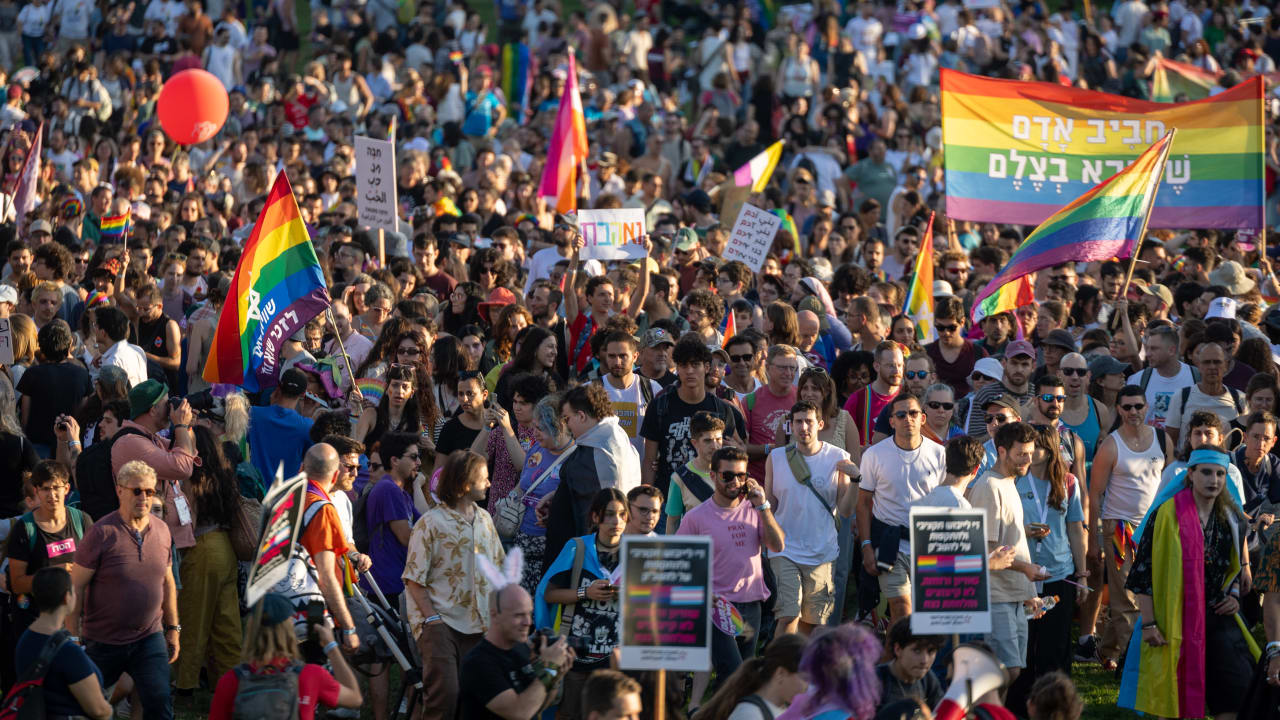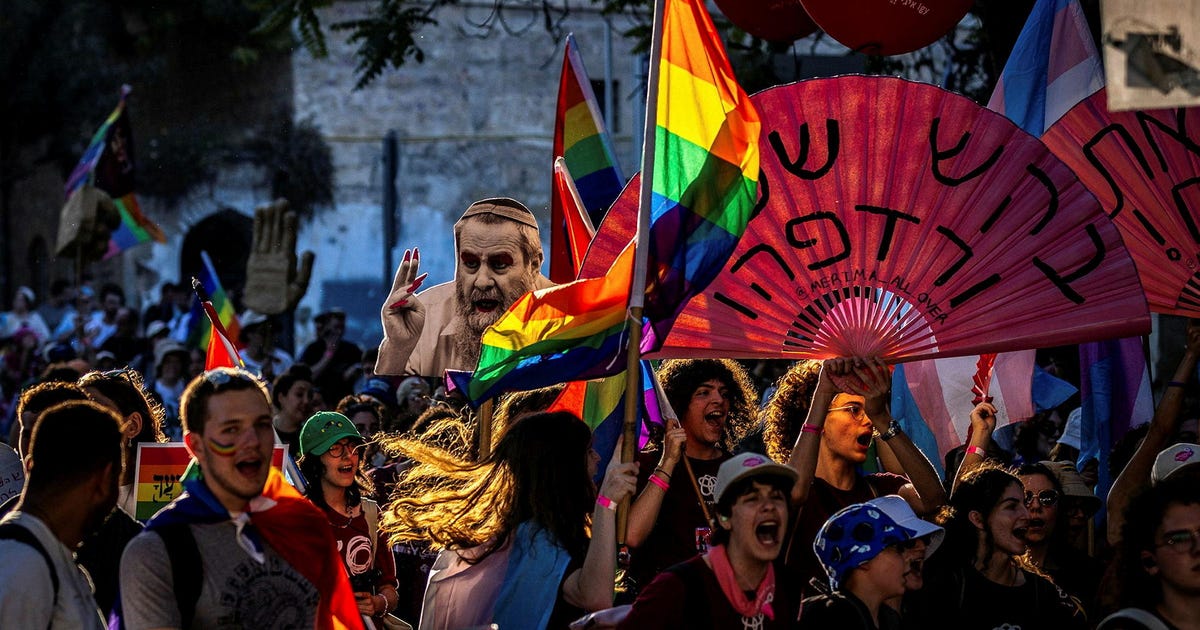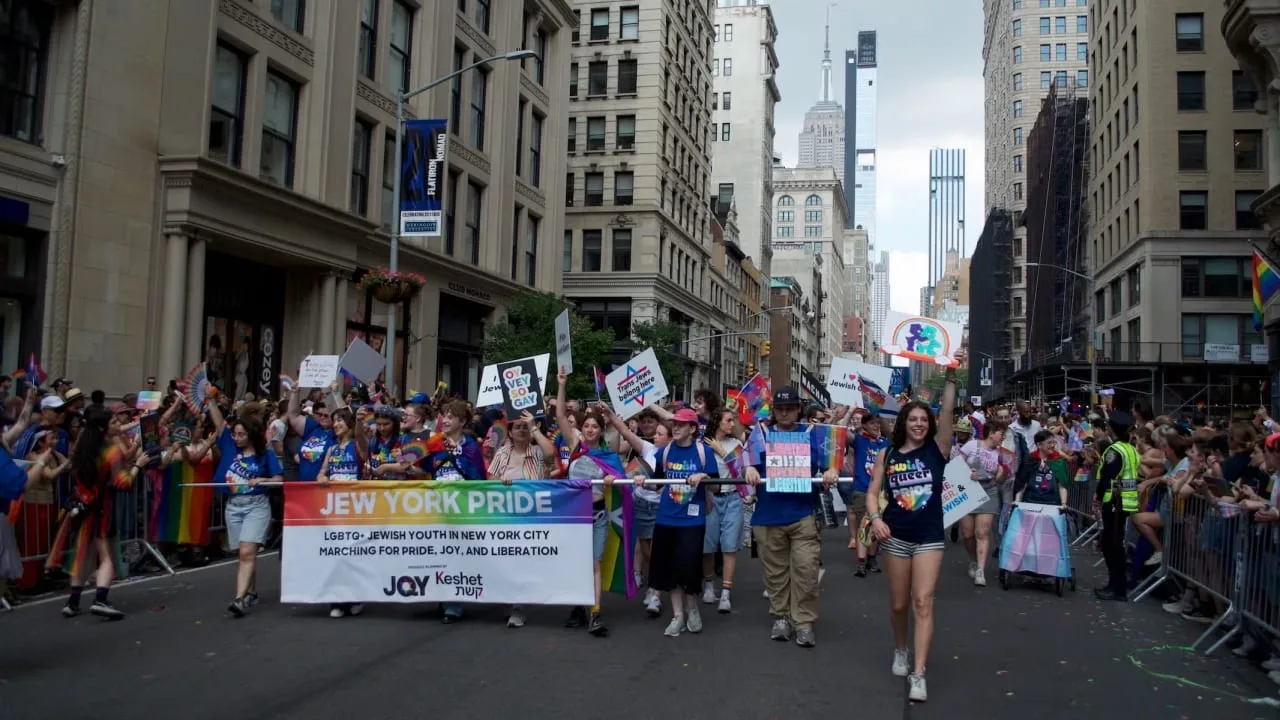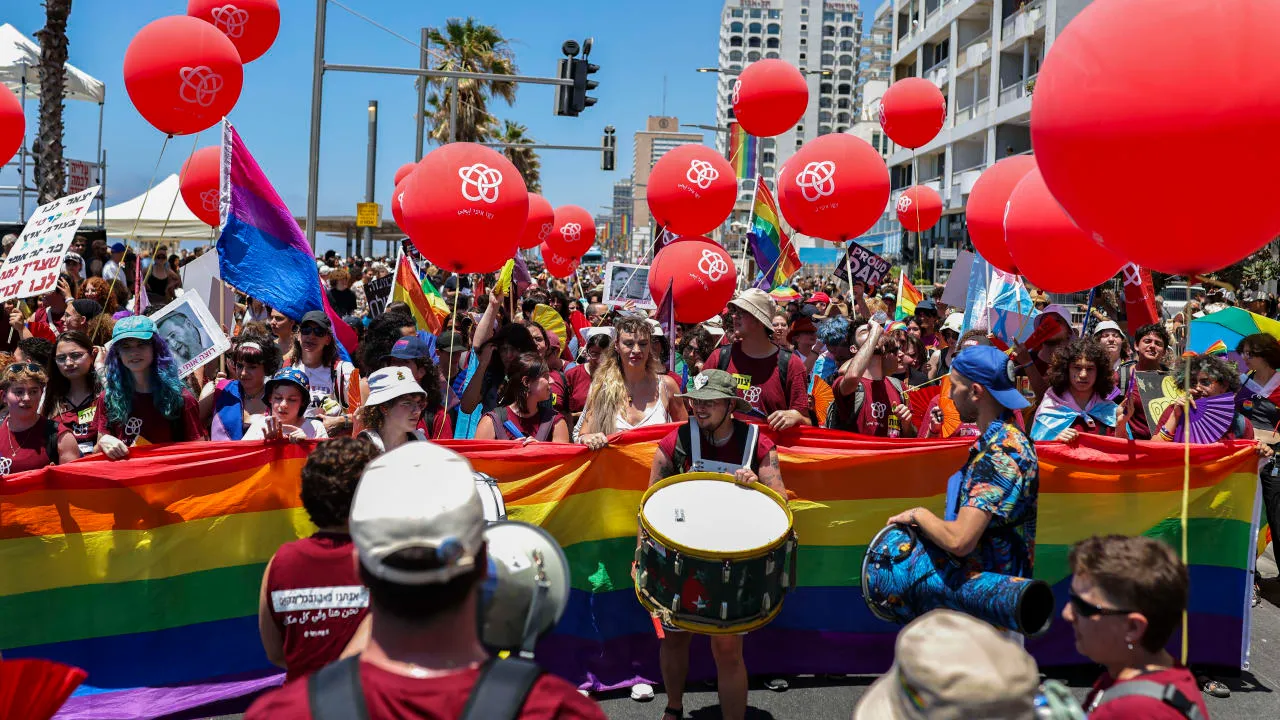
ByNICOLE GRUBNERJUNE 5, 2026 04:12Ten years ago, I walked in my first Jerusalem Pride march.I was newly in a relationship and on cloud nine. It was also one year after Shira Banki, a sixteen-year-old who had come to celebrate, was stabbed to death at that same parade. Security was tight. The weight of her absence hung over everything. Yet, walking and dancing down the streets of Jerusalem, something in me cracked open. Here I was. Being me. Out in the open. The feeling was incomparable.What made it remarkable was the contrast, all those years of hiding, suddenly behind me.For years, I had hidden. Not from anyone in particular, but from everyone in general. No one could know this about me. I had an image to uphold. I was skilled at the particular art that LGBTQ+ people know too well: masking, deflecting, overcompensating, distracting myself from myself. Pride parades were not for me. They were too visible, too loud, too much of a declaration I wasn't ready to make. In my earlier years, you would never have caught me at one.The experience of being in the closet is one that LGBTQ+ members know all too well. You become fluent in a kind of performance. You’re always aware of how much of yourself you're showing, always managing the gap between who you are and who the world thinks you are. It is exhausting in a way that's hard to describe to someone who hasn't lived it, because so much of the energy is invisible. You're not doing something. You're constantly not doing something.THOUSANDS TAKE part in the annual Gay Pride Parade in Jerusalem, on June 4, 2026. (credit: YONATAN SINDEL/FLASH90)If I replaced the LGBTQ+ acronym with the word "Jew," I think many Jewish people around the world would recognize that experience too. The hiding. The hedging. The careful management of what you let the world see. In New York and Antwerp, London and Sydney, Jews are quietly removing kippot before boarding the subway. Tucking Stars of David under their shirts. Thinking twice before speaking Hebrew in public. Calculating, always calculating, how visible is too visible.Hiding has costs that compoundWhich is why what I watched happen at last week's Israel Day Parade in New York stopped me in my tracks. Over 50,000 people took to the streets, with tens of thousands of spectators, marking a record turnout. Jews of every age and denomination filled Fifth Avenue, unapologetically taking up space.There is no question that antisemitism is rising. There is no question that hateful rhetoric leads to physical violence. Shira Banki was a devastating reminder of that truth in the LGBTQ+ community. Over the last year, the Jewish community has accumulated a list of names of people killed simply for being Jewish that is far too long. The threat is real. Hiding can feel like a rational response when that is the reality you're navigating.I understand that. I hid for years, and my reasons felt valid to me at the time.Visibility is not vanityHowever, what I know now is that hiding has costs that compound. Hiding teaches you to be ashamed of something that deserves no shame. It chips away at your sense of self, your confidence, your mental health and your relationships. It tells you to be small, to not take up space.There's a professional cost to this too, one that doesn't get talked about enough. A person managing the gap between their inner and outer self is spending energy — cognitive, creative, emotional — on concealment that could be going somewhere else.I've seen this in my own work: the version of me that walked into rooms guarded and edited was a less useful person in those rooms. Less curious, less willing to take risks, less able to connect. Communities lose something real when their members are performing rather than participating. The most innovative environments — in business, in education, in civic life — are the ones where people aren't burning half their bandwidth on a performance of self.Through fear, through loss, through ongoing struggle, the LGBTQ+ community has held to something hard-won: that visibility is not vanity. That showing up, fully and publicly, as who you are, is an act with meaning beyond the personal.The situations are distinct, and rising antisemitism demands serious, coordinated responses at the political, communal, and institutional levels. However, I do think there is a question worth sitting with, particularly for Jewish parents, educators and community leaders: What does it mean to be proud of who you are, in public, when the world is making that harder? What values and lessons do we need to instill in children — wherever they live — to feel genuinely positive about their Jewish identity? To not feel the need to hide it. To not calculate whether today is a day they can wear a kippah, or let their Star of David show.I have a wife and two children. I live in Israel, where I don't have to hide any part of myself, not my queerness, not my Judaism, not the particular combination of the two that makes me who I am. I am aware, every day, of how fortunate that is. Yet, I’m left thinking about the kids growing up in communities where being openly Jewish feels like a risk calculation, and I want them to know what I learned dancing down a street in Jerusalem a decade ago: that the moment you stop hiding is one of the most liberating of your life.Jerusalem Pride is today. I won't be marching through the city center this year. I've traded Jerusalem streets for the quieter rhythms of Modiin, where I've settled with my wife and two kids. I'll be at our local parade, still moved by what it means to walk openly as yourself. The specific geography has changed. The feeling of walking openly as yourself, in any city, through any street, hasn't.Maybe this is a moment of shared understanding. Perhaps Jews around the world can find in the LGBTQ+ community's long example a lesson in not letting hate stop us from celebrating who we are. The two communities are different, and their struggles are different. The experience of hiding, though — and the experience of finally, stubbornly, joyfully refusing to — that part is familiar.The writer made aliyah from Vancouver over a decade ago and now calls Modiin home. She is a Partner at FINN Partners, where she works with purpose-driven organizations and companies leading innovation in health and climatetech.Follow us on Google
What Jerusalem Pride taught me about being visibly, proudly Jewish | The Jerusalem Post
Perhaps Jews around the world can find in the LGBTQ+ community's long example a lesson in not letting hate stop us from celebrating who we are.
1,082 words~5 min read