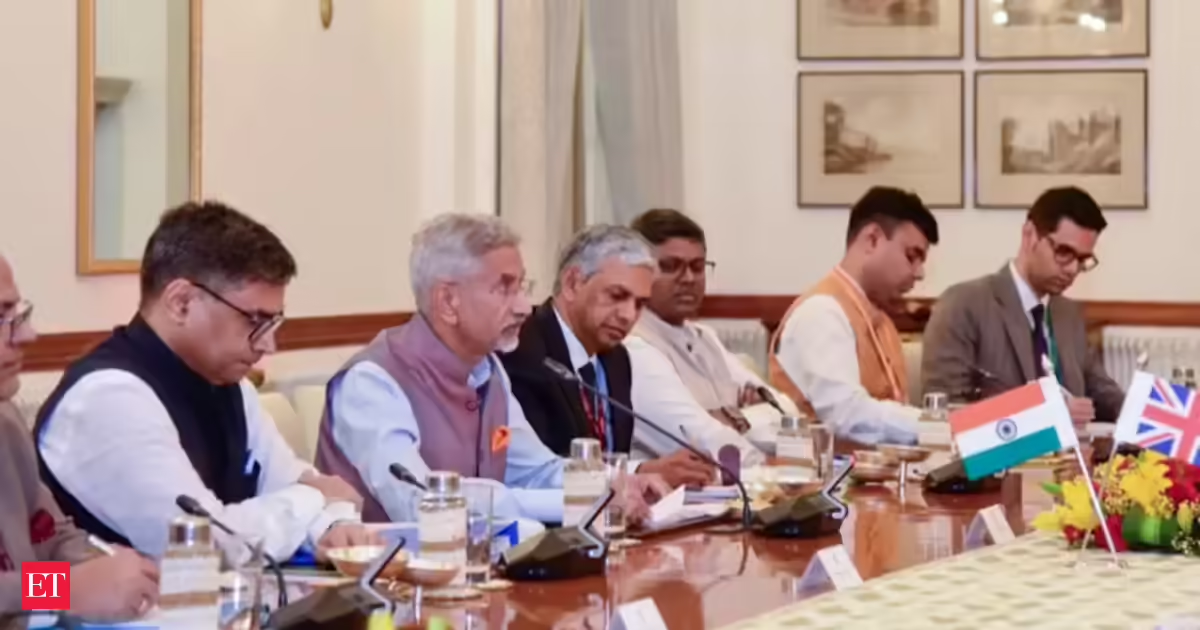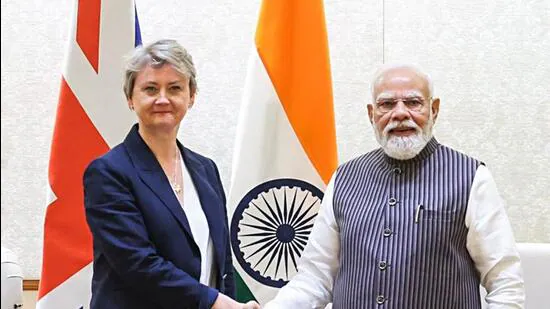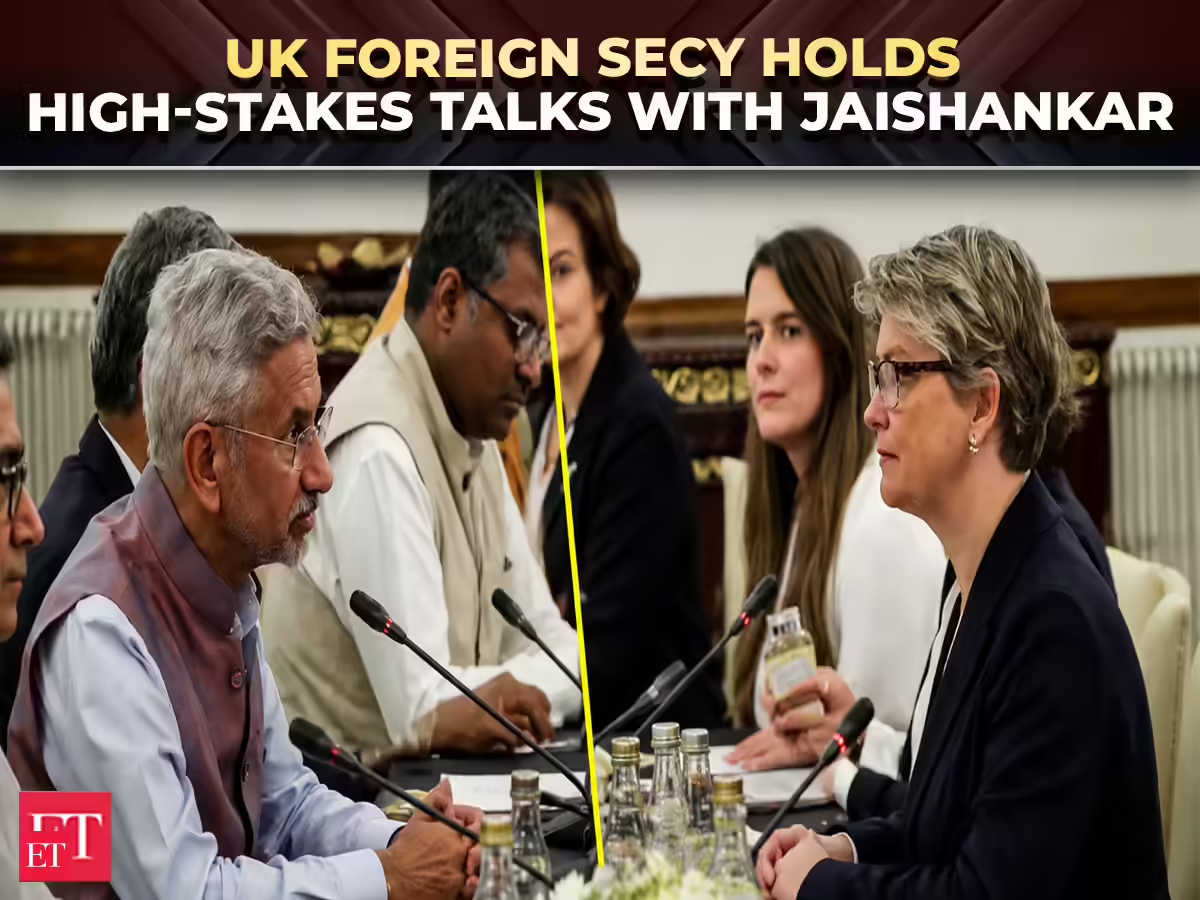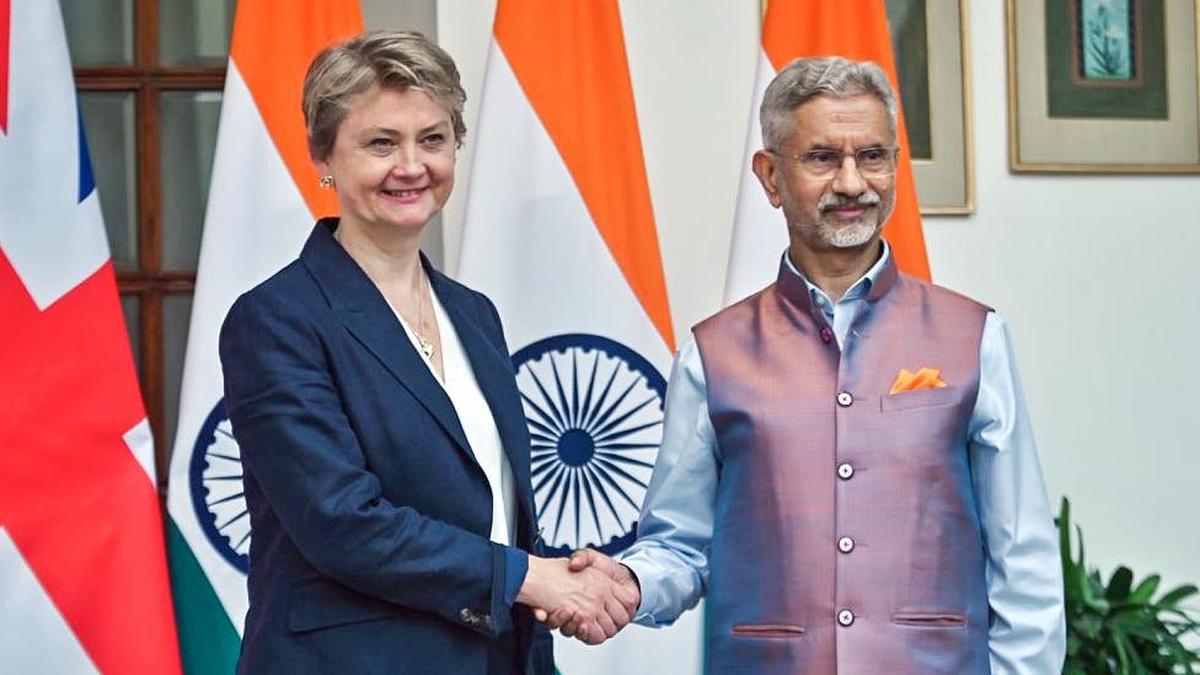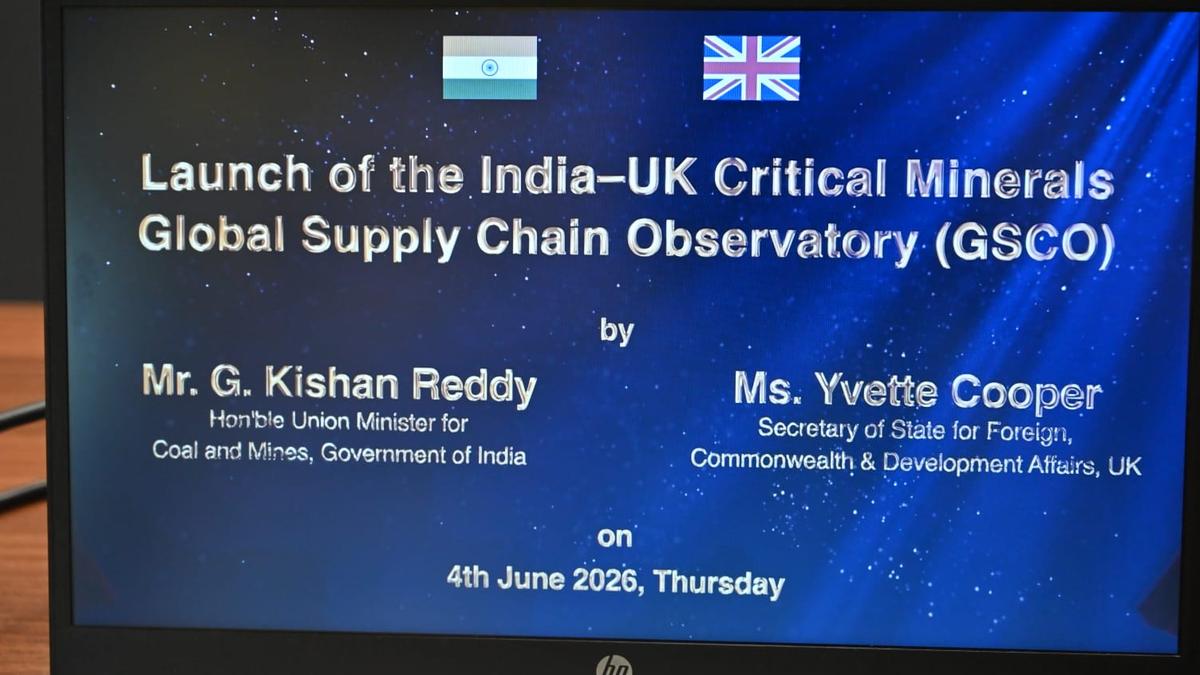
New Delhi: India and the UK on Thursday launched new initiatives to enhance joint work in maritime security and critical minerals as external affairs minister S Jaishankar and his British counterpart Yvette Cooper reviewed security and economic cooperation and discussed the fallout of the West Asia conflict.India, UK unveil new initiatives on maritime security, key mineralsThe two sides concluded a memorandum of understanding (MoU) on setting up the Regional Maritime Security Centre of Excellence, which will help Indian Ocean states to build capacity to address non-traditional maritime security threats. They also launched the India-UK Critical Minerals Global Supply Chain Observatory (GSCO) to boost cooperation in critical minerals and support the creation of resilient and secure global supply chains.Cooper arrived in India on Wednesday for her first visit to the country after a trip to China. Besides holding talks with Jaishankar to review the implementation of the India-UK Vision 2035, she met coal and mines minister G Kishan Reddy to launch the GSCO.Cooper also met Prime Minister Narendra Modi, who said on social media that the India-UK partnership has deepened in recent times, unlocking unprecedented growth opportunities for both sides. “India-UK Vision 2035 will continue to guide our partnership and strengthen our joint efforts for global good,” he said.Jaishankar said at the start of his meeting with Cooper that the India-UK relationship has moved from its historical roots to become a “forward-looking highway of shared economic ambitions and high technology”. The signing of the Comprehensive Economic and Trade Agreement (CETA) and adoption of the Defence Industrial Roadmap last year have positioned the two sides to build a new future-oriented and mutually beneficial partnership, he said.The CETA also addresses many concerns about creating resilient supply chains, trade, energy and economic security, Jaishankar said. Cooper noted the bilateral partnership has “gone from strength to strength” because of CETA and work under the five pillars of Vision 2035 focused on economic growth, technology such as AI, defence and security, climate and clean energy, and education.This cooperation is happening amid “great global instability” because of a shared focus on trade and a commitment to economic security, and this is reflected in the launch of the initiatives on maritime security and critical minerals, Cooper said.The two sides first unveiled plans to set up the Regional Maritime Security Centre of Excellence (RMSCE) while adopting Vision 2035 in July 2025. Part of the defence and security pillar of Vision 2035, the centre to be set up by King’s College London and the National Maritime Foundation is also aimed at enhancing cooperation under the Indo-Pacific Oceans’ Initiative.The Critical Minerals Global Supply Chain Observatory (GSCO) will be set up through £1.2 million of funding and will involve the setting up of a satellite observatory at IIT-Dhanbad’s Mining Innovation Hub. Its launch marks a significant milestone in the India-UK partnership on critical minerals and supply chain resilience, and reinforces cooperation in securing resources needed for clean energy transitions, advanced manufacturing and electric mobility, an Indian government readout said.Coal and mines minister G Kishan Reddy said the observatory will strengthen India’s capabilities in critical mineral supply chain intelligence, advance the objectives of the National Critical Mineral Mission, and bolster international cooperation with trusted partners. Cooper said improved information-sharing is in the interest of both nations and will contribute to supply chain security.The GSCO is a joint initiative of India’s Technology Innovation in Exploration and Mining Foundation (TEXMiN), IIT-Dhanbad and University of Cambridge.It will enable the monitoring of global critical mineral supply chains, identification of supply risks and disruptions and generation of market intelligence.Jaishankar and Cooper joined education minister Dharmendra Pradhan to witness the handing over of a letter of approval for the University of Liverpool to open a campus in Bengaluru.
India, UK unveil new initiatives on maritime security, key minerals
India and UK launch initiatives on maritime security and critical minerals, enhancing cooperation. Vision 2035 guides partnership for global good and economic growth. | India News
619 words~3 min read