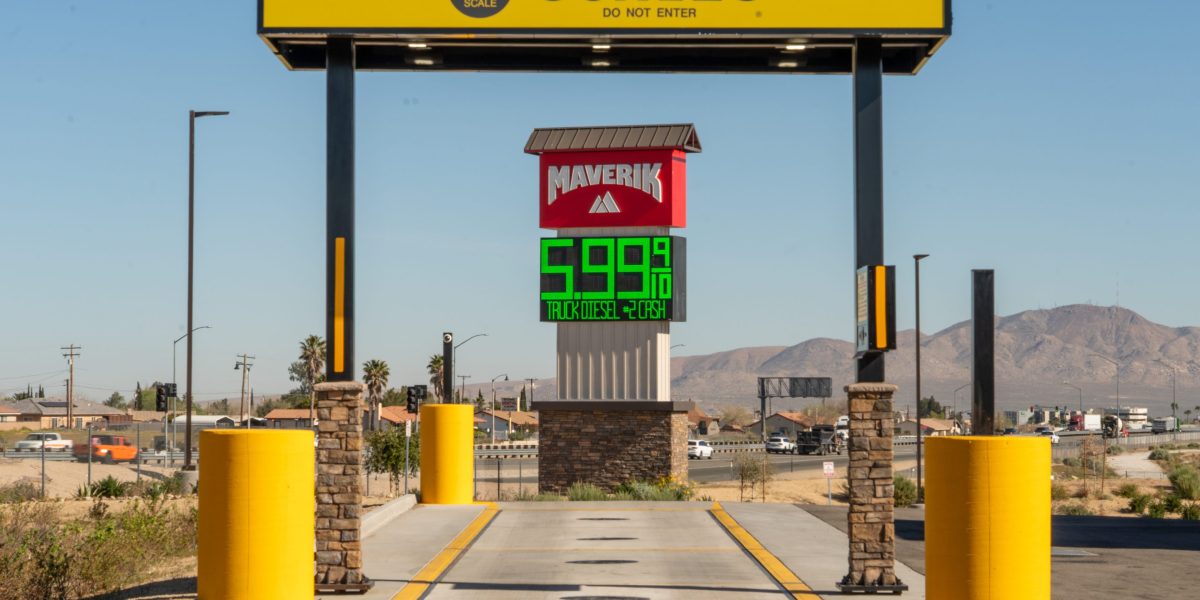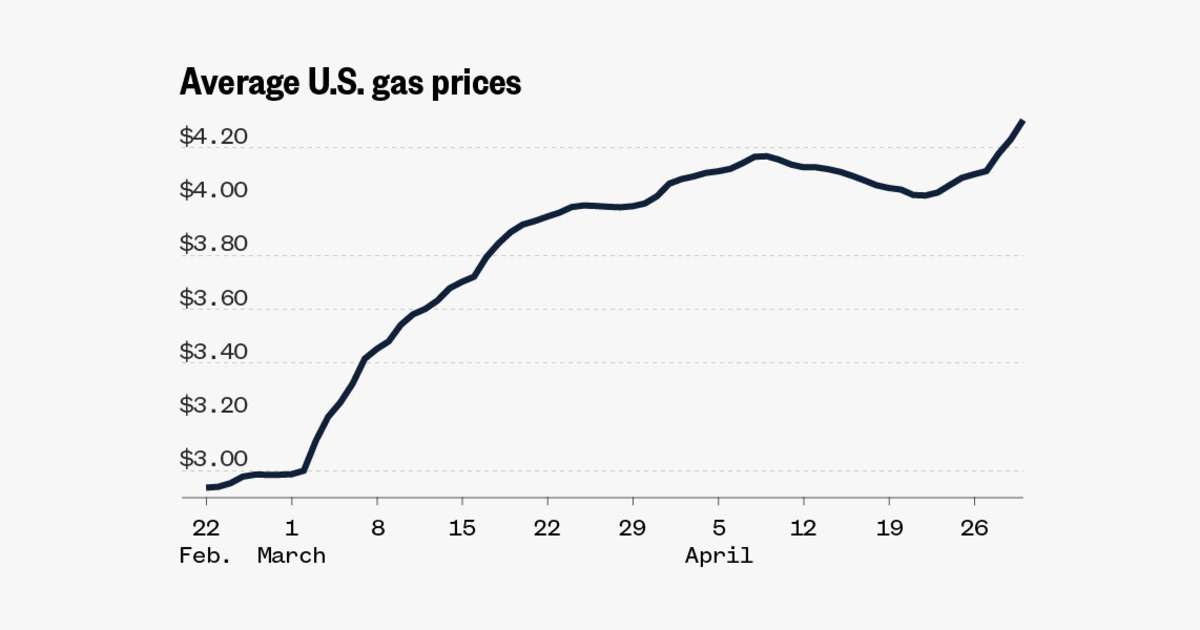
The average price of a gallon of regular gas in the U.S. as of Thursday is $4.24, according to AAA. That's down more than 18 cents from a week ago, but it’s still nearly $1.10 more than we were paying a year ago.The war in the Middle East has been an opportunity for the U.S. to export more of the oil that's produced here to make up for some of the missing supply from the Persian Gulf. That, in turn, helped convince the Trump administration to try to keep prices down at the pump by drawing from strategic petroleum reserves.Now, the Energy Information Administration reports that U.S. petroleum inventories have fallen to their lowest levels since 2004.The U.S. is exporting more oil, but not because it’s producing more oil.“We're just kind of pulling that out of our inventory, and we're shipping it overseas,” said Abhi Rajendran with the Center for Energy Studies at the Baker Institute. Exports from the U.S. have tempered the global supply shortage and actually kept prices relatively stable. But “the U.S. can't continue to be a backstop just through inventories for too much longer,” Rajendran said. At this rate, analysts expect U.S. inventories to reach record lows, because last time they got this low in the mid-2000s, the U.S. wasn’t even close to exporting the millions of daily oil barrels it does now.“It's really easy to say, ‘Well, we can just stop that.’ Well, we really can’t,” said Patrick De Haan, head of petroleum analysis at GasBuddy.If we did stop exporting, oil companies would pretty much stop drilling, he said. “You can't have a world in which the U.S. is the world's largest oil producer, and we keep all of our own oil. It just wouldn't work like that. There's not enough financial incentive for oil companies to invest billions of dollars for a very limited return.”Even if the Strait of Hormuz were to reopen today, the U.S. would likely keep drawing down its stockpiles for months. For one thing, according to Greg Priddy, senior fellow with the Center for the National Interest, oil tankers are slow. Plus, a lot of them are in the wrong place.“They're not sitting there waiting in the Arabian Sea to go in and pick a cargo up,” he said. “A lot of them are parked near the destinations, or tankers that would have been going to the Gulf just picked up a cargo in Texas.”And if the war keeps going until the end of the year, “it's conventional wisdom, even, that the U.S. would be in recession,” Priddy said.U.S. drivers will likely pay $5 per gallon by July, Priddy said. And if the war continues, it could be $6 by the end of the summer. From May 13: Emergency oil stockpiles are dwindling by roughly 4 million barrels a dayFrom April 2: Even if the war in Iran ends soon, the oil market will take months to recoverFrom March 12: Without Middle East crude, some refineries have to shut down
Historically low U.S. oil inventories could mean more pain at the pump
The good news is the U.S. is exporting more oil because of the war. The bad news is the U.S. is exporting more oil because of the war.
500 words~2 min read