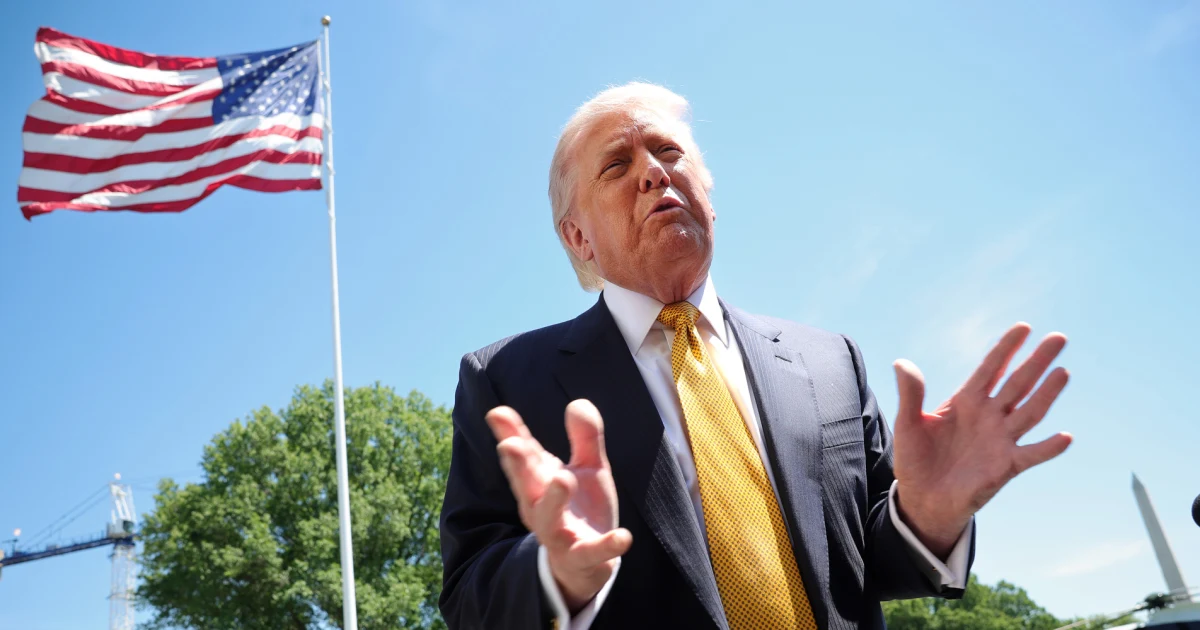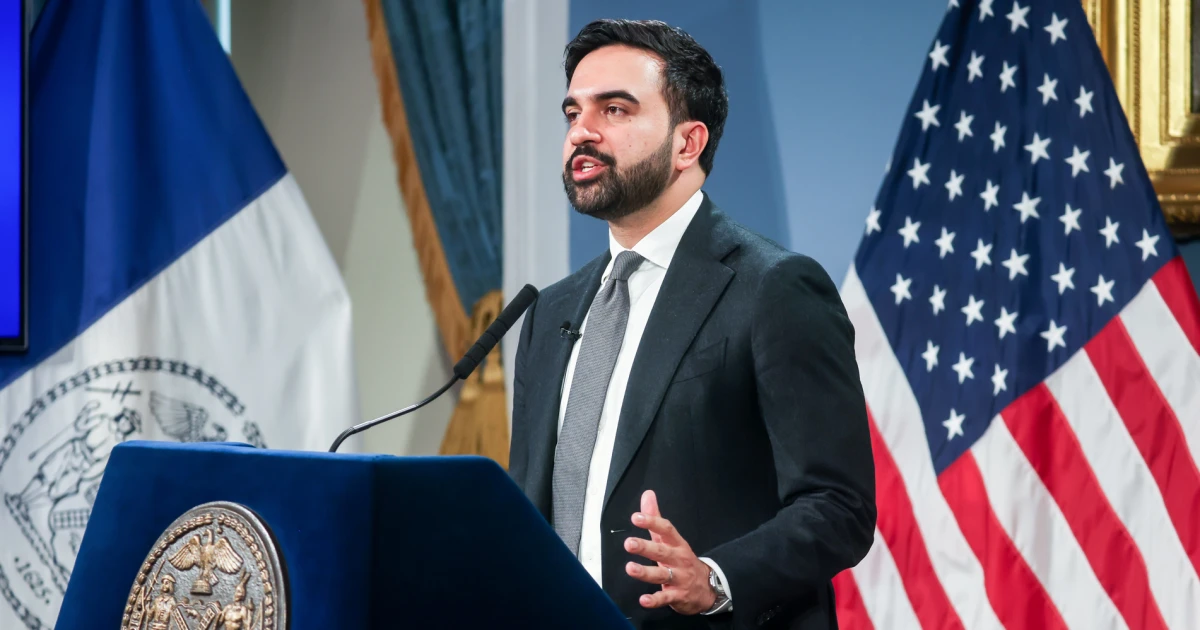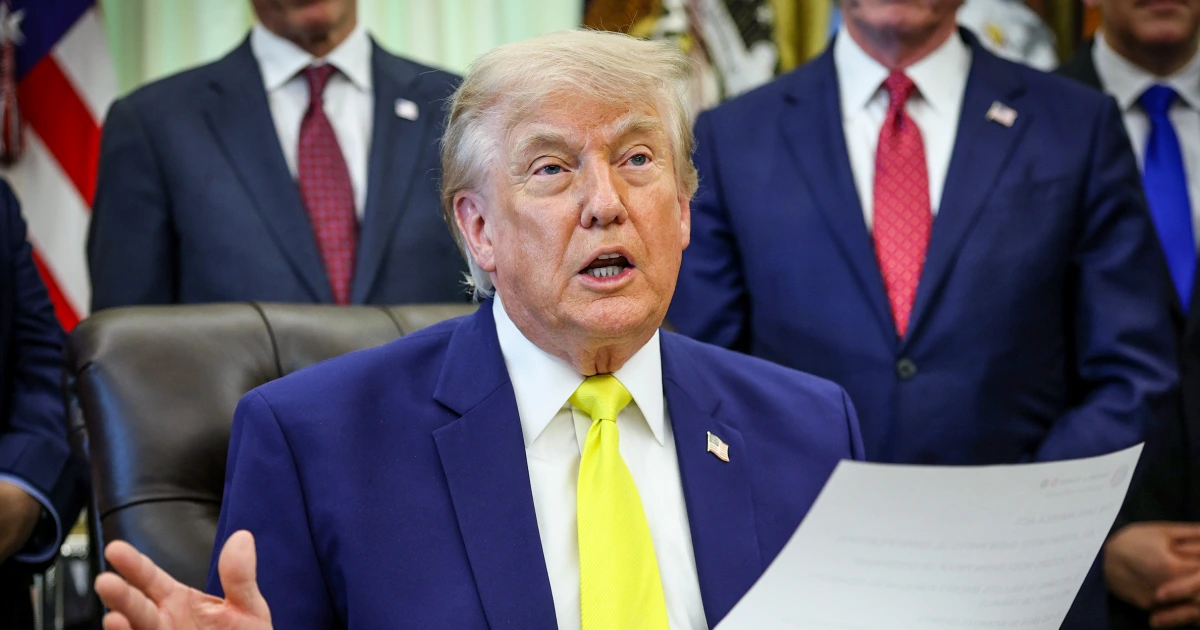
Welcome to From the Politics Desk, a daily newsletter that brings you the NBC News Politics team’s latest reporting and analysis from the White House, Capitol Hill and the campaign trail.In today’s edition, Jonathan Allen explores how congressional Republicans are starting to push back on some of President Donald Trump’s wishes. Plus, Matt Dixon and Scott Wong dive into a Florida redistricting-fueled clash among Democrats. Sign up to receive this newsletter in your inbox every weekday here.— Adam WollnerCracks emerge in GOP support for Trump’s agendaAnalysis by Jonathan AllenRepublicans on Capitol Hill aren’t in full-on rebellion, but they are finding it easier to push back on the once immovable force in the Oval Office. The House passed a resolution this week calling for President Donald Trump to withdraw U.S. forces involved in the Iran war, with the support of four Republicans. Some Senate Republicans have balked at two of his recent marquee plans for taxpayer money: one for an “anti-weaponization” fund in which he settled with his own Justice Department to pay for the legal expenses of people he believes were unjustly prosecuted, and one for the White House ballroom that he initially said would be privately financed.And he’s even having trouble with what is ordinarily the easiest partisan ask of the Senate: to confirm his nominees. Senators are pushing back on Trump’s picks of Bill Pulte for national intelligence director and Todd Blanche for attorney general.This is what happens when an embattled president keeps his foot on the gas for an unpopular agenda with midterm elections approaching. Trump can still get the lion’s share of Republicans to stick with him on most issues, but he can’t expect that kind of loyalty from lawmakers in swing races, those who are retiring or, especially, those he has endorsed against in their primaries. Sens. Susan Collins, R-Maine, Jon Husted, R-Ohio and Dan Sullivan, R-Alaska, who face tough re-election races this fall, all voted with Democrats this week on an amendment that would have banned the administration from deploying the “anti-weaponization” fund. The amendment failed, but others are looking for a similar legislative fix — even after Blanche, currently the acting attorney general, testified that the administration would abandon the proposal — including Sen. Thom Tillis, R-N.C., who is not seeking re-election after clashing with Trump on a variety of issues.Two of the four House Republicans who voted to halt the Iran war are in highly competitive re-election battles: Rep. Brian Fitzpatrick of Pennsylvania and Tom Barrett of Michigan. A third, Rep. Thomas Massie, of Kentucky, who has long been critical of Trump on a host of issues, was defeated in his primary last month after Trump blasted him repeatedly in public and endorsed his opponent.The White House ballroom funding was so objectionable to Senate Republicans that they dropped it from a budget bill — and quietly sighed their collective relief — when the parliamentarian concluded it didn’t pass muster with the chamber’s rules. Even Trump’s most powerful weapon for maintaining party discipline — using endorsements in primaries as a reward or punishment — looked a little rusty this week.Late in the game, he threw his weight behind Rep. Randy Feenstra in the Republican primary for Iowa governor. It looked like a good bet to pay off, with Feenstra locked in a close race against conservative businessman Zach Lahn. The endorsement was a positive for Feenstra, according to a person close to Lahn, but it didn’t move the numbers enough to save him.It was the first time in this election cycle that a Trump-backed candidate lost a primary for a House seat, a Senate seat or a governorship. Trump can still do plenty of damage to Republicans who defy him — the base remains his — but he can’t do as much to help them win. So, unless and until he pays more attention to the politics of his decisions, he can expect more defections.For subscribers: Graham Platner’s account on a notorious chat app highlights Kik’s dark reputationBy Jane Lytvynenko and Ben GogginThe revelation that Maine Democratic Senate candidate Graham Platner had an account on the platform Kik has thrust the largely anonymous messaging app into the national spotlight.Keep reading →📉 More for subscribers: Kevin O’Leary says he will shrink his Utah AI data center project after political backlash, by Jared PerloRep. Debbie Wasserman Schultz faces backlash for running in a district long represented by Black DemocratsBy Matt Dixon and Scott WongRep. Debbie Wasserman Schultz faces significant pushback from Black Democrats after she decided to run in a newly redrawn district in South Florida that has a plurality of Black voters and a crowded primary field.The Florida political landscape was scrambled after GOP Gov. Ron DeSantis signed legislation last month creating a new congressional map. Instead of running in the 22nd District, where she lives, Wasserman Schultz opted to run in the more Democratic-leaning 20th District, which has long been represented by a Black Democrat.The move has angered Black leaders and candidates in the district, especially when Republicans have tried to wipe out districts long held by Black Democrats after a recent Supreme Court decision that limits the consideration of race in redistricting.Four Black candidates running in the primary have even discussed coalescing around one or two candidates to take on Wasserman Schultz rather than split the Black vote, according to one of the participants in the meeting.Wasserman Schultz, an 11-term incumbent and former chair of the Democratic National Committee, announced her decision last month, saying she wanted to ensure her seniority would not be lost.She argued that if Democrats take control of the House, she would be in line to chair a key committee, which would be good for the district. “You have always been able to count on me to deliver results for our community,” she said in a video announcing her decision to run, which emphasized her “seniority” and “clout.” House Minority Leader Hakeem Jeffries, D-N.Y., who would be in line to become the first Black speaker if Democrats take control of the House in November, told reporters Tuesday that he has not yet decided whether he is endorsing in the race. “Haven’t made a decision as it relates to that particular race,” said Jeffries, who normally, as caucus leader, would be expected to support an incumbent.Read more →🗞️ Today's other top stories⚖️ Bolton plea: John Bolton, who served as national security adviser during Trump’s first term and later became one of his fiercest critics, has agreed to plead guilty to one count of retaining national security information. Read more →🗺️ Redistricting roundup: New York Democratic lawmakers took the first step toward passing a constitutional amendment that would allow them to draw a new congressional map ahead of the 2028 election. Read more →☑️ Vote-a-rama: The Senate began voting on a $70 billion bill to fund ICE and Border Patrol through the end of Trump’s term. Red more →🏛️ What’s in a name: The Kennedy Center’s lawyers directed staff at the venue to remove Trump’s name from all official signage to comply with a federal judge’s order from last week. Read more →That’s all From the Politics Desk for now. Today’s newsletter was compiled by Adam Wollner.If you have feedback — likes or dislikes — email us at politicsnewsletter@nbcuni.comAnd if you’re a fan, please share with everyone and anyone. They can sign up here.
Cracks emerge in GOP support for Trump’s agenda: From the Politics Desk
Plus, Florida redistricting fuels a Democratic clash.
1,224 words~6 min read