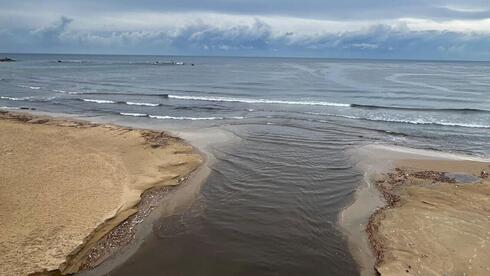
Zalul report finds beach closure days jumped tenfold over the winter, with sewage-tainted runoff blamed in most cases and tests showing fecal bacteria and drug residue in drainage systemsIsrael’s beaches are facing a worsening pollution crisis, with contaminated runoff flowing into the sea in a growing number of cases, according to a new report by the environmental group Zalul.The report, which summarizes the 2025 bathing season and the winter of 2025-2026, found a tenfold jump this past winter in the number of days authorities ordered beaches closed compared with the previous winter.Marine pollution in Tel Aviv (Video: Iris Kadishman)According to the data, beaches were closed for a cumulative 1,521 days during the winter of 2025-2026, calculated by multiplying the number of beaches by the number of closure days. That compares with just 155 cumulative closure days the previous winter.The report also found that in 94% of closure cases, the cause was contaminated runoff. That, too, marks a sharp rise from the previous winter, when about 70% of beach closures were caused by pollution.The runoff is typically rainwater or floodwater that eventually reaches the sea. But Zalul says serious infrastructure failures are causing that water to carry sewage and other pollutants into bathing beaches.One of the main causes, according to the group, is so-called “cross-connections” between municipal drainage and sewage systems. These faulty connections allow runoff mixed with sewage to flow into streams and the sea on rainy days, harming ecosystems and posing a risk to public health.Among the exceptional incidents recorded this past winter, all 105 Mediterranean beaches in Israel were closed for four days in November 2025 over concerns of pollution from runoff and sewage. In December 2025, all beaches across the country were closed again, while some beaches in central and southern Israel remained closed for nearly two additional weeks because of persistent pollution.Tests conducted by Zalul in March, together with the water research company Yeda Mayim, found especially high concentrations of fecal bacteria and traces of medications in municipal drains in Tel Aviv, Herzliya, Ramat Gan and Bnei Brak.“This is evidence of sewage entering municipal drainage systems and being discharged into the sea,” Zalul said.1 View gallery Black runoff water flows into the sea near Jaffa (Photo: Nadav Desberg, Zalul Environmental Association)Drug testing in drains in Haifa, including Halutzei HaTa’asiya, Check Post and Nahal Saadia, which flows into the Kishon River, found traces of carbamazepine, a psychiatric medication; valsartan, used to treat high blood pressure; and antibiotics. Lower concentrations of medications were also found at drainage outlets in Tel Aviv and the Yarkon River, indicating the infiltration of household sewage into drainage systems.Zalul said the findings are a serious warning sign of Israel’s ongoing failure to address its sewage and drainage infrastructure. The group blamed insufficient investment by local authorities and water and sewage corporations, as well as poor coordination between sewage corporations and the bodies responsible for drainage.It also pointed to the Environmental Protection Ministry and the Water Authority, which it said are not properly enforcing laws meant to prevent marine pollution and require the separation of sewage and drainage pipes.“The dramatic rise in the number of closure days is a direct result of the lack of preparation for the climate crisis and for strong rain events, whose frequency and intensity are increasing,” said Zalul CEO Mor Gilboa.“The sharp jump in the total number of days in which Israeli citizens encountered closed beaches over the past year points to a very bleak picture that repeats itself almost every year, except for especially dry years,” he said. “Israel suffers from defective sewage and drainage infrastructure, while both the authorities and enforcement bodies are failing to deal with a phenomenon that has already become a national scourge.”
Black sea: Israel’s beaches face sharp rise in pollution as contaminated runoff forces closures
Zalul report finds beach closure days jumped tenfold over the winter, with sewage-tainted runoff blamed in most cases and tests showing fecal bacteria and drug residue in drainage systems
619 words~3 min read