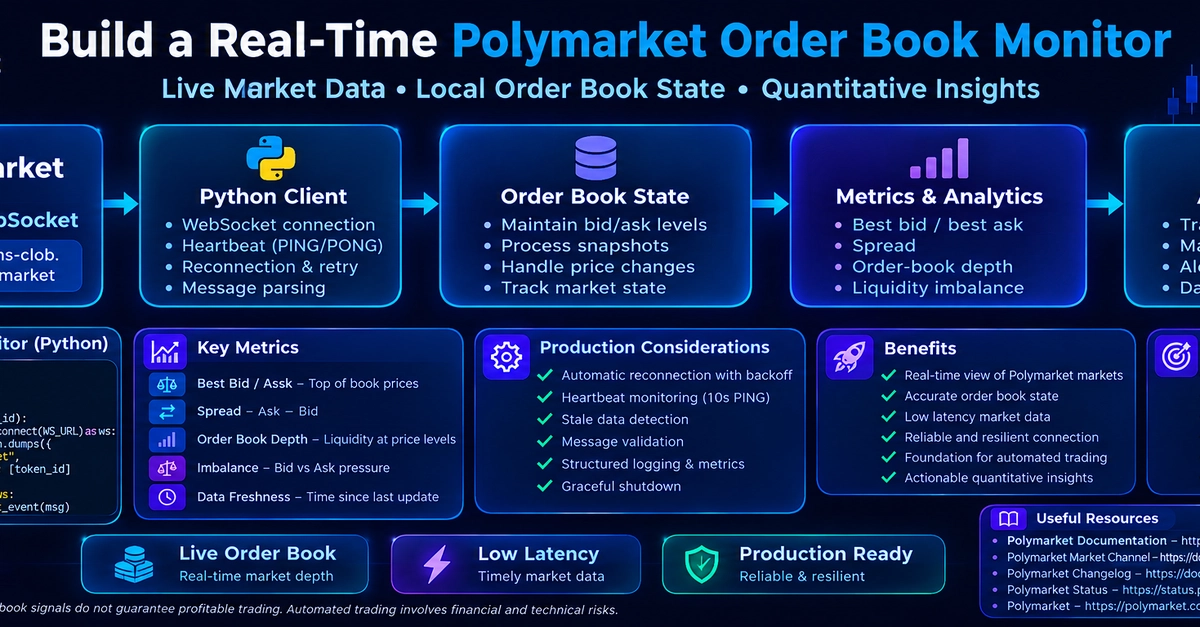
If you've already explored real-time market streaming and WebSocket integrations in my previous article, "Fetching Real-Time Polymarket Data Using WebSockets: Building a Faster Polymarket Trading Bot", the next logical step is building a market scanner that can automatically discover trading opportunities.
A scanner is one of the most important components of any successful trading system. Instead of manually monitoring hundreds of prediction markets, a scanner continuously evaluates market conditions, identifies unusual activity, tracks liquidity changes, and surfaces potential opportunities for automated execution.
With the release of Polymarket CLOB V2, developers now have access to a more mature and efficient infrastructure for building professional-grade trading systems. The combination of the Polymarket API, prediction market API endpoints, EIP-712 order signing, and robust order book data makes it possible to build scanners similar to those used by quantitative traders in traditional financial markets.
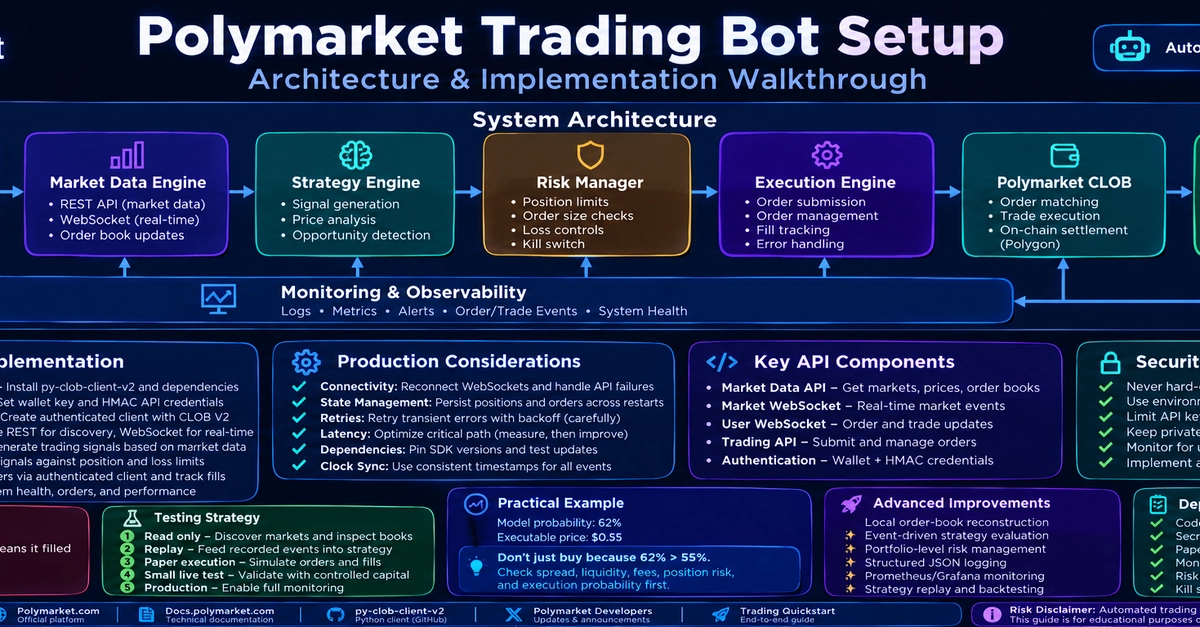
In this Polymarket developer guide, we'll walk through the architecture, implementation, and best practices for creating your first market scanner using the Polymarket Python SDK and CLOB V2 APIs.