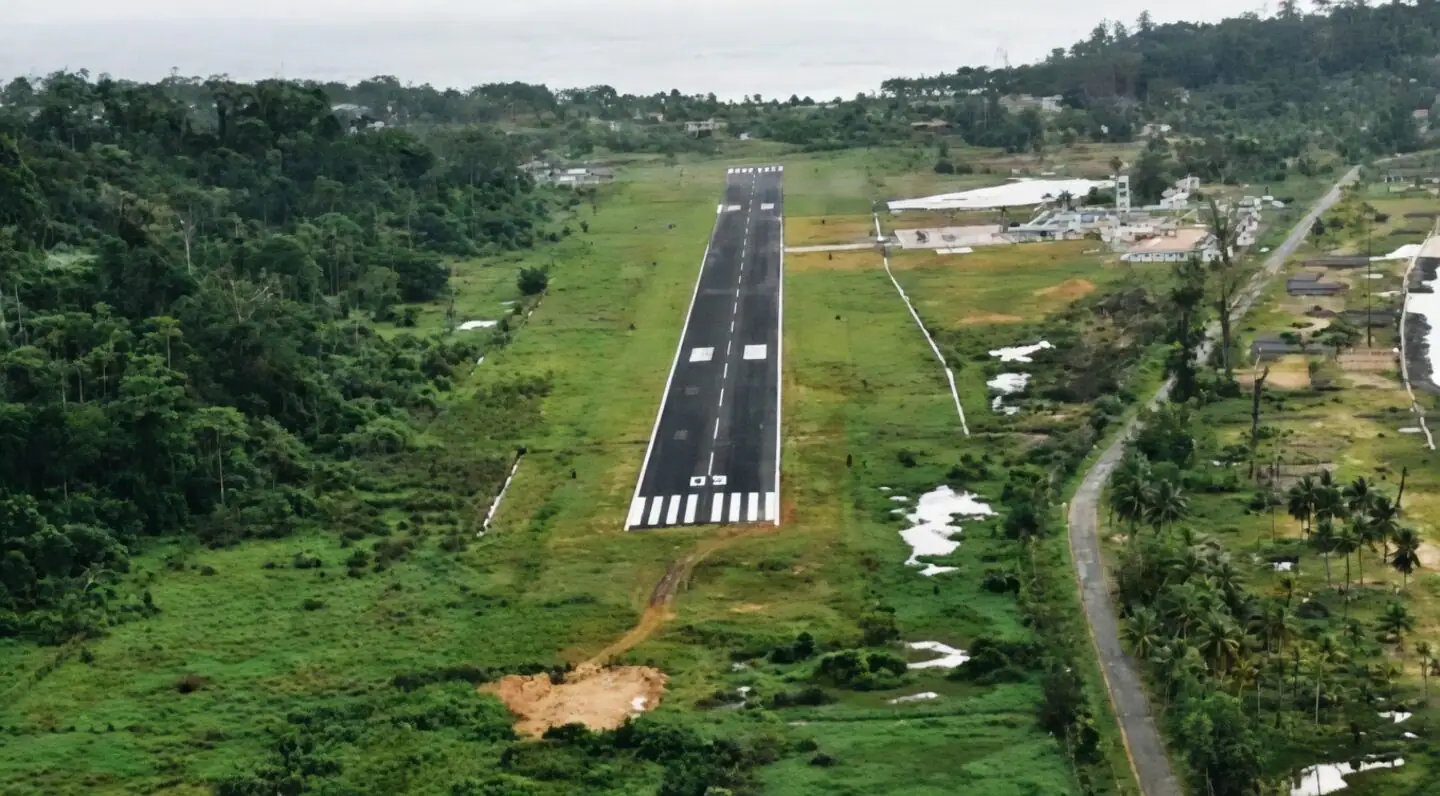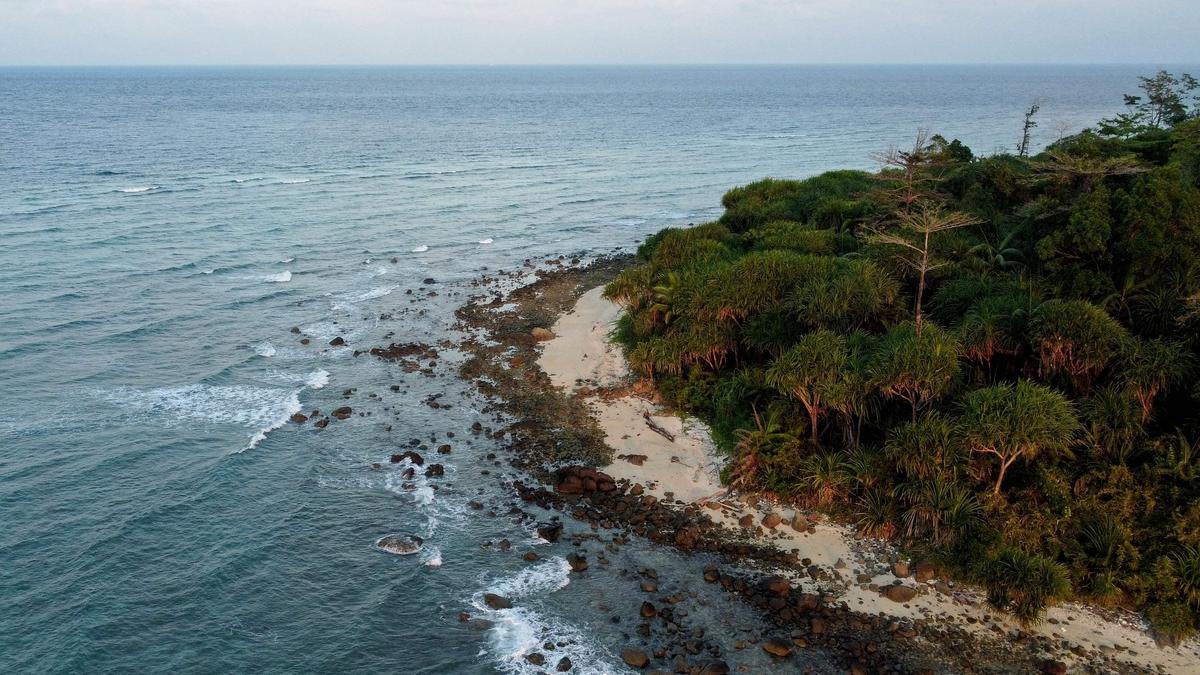
The Public Investment Board (PIB), a Finance Ministry body that appraises large public investments, had on August 2024 termed the proposed International Container Transhipment Port (ICTP) at Galathea Bay in Great Nicobar Island as lacking in “strategic objectives”. At the August meeting, it had advised the Ministry of Ports, Shipping and Waterways (MoPSW) to include a strategic case into its proposal. A little over a year later, the same project was formally notified as a “strategic project” by the Ministry of Defence, according to records of a March 2026 meeting viewed by The Hindu. The “strategic” nature of the proposed ₹81,000-crore Great Nicobar Project, which consists of the ICTP, a township, airport, a gas-powered power plant and a tourism zone, has been the Centre’s excuse, since at least 2022, for not making public the contents of a report by a High Powered Committee (HPC) on the cumulative environmental impact of the project. It has also denied Right To Information requests on environmental clearances for the project on the same grounds.The PIB’s view surfaces in records of meetings held on March 17 and 19, 2026, by another Finance Ministry body — the Public-Private Partnership Appraisal Committee (PPPAC) -- tasked with vetting project proposals worth ₹500 crore and above, involving a partnership with private players. The Hindu has viewed the PPPAC meeting records and reached out to the Finance Ministry for comment, but hasn’t received one till press time.The proposal, sponsored by the MoPSW with the Kamarajar Port Limited (KPL) in Chennai as the implementing agency, sought PPPAC clearance to build the port in two phases and crucially, approval for ₹12,230 crore as Viability Gap Funding (VGF) to make the commercially marginal project bankable. VGF is a one-time grant given to support infrastructure projects that are economically justified but fall short of commercial (financial) viability. The PPPAC cleared the proposal “unanimously” though it refused the VGF, recommending instead that the MoPSW use its internal budget for the same. Earlier this week, Congress MP Jairam Ramesh wrote to Environment Minister Bhupender Yadav that “...the narrative on the Great Nicobar Island Project has suddenly shifted… faced with incontrovertible evidence of its hugely adverse ecological impacts, the Union Government is now emphasizing its supposed strategic rationale.” He added that “...the Great Nicobar Island Project as presently conceived is overwhelmingly a commercial enterprise”.“Until the environment clearance (accorded in November 2022) there was no real reference by the Government of it being a strategic project… and even then it was only the airport (with civilian and military use),” researcher and author Pankaj Sekhsaria, who has extensively documented the environmental threat posed by the project, told The Hindu. The ICTP is a significant component of the much bigger Great Nicobar Island Development Project and is a Ministry of Home Affairs initiative, with the Andaman and Nicobar Islands Integrated Development Corporation Limited (ANIIDCO) as proponent of the overall project and holder of the environmental clearance. The 2021 documents that conceived the Great Nicobar programme and the January 2023 Expression of Interest for the port described it as a means of capturing transhipment cargo currently routed through Colombo, Singapore and Port Klang, with the government estimating annual foreign exchange savings of about $200 million, cumulatively reaching around $1 billion by 2047. In the last year or so, the project has volubly been cast in a maritime security lens -- centred around the threat from China. Great Nicobar is situated near the Malacca Strait, through which much of China’s energy imports pass, a vulnerability Beijing has called the “Malacca dilemma”. The project has hence been cast as a counterweight to Chinese naval expansion in the Indian Ocean. This is an argument given fresh impetus by the U.S.-Iran confrontation over the Strait of Hormuz and the renewed spectre of waterways being militarily dominated. Former Chief of Staff of the Integrated Andaman and Nicobar Command, Rear Admiral Sudhir Pillai, has called infrastructure built there without a maritime doctrine “a platform without a theory” while former Navy Chief Admiral Arun Prakash has argued that the existing military presence can be reinforced without the ecological damage the project entails.The PPPAC records also show that despite the eventual clearance, the meeting attendees, representing the Finance Ministry, NITI Aayog, and several arms of government, questioned how the project would be paid for before the committee cleared it.The MoPSW had sought a series of relaxations — approval for VGF beyond the scheme’s 20% ceiling, the freedom to charge market-determined tariffs, disbursal of the grant on an annual basis before equity is fully infused, and exemption from repaying 90% of the grant if the project is terminated. These, the committee recorded, “constitute material deviations” not permissible under existing rules and would require explicit Cabinet approval. The committee concluded that the grant was “not admissible” under the Department of Economic Affairs (DEA) scheme and that the MoPSW “may consider providing VGF/Capital grant support through its own budgetary support”.The DEA also asked why VGF was needed at all when the sponsoring authority would earn dividends and a revenue share. The MoPSW responded that those earnings would begin only in the 17th year, when the project reaches financial break-even, and VGF was meant to compensate for the risks it was bearing. The records put the project’s internal rate of return at 13.30% and the equity internal rate of return at 17.30%.The committee also questioned how the port would compete with the established hubs at Colombo, Singapore and Port Klang, and why the second phase was to be financed from internal accruals rather than fresh equity — which the DEA said was “not a standard practice”.Ultimately, the committee cleared a total estimated cost of ₹48,862 crore — ₹27,793 crore for the first phase and ₹21,069 crore for the second — over a concession period of 50 years, with construction periods of 60 months for sub-phase IA and 108 months for sub-phase IB. The port will be built by a joint venture in which an Indian-owned and controlled private entity holds 55% and select major ports, including the KPL, hold 45%. The environmental clearance for the project was granted on November 11, 2022 in the name of the Andaman and Nicobar Islands Integrated Development Corporation (ANIIDCO), from which land is to be transferred to the KPL for the port.
Nicobar port has no ‘strategic goals’, Finance Ministry body said in 2024
The Finance Ministry once deemed the Great Nicobar port as lacking strategic objectives, raising concerns over its environmental impact.
1,045 words~5 min read