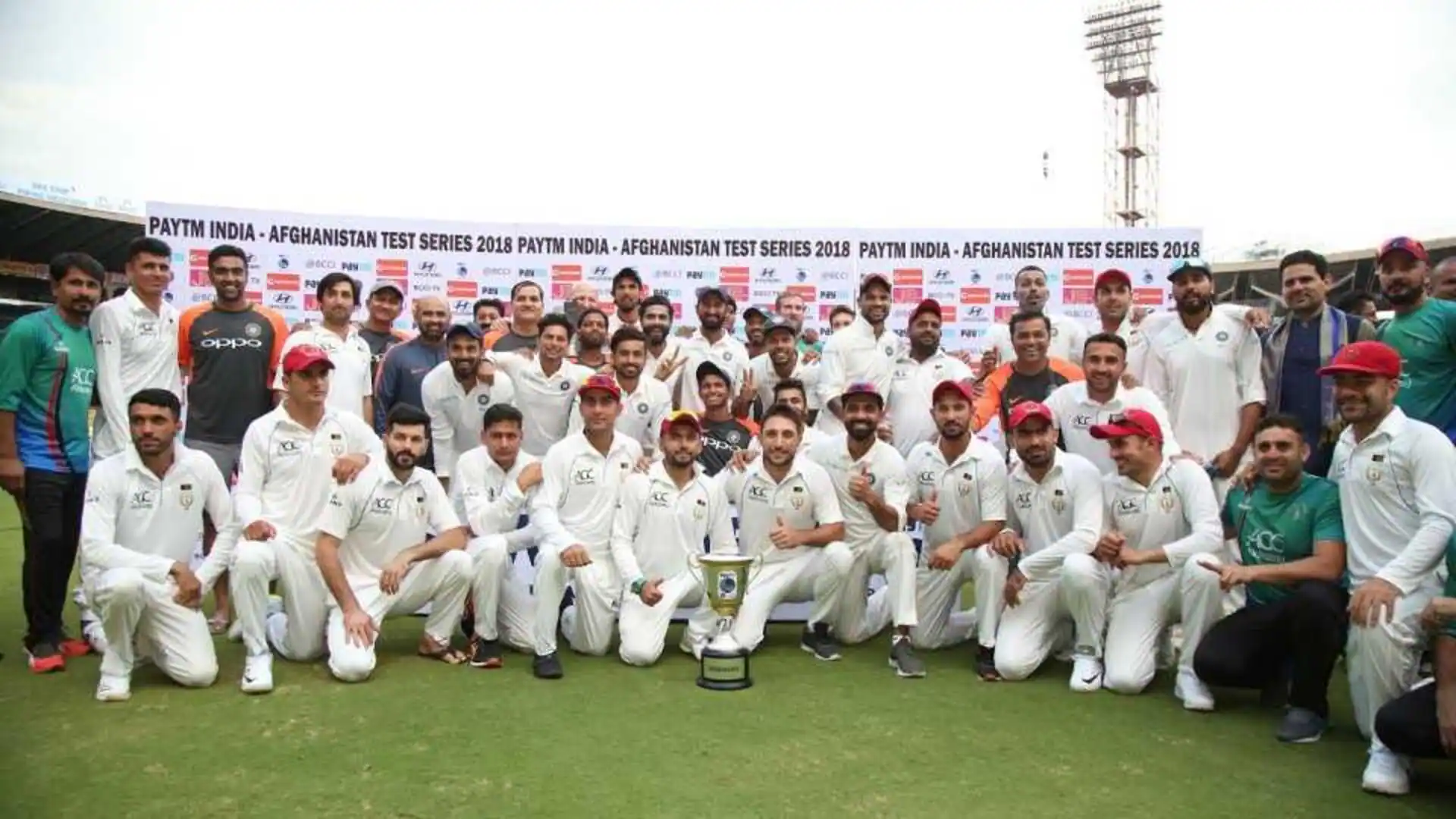
India’s tryst with one-off Tests dates back to June 1932, and their inaugural Test, against England at Lord’s. In the intervening 94 years, they have played just 14 more such games, among them the first-ever Tests for Zimbabwe (October 1992) in Harare, Bangladesh (November 2000) in Dhaka and Afghanistan (June 2018) in Bengaluru.There have been two standalone historic outings — the Golden Jubilee showdown against England in Bombay, as it was then, in February 1980, and against Australia in New Delhi in October 1996 to herald the installation of the Border-Gavaskar Trophy as the symbol of Test supremacy between the sides. India also qualified for the World Test Championship (WTC) final in the first two editions, going down to New Zealand in Southampton in June 2021 and to Australia at the Oval in June 2023.Nearly three years to the day (June 7) since the Oval faceoff, they renew their acquaintance with an isolated Test when they lock horns with Afghanistan from Saturday in a match which doesn’t have too much significance in the context of five-day cricket as it exists now. But then again, when has there been a Test match without any significance (New Zealand’s two-and-a-half-day rout of Ireland last week notwithstanding)?Redefining the landscapeIn so many ways, the WTC has redefined the landscape of Test cricket. As it is, only nine of the 12 nations are part of this championship —Zimbabwe, Afghanistan and Ireland have been excluded — and even then, it isn’t an all-play-all format. Every nation must play a minimum of six series, three at home and three away, with no series of less than two matches. Points are awarded for outright victories and draws — no bonus points for innings or 10-wicket wins or overseas triumphs which, pundits feel, ought to receive greater weightage — and the two top teams with the best percentage points make it to the knockout final, with the next title clash scheduled for Lord’s 12 months from now.Teams can play, and have played, full series outside the ambit of the WTC, but those are understandably not that frequent. As it is, the slant towards white-ball internationals, and particularly the T20 iteration, is marked and most nations are content meeting the bare minimum Test requirements. Very few series spill over beyond two-Test affairs, except those that India, Australia and England play against each other. These three marquee contests have become five-match pow-wows, in keeping with both their perceived standing as the three best sides in the world and the ability of these contests to attract sizeable attention.It’s nobody’s fault that in their eight years as a Test entity, Afghanistan have played just 12 games while India have played 13 Tests in Australia alone. Eventually, commerce will direct such outcomes, no matter how unfair that might seem. Five of Afghanistan’s 12 fixtures have come against Zimbabwe and two against Ireland; their other Test opponents, apart from India, have been Sri Lanka and West Indies (one match apiece) and Bangladesh (two games), which tells a story in itself.It can be argued, with good reason, that those outside the WTC can’t become better if they don’t play against the higher-ranked teams more frequently. By the same token, it must be kept in mind that these ‘higher-ranked teams’ are already grappling with a packed calendar and therefore don’t have either the desire or the window or both to accommodate the ‘lesser lights’. One of the possible solutions is to instead have the ‘A’ teams of the big countries playing against the likes of Afghanistan, Zimbabwe and Ireland. But again, cost is a big factor and while it is all nice and fine to sit in our living rooms and apportion responsibility to the established nations to lift the standards of the relative newbies, practicality and ideal scenarios don’t always go hand in glove.Anyway, back to this standalone contest in which the stakes might appear marginal, but only to those watching on from the outer. There is a lot more at stake for the home side, which will obviously begin overwhelming favourites in a match which won’t impact the WTC, not least because of disappointing results in their backyard in the last 18 months catalysed largely by persevering rather than unplayable spinners from first New Zealand and then South Africa.
India renew their acquaintance with one-off Tests
India resumes their one-off Test journey against Afghanistan, reflecting on 94 years of unique historic encounters in cricket.
1,775 words~8 min read