Understanding how wildfire spreads through communitiesThis article appeared in Berkeley Engineer magazine, Summer 2026
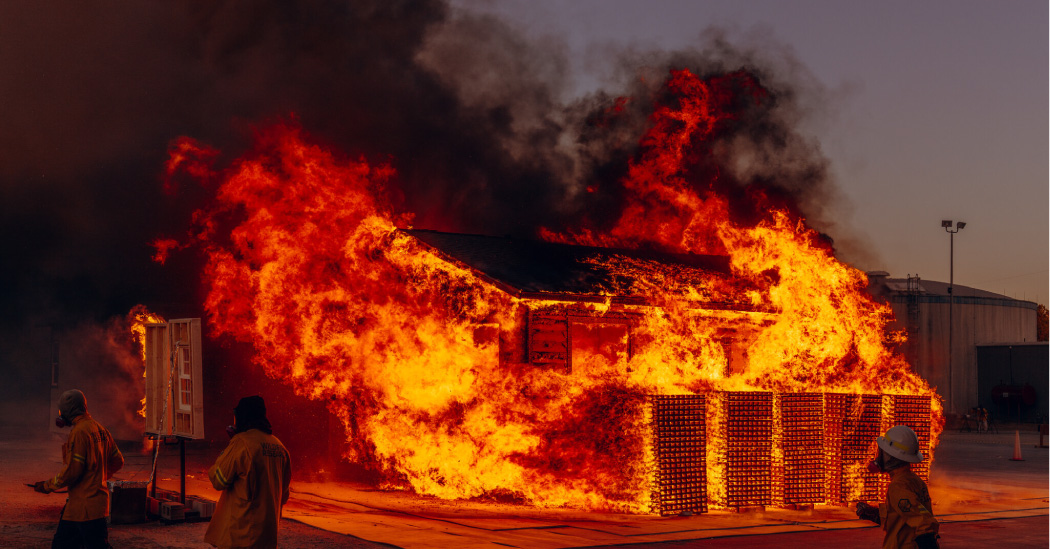
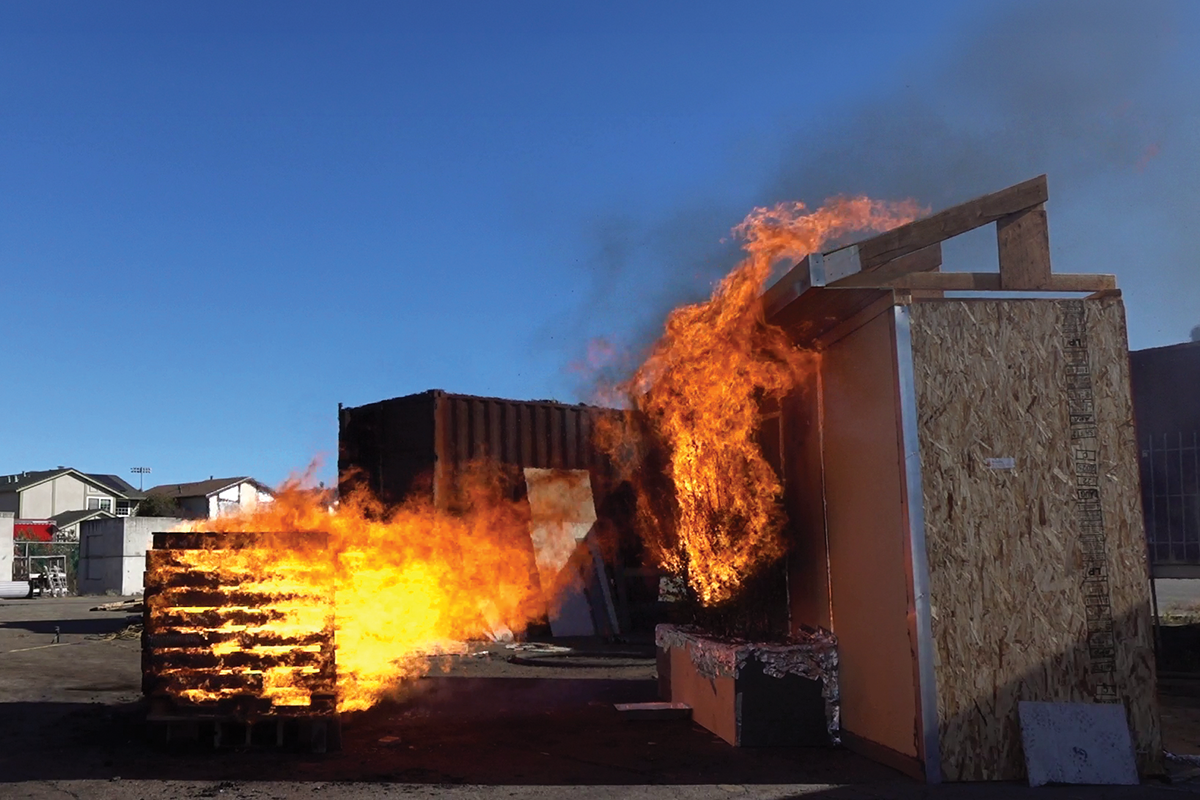
Researchers burn an accessory dwelling unit (ADU) in a controlled test, to study the impacts of wildfire. (Image courtesy Michael Gollner)
As California’s population boomed — from 10 million in 1950 to over 40 million today — the number of people living in fire-prone areas multiplied. Over the decades, millions of new homes and commercial buildings sprang up to accommodate the needs of the state’s growing population, and many of those structures stand in areas prone to wildfires.
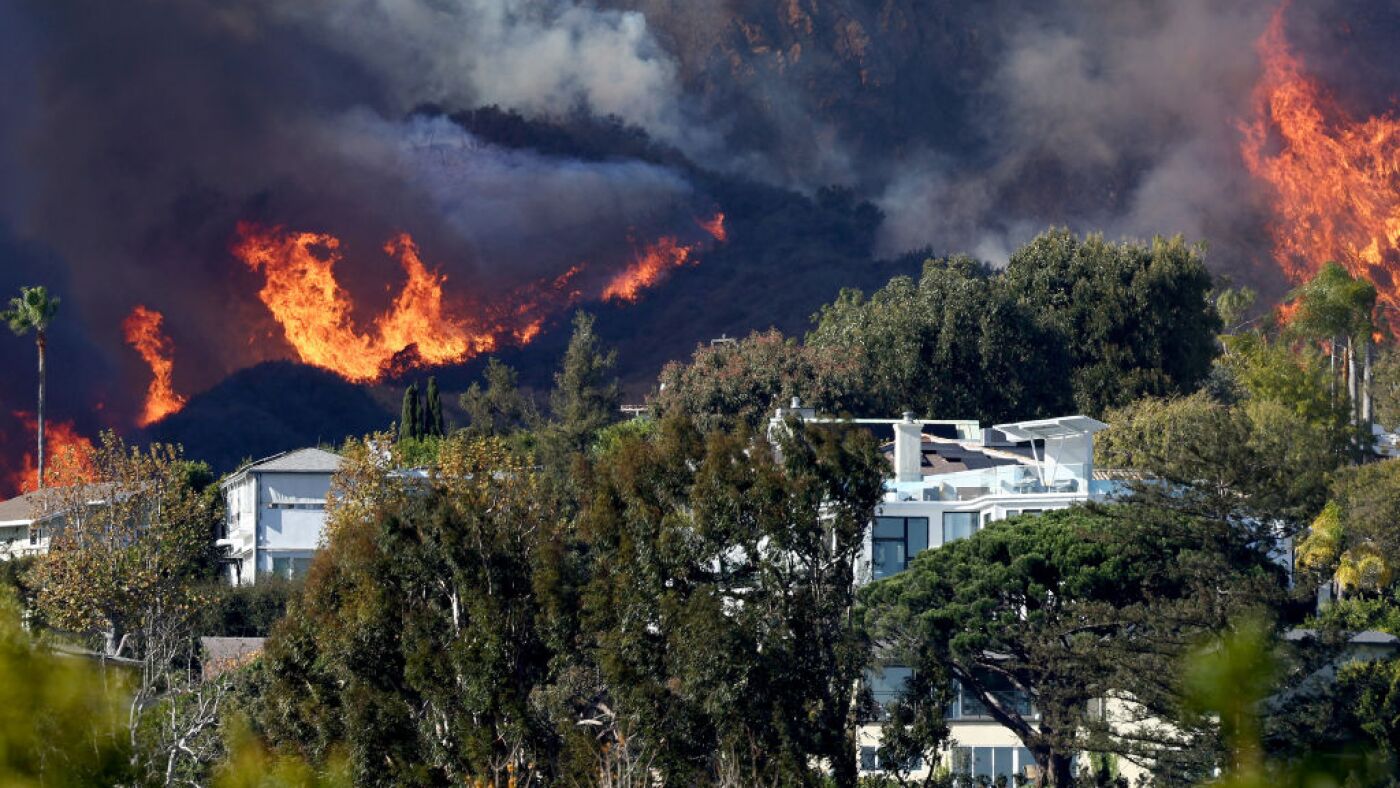
As a result, more communities are now in harm’s way. The 2025 Palisades and Eaton fires in Los Angeles show exactly how destructive urban wildfires can be. More than 16,000 buildings were destroyed, and 31 people lost their lives. By the time the recovery is complete, the cost of repairing the damage from those wildfires could approach a quarter of a trillion dollars.
“We are front and center in the wildfire crisis,” says Michael Gollner, associate professor of mechanical engineering at UC Berkeley. “California is beautiful, but everything aligns for fires here. We need to learn to adapt, to limit the damage that wildfires cause. A lot of people live in fire-prone areas, and most of the country’s major urban wildfire disasters have happened in California.”