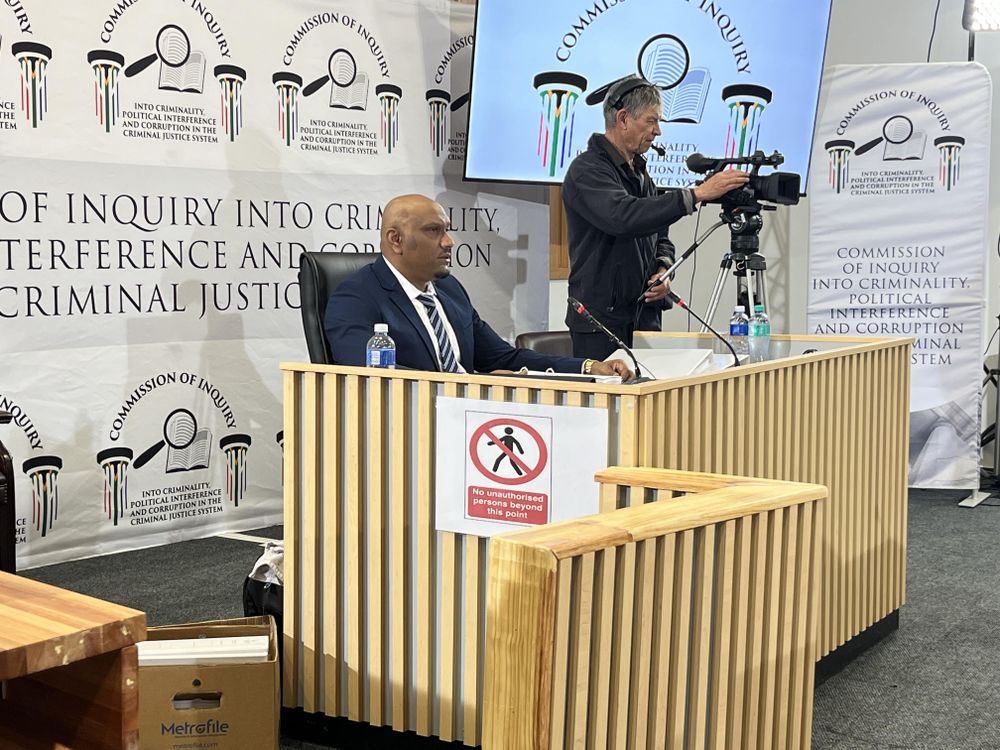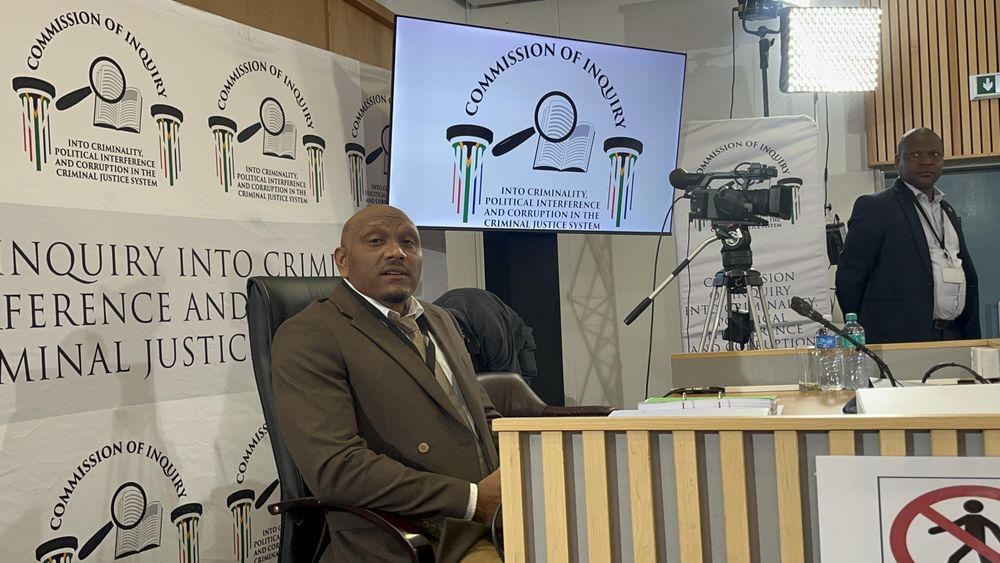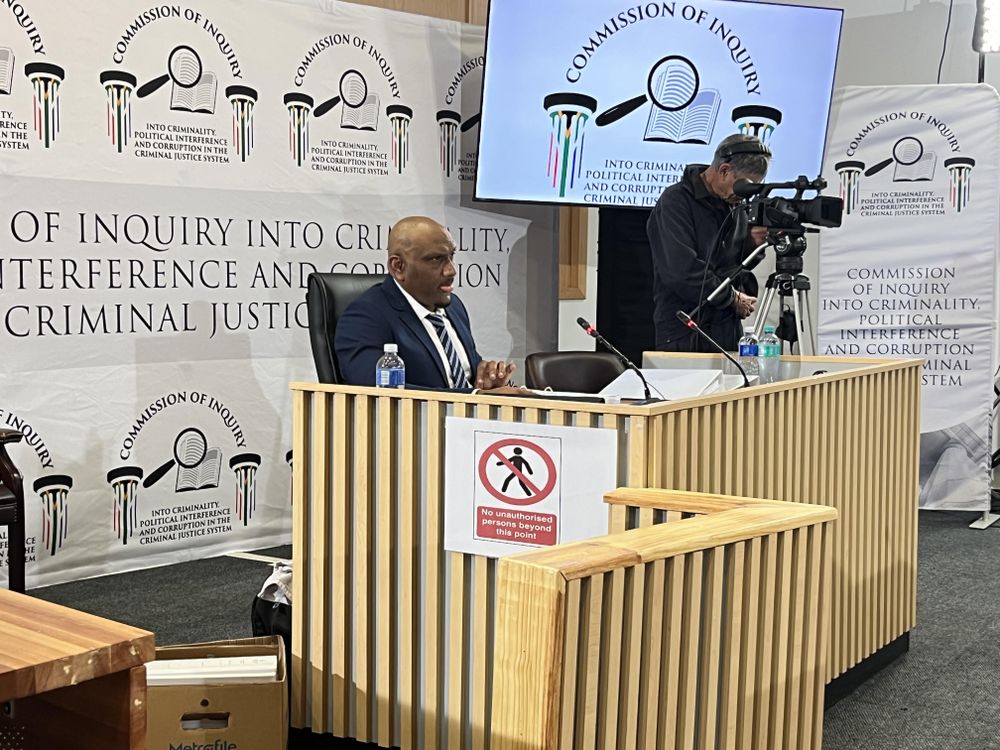
Two weeks before 541kg of cocaine worth more than R200m was stolen from the Directorate for Priority Crime Investigation (Hawks) offices in Port Shepstone in KwaZulu-Natal, there was an attempted break-in, but the management did not act hastily to prevent the exhibits from being stolen, the Madlanga commission heard on Thursday. The Hawks’ Durban serious organised crime investigation unit commander, Col Gavin Jacob, testified that his superior, Brig Msizi Nyuswa, told him there was an attempted break-in on October 27, 2021, but despite that, the drugs were not moved from the facility. The cocaine was seized in Durban port but was stored 100km away in Port Shepstone, where it was stolen on November 8, 2021. Jacob, who was the investigating officer responsible for the seizure of the drugs in Durban, said he was partially to blame for them going missing, but mainly shifted the blame to his superiors during his testimony. The storage of the drugs is crucial for the commission, which is probing allegations that police officers have links to drug cartels, as Hawks Maj-Gen Hendrik Flynn, who investigated the theft, testified that it “was by design” that the drugs were stored in Port Shepstone, despite the risk associated with the office. Jacob, despite admitting missteps in the operation, pushed back against inferences that could be made from Flynn’s statement that it was by “design” for the drugs to be stored in Port Shepstone only to be stolen five months later.To prove this, Jacob said he was the one who ensured police were in contact with a key whistleblower with credible information about the theft. He denied any role in the theft of drugs and referenced a polygraph test that cleared him. The test, however, was found to have had several errors. Jacob said Port Shepstone was not his jurisdiction, and he could not move the drugs because Nyuswa had instructed that the drugs be moved to Port Shepstone. He conceded that he never asked Nyuswa to move the drugs. Despite being the investigating officer, Jacob contended that Nyuswa, not him, had the power to decide where the drugs were stored. Furthermore, Jacob said the KwaZulu-Natal Forensic Science Laboratory was also to blame because the lab failed to take custody of the drugs for processing five months after the seizure due to space constraints. He pushed back against inferences that he failed to act diligently or intentionally, allowing for the drugs to get stolen.“If I had known that was what would happen, I would have taken more steps,” he said.Jacob testified that the decision to store the drugs in Port Shepstone was an instruction from Nyuswa, who made the call after he informed him he had exhausted all avenues and sought assistance for the storage of the seized drugs. During cross-examination, Jacob, however, conceded his statement to Nyuswa about exhausting avenues was not factually correct because he did not enquire with three Durban police stations about storage capacity on the day of the operation, June 22, 2021. “You lied to him when you said you exhausted all avenues; that was not factually correct,” commission chair Mbuyiseli Madlanga put to Jacob. Jacob described the word “lied” as strong but conceded his statement to Nyuswa was not factually correct. However, he said he never suggested the drugs be stored outside of Durban but wanted Nyuswa to speak to senior officers and find a solution.Jacob said he made the call to Nyuswa about the storage issue based on past experiences with local stations not wanting to store large amounts of drugs in their stations. He cited an incident where drugs were previously stored in a holding cell due to a local station having exhibit space constraints and another where mandrax had to be hastily moved from a station after police officers became sick due to the presence of the narcotics. In circumstances where the police stations have capacity, he said they inundate him with calls because the drugs do not get moved to the forensic laboratory for months due to their space constraints, and it becomes a headache for police station commanders because the drugs occupy exhibit storage space for a long time.Based on that experience, Jacob said he wanted Nyuswa to resolve the storage issue. The issue of storage in nearby stations on the day of the operation was contradicted by the storage of 999kg of cocaine stored in Maydon Wharf police station in Durban on July 30, 2021 — a month after Jacob seized the 541kg of cocaine. Jacob said the 999kg was possibly accommodated in Maydon Wharf because the police operation fell within its precinct, while the seizure of the 541kg of cocaine was under Isipingo police station, at which the station commander allegedly declined to keep large exhibits. Jacob denied that the storage of drugs in Port Shepstone was by choice. “It was not by choice. I made an assumption [on Durban police stations’ storage capacity] based on my past experience and not on fact,” Jacob said. Jacob said while police policy states exhibits should be stored at a local police station, the “reality on the ground” was that the police struggled to book large exhibits due to storage space constraints or security reasons. He cited two cases in which he had to organise a container and place it in a police station to store exhibits, and how even then, everything was stolen. Jacob described the theft of drugs as an “embarrassment” for the Hawks, which has sparked internal distrust among officers. Hawks KZN head Maj-Gen Lesetja Senona is expected to testify at the commission. • This story has been updated with new information.
Hawks officer shifts blame for R200m cocaine heist as Madlanga commission probes accountability
Col Gavin Jacob testifies his superior ordered the drugs to be stored in an office that had been broken into two weeks earlier
936 words~4 min read