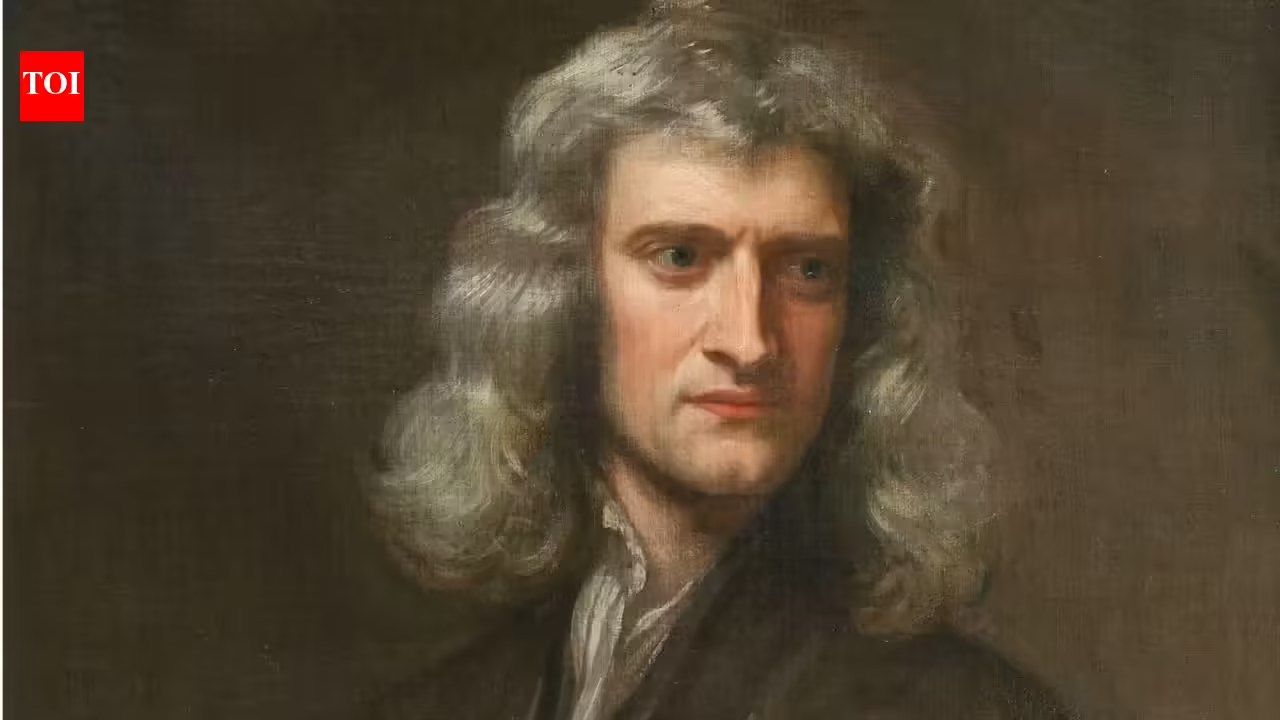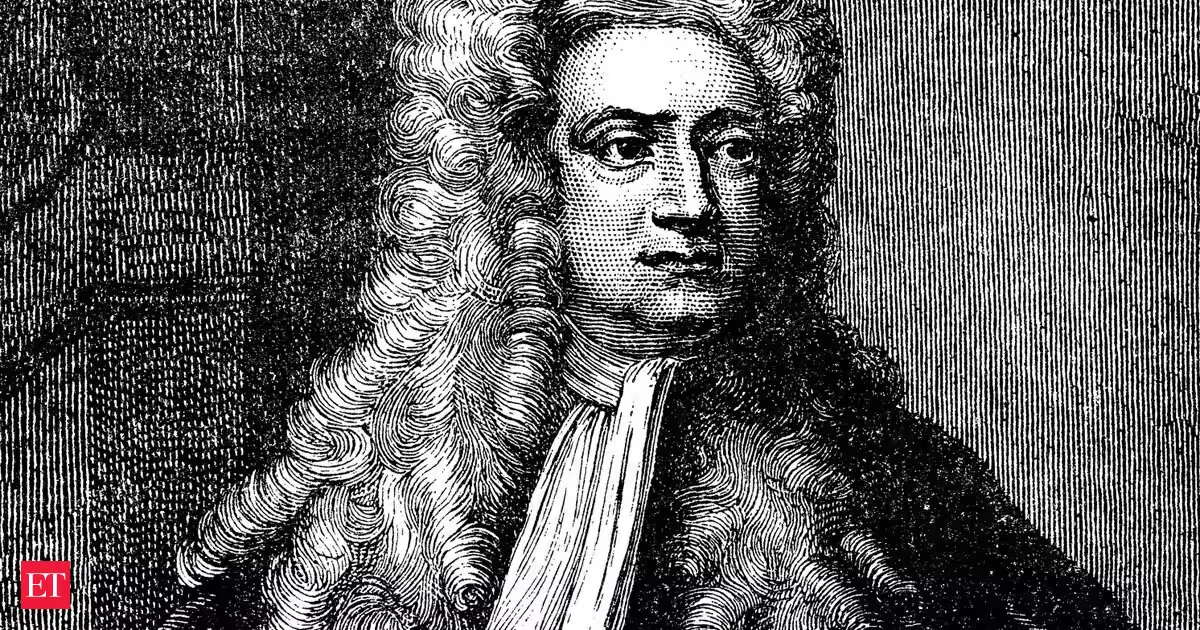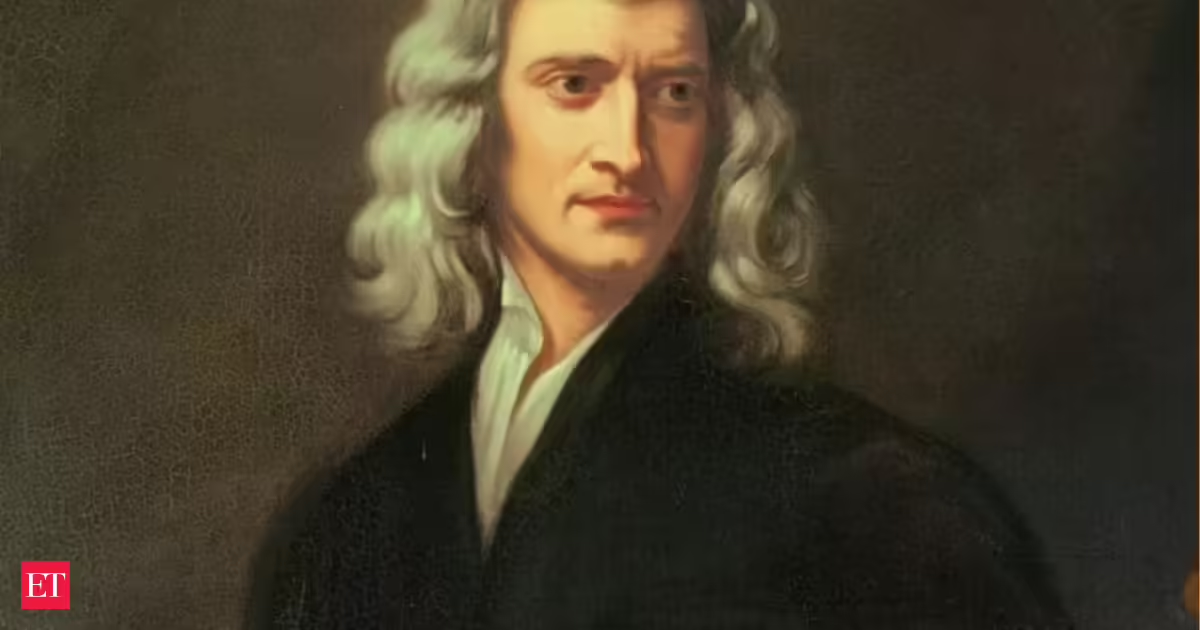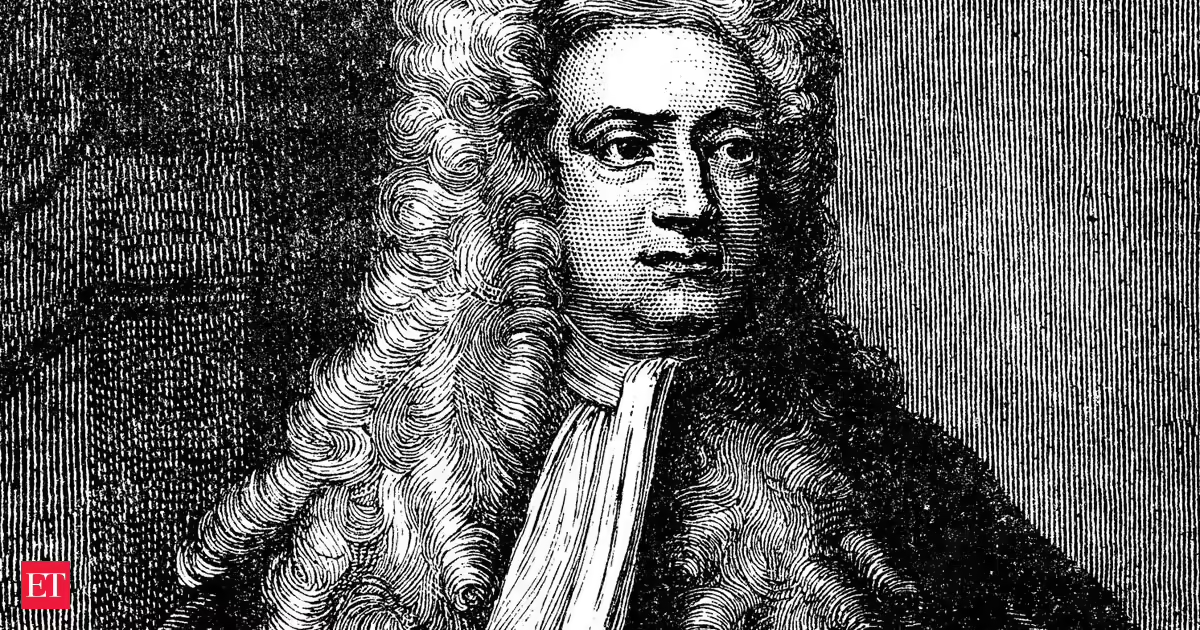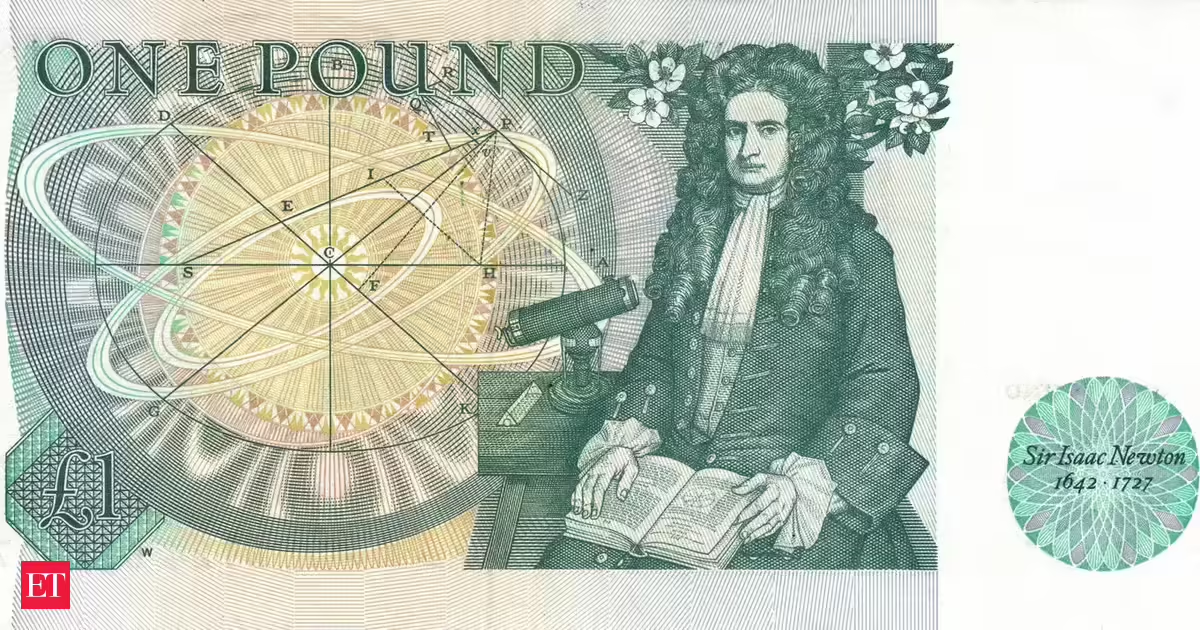
Quote of the day by Issac newton: Few scientists have shaped humanity's understanding of the universe as profoundly as Isaac Newton. Widely regarded as one of the greatest minds in history, Newton transformed mathematics, physics and astronomy through discoveries that laid the foundation of modern science. Yet despite his remarkable achievements, he remained conscious of the limits of scientific explanation, a perspective reflected in one of his most thought-provoking quotes: “Gravity explains the motions of the planets, but it cannot explain who sets the planets in motion.” The quote offers a glimpse into Newton's belief that science can describe how the universe works, but may not always answer why it exists or what initiated its processes. While gravity explains the forces governing planetary motion, Newton suggested that deeper questions about origins, purpose and existence extend beyond the scope of scientific laws.Quote of the day by Isaac Newton: “Gravity explains the motions of the planets, but it cannot explain who sets the planets in motion.” What the quote means At its core, the quote distinguishes between mechanism and origin. Science can identify patterns, laws and relationships in nature. Newton's law of universal gravitation explained why planets orbit the Sun and why objects fall to Earth. However, Newton argued that understanding a process does not necessarily explain how that process began. The statement reflects intellectual humility. It acknowledges that even the most successful scientific theories leave room for unanswered questions. Rather than presenting science and philosophy as rivals, Newton's words suggest that they address different aspects of human curiosity. Today, the quote continues to resonate because it encourages people to remain curious. It reminds us that solving one mystery often reveals another, and that knowledge advances through questioning rather than certainty. A life lesson from Newton's words The quote carries a broader lesson beyond astronomy or physics. In everyday life, people often focus on immediate explanations while overlooking deeper causes and motivations. Newton's observation encourages individuals to look beyond surface-level answers and think critically about underlying reasons. It also teaches humility. No matter how much knowledge one gains, there will always be questions that remain unresolved. The willingness to accept uncertainty while continuing to seek understanding is one of the defining qualities of intellectual growth. Another lesson lies in the importance of curiosity. Newton's achievements were driven by an eagerness to question accepted ideas and explore the unknown. His quote serves as a reminder that progress often begins with asking questions that others overlook.Newton's early life and education Isaac Newton was born on January 4, 1643, according to the modern calendar, in Woolsthorpe, Lincolnshire, England. Born prematurely and fatherless, he faced challenges early in life. He was raised largely by his grandmother after his mother remarried. As a child, Newton showed a fascination with mechanics and problem-solving. He attended The King's School in Grantham before enrolling at University of Cambridge's Trinity College in 1661. There he studied mathematics, natural philosophy and the works of earlier thinkers such as Galileo Galilei and René Descartes. The outbreak of the Great Plague in 1665 forced Cambridge to close temporarily. During this period, often referred to as Newton's "annus mirabilis" or miracle years, he developed many of the ideas that would later revolutionise science.Scientific contributions that changed the world Newton's most famous work, Philosophiæ Naturalis Principia Mathematica, published in 1687, introduced the laws of motion and the law of universal gravitation. These principles provided a mathematical framework for understanding motion on Earth and in space. His three laws of motion became the foundation of classical mechanics and remained central to physics for centuries. Newton also made major advances in mathematics by developing calculus independently of Gottfried Wilhelm Leibniz. In optics, Newton demonstrated that white light is composed of multiple colours and developed the first practical reflecting telescope, now known as the Newtonian telescope. His research transformed the scientific understanding of light and colour. Beyond science, Newton served as President of the Royal Society and later worked at the Royal Mint, where he played a key role in reforming England's currency system.Why Newton remains relevant today More than three centuries after his death, Newton's ideas continue to influence science, engineering and technology. His laws helped pave the way for modern space exploration, satellite technology and countless engineering innovations. Yet perhaps his greatest legacy lies not only in his discoveries but also in his mindset. The quote about gravity and planetary motion reminds us that knowledge has limits and that curiosity should never end. It is a lesson that remains as relevant today as it was in Newton's time: understanding the world requires both rigorous inquiry and the willingness to ask deeper questions about what lies beyond our current knowledge.
Quote of the day by Isaac Newton: “Gravity explains the motions of the planets, but it cannot explain who sets the planets in motion.” A timeless lesson on curiosity and humility
Quote of the Day: Sir Isaac Newton, a giant of science, left us a profound thought. His words on gravity reveal that while science explains how things work, it doesn't always answer why they exist. This timeless quote encourages us to keep asking questions. Newton's own life shows the power of curiosity.
782 words~4 min read