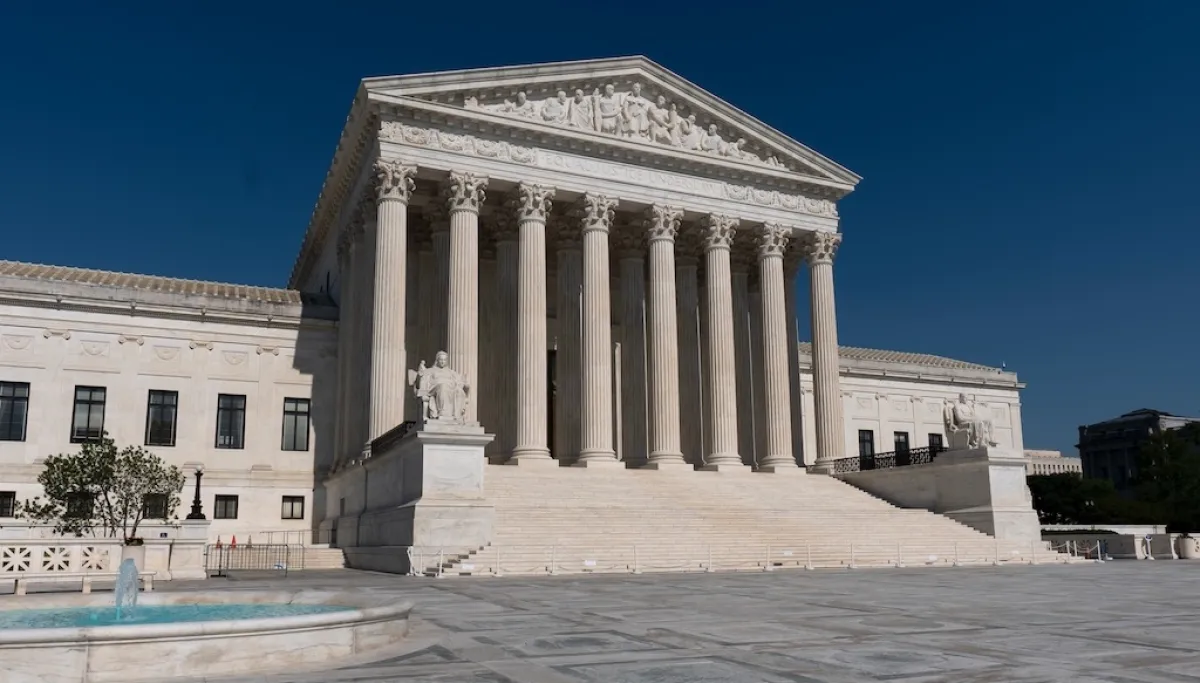
The Supreme Court handed the Federal Communications Commission a victory on Thursday, upholding its ability to penalize telecommunications companies by finding that its scheme for levying fines is constitutional.The high court ruled 8-1 in favor of the federal agency in the consolidated cases FCC v. AT&T and Verizon Communications v. FCC. Chief Justice John Roberts penned the majority opinion finding that the FCC’s penalty scheme does not violate the companies’ Seventh Amendment right to a jury trial. The high court found that AT&T and Verizon did not have to pay the more than $100 million in fines for selling customers’ location data to third parties, agreeing with the FCC that the fine was presented to the companies as a preliminary finding, rather than a binding fine that created a debt to be paid.“The FCC’s forfeiture proceedings fit comfortably within these precedents,” Roberts wrote for the majority. “The orders at issue did not settle the carriers’ legal obligations because, stated simply, they did not create an obligation to pay. And the orders did not reflect the ultimate determination of any fact because, before the carriers could have been made to pay, the Government was required to prove its case to a jury.”
Supreme Court upholds FCC's ability to penalize AT&T and Verizon
The Supreme Court sided with the FCC to find the agency's scheme for fining telecommunications companies is lawful.
499 words~2 min read