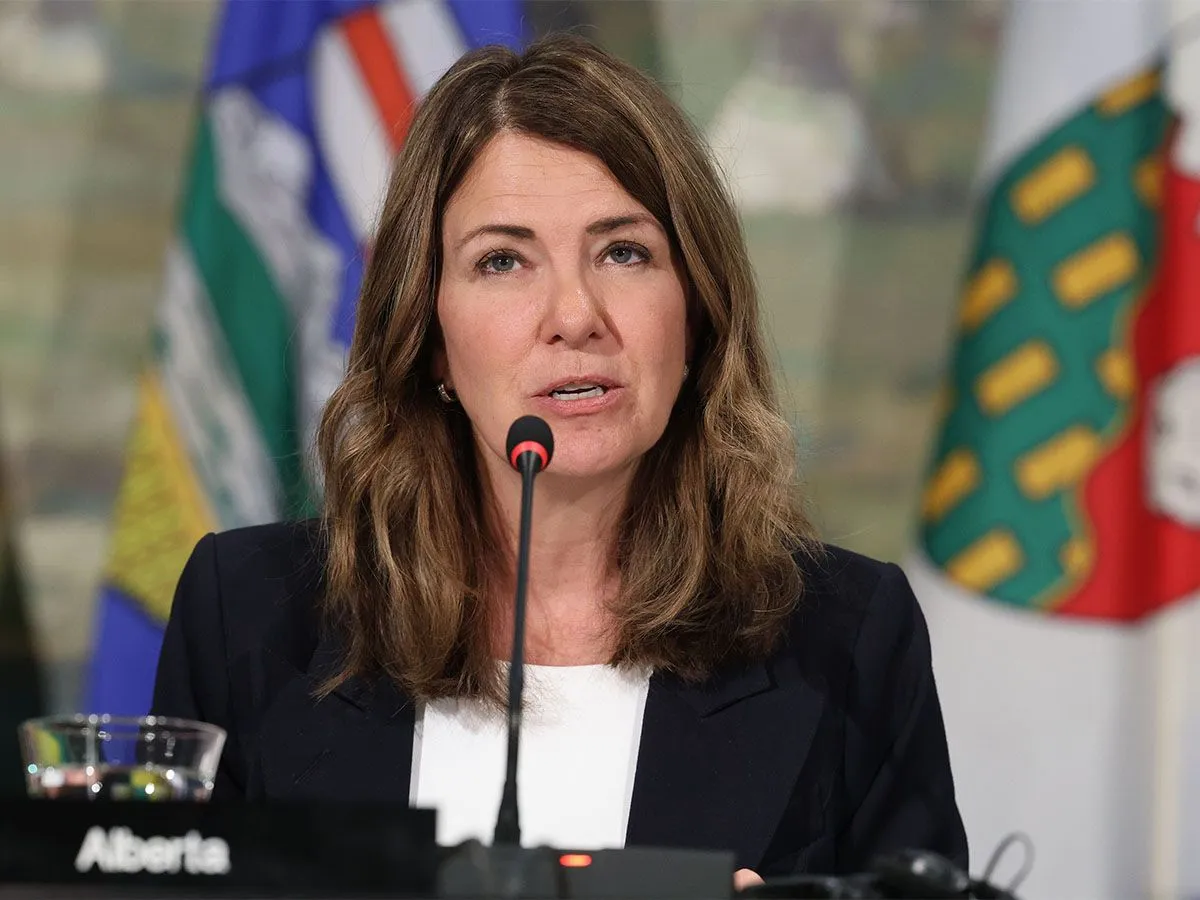
Skip to Content Subscribe Our Offers My Account Manage My Subscriptions FAQ Newsletters Canada Canadian True Crime Canadian Politics Health World Israel & Middle East Financial Post NP Comment Longreads Puzzmo Diversions Comics NP News Quiz New York Times Crossword Horoscopes Life Eating & Drinking Style Sponsored Play for Ontario Travel Travel Canada Travel USA Travel International Cruises Travel Essentials Culture Books Celebrity Movies Music Theatre Television Business Essentials Advice Lives Told Tails Told Shopping Buy Canadian Home Living Outdoor Living Tech Style & Beauty Kitchen & Dining Personal Care Entertainment & Hobbies Gift Guide Travel Guide Deals Savings National Post Store More Sports Hockey Baseball Basketball Football Soccer Golf Tennis Driving Vehicle Research Reviews News Gear Guide Obituaries Place an Obituary Place an In Memoriam Classifieds Place an Ad Celebrations Working Business Ads Archives Healthing Epaper Manage Print Subscription Profile Settings My Subscriptions Saved Articles My Offers Newsletters Customer Service FAQ Newsletters Canada World Financial Post NP Comment Longreads Puzzmo Diversions Life Shopping Epaper Manage Print Subscription HomeNewsCanadaCanadian PoliticsFewer than half of Albertans say they would stay in a newly independent province: pollThe Postmedia-Leger survey also found that Canadians think Alberta’s separation would have a greater economic impact than Quebec'sLast updated 0 minutes ago You can save this article by registering for free here. Or sign-in if you have an account.Premier of Alberta Danielle Smith meets with Quebec Premier Christine Frechette in Quebec City on June 3, 2026. Photo by Francis Vachon for National PosFewer than half of Albertans are certain that they would continue living in their newly independent province should it separate from Canada, according to a new Postmedia-Leger poll, as a referendum later this year is set to decide if the province wants to vote on breaking from the federation.Enjoy the latest local, national and international news.Exclusive articles by Conrad Black, Barbara Kay and others. Plus, special edition NP Platformed and First Reading newsletters and virtual events.Unlimited online access to National Post.National Post ePaper, an electronic replica of the print edition to view on any device, share and comment on.Daily puzzles including the New York Times Crossword.Support local journalism.Enjoy the latest local, national and international news.Exclusive articles by Conrad Black, Barbara Kay and others. Plus, special edition NP Platformed and First Reading newsletters and virtual events.Unlimited online access to National Post.National Post ePaper, an electronic replica of the print edition to view on any device, share and comment on.Daily puzzles including the New York Times Crossword.Support local journalism.Create an account or sign in to continue with your reading experience.Access articles from across Canada with one account.Share your thoughts and join the conversation in the comments.Enjoy additional articles per month.Get email updates from your favourite authors.Create an account or sign in to continue with your reading experience.Access articles from across Canada with one accountShare your thoughts and join the conversation in the commentsEnjoy additional articles per monthGet email updates from your favourite authorsSign In or Create an AccountorAccording to the survey conducted between May 29 and June 1, 39 per cent of respondents said they would “continue to live in my new independent country” in the case of separation, while 38 per cent said they would move elsewhere in Canada. Nineteen per cent said they weren’t sure, and the remaining two per cent said they would move to another country altogether. The proportion of those of who would remain is much larger in Quebec, where 56 per cent of respondents said they would stay in their “new independent country,” with just 24 per cent saying they would move elsewhere in Canada. Among respondents polled outside of Alberta and Quebec, 10 per cent of respondents said they would move to an independent country of Alberta should the province separate from Canada, while just one per cent said they’d move to an independent Quebec. Andrew Enns, executive vice-president of Leger’s central Canada operations, said the survey should serve as a loose indication of peoples’ views toward separation rather than true moving intentions. Opposition to the independence movement in the province are strong, he said, yet the number of people who would actually pack up and leave might be lower in reality than the results suggest. “I would fully expect that that number will be less,” Enns said. “I think that number is more of a temperature gauge on peoples’ emotions. This is a big deal for people.”Respondents widely viewed Alberta’s hypothetical separation from Canada as having a much greater economic impact on the rest of the country than Quebec’s, with 33 per cent saying Alberta’s would have the biggest negative impact of the two. Just eight per cent of respondents said Quebec’s separation would have the greater economic impact, while 45 per cent said it would be equal. The remaining 14 per cent said they didn’t know. Enns said those results were hardly surprising given the amount of focus on the Alberta economy over the last year under Prime Minister Mark Carney, including Ottawa’s emphasis on using natural resources to combat Canada’s overdependence on U.S. trade.“We’ve heard a lot of talk, especially in the last 18 months, about how important our natural resources sector — particularly the Alberta energy sector — is for Canada’s economy,” he said.On the question of which province’s exit would have the greatest impact on “Canada’s national identity,” 17 per cent said Quebec and 15 per cent said Alberta. A majority (54 per cent) said the impact would be equal, while the remainder (14 per cent) didn’t know. The poll results come just as Alberta Premier Danielle Smith has confirmed that the province will see a separation-related question in its October referendum, appearing alongside nine other questions on issues like immigration and Senate reform. Separatist sentiments in Alberta have hit new highs in recent years, as frustrations over the province’s perceived place in confederation are reviving resentments that have lingered for decades.Smith’s referendum question will ask voters whether they wish to remain in Canada, or have a second, “binding” referendum that could trigger separation negotiations with Ottawa. Support for the referendum still seems somewhat narrow: According to public polls, about 70 per cent of Albertans appear to prefer staying in Canada, with the remaining 30 per cent saying they are either deeply supportive or somewhat supportive of separation. Despite the separatist sentiment in the province, most respondents to the Postmedia-Leger survey from Alberta still appeared to think the province is appropriately represented by the federal government. Among those in Alberta, 33 per cent said Ottawa was doing a “good job” of representing their interests, while 16 per cent said it was doing a “poor job.” Fifteen per cent said they do a “very poor job,” and the remaining 11 per cent said the government is doing “very good.” Twenty-six per cent said they didn’t know.One of the biggest sources of Western frustration is the federal government’s treatment of its oil and gas sector, which has prompted premier Smith to seek an energy alliance, or memorandum of understanding (MOU), with Carney. The deal, aimed at helping to unlock fossil fuel investment by cutting back proposed environmental restrictions and building a new West Coast pipeline, appears to have broad support, based on the results of the Postmedia-Leger poll. Among those surveyed, a majority (66 per cent) supported measures to expand Alberta’s oil and gas sector, compared with 17 per cent opposed. The remaining 17 per cent said they did not know. Those who “strongly support” that expansion were most prominent in Alberta (80 per cent), and the lowest in Quebec (58 per cent). Notably, the “strong” supporters of such policies were also almost equally distributed between Conservative and Liberal respondents: 77 per cent of people who intended to vote for the Conservative Party of Canada in the next election were highly supportive of expansion, compared with 76 per cent who back the Liberal Party of Canada. Just 41 per cent of NDP supporters expressed strong support, and 40 per cent of Bloc Québécois voters. Enns said the near-equal split between Liberal and Conservative supporters underscores the major energy policy shift of the Liberal caucus during Carney’s leadership, which has seen the government pivot sharply from environmental to energy security priorities.“I don’t have any sort of party affiliation to draw on, but I would suggest that a couple of years ago Liberal voters wouldn’t have been as keen on expanding the energy sector in Alberta by a long shot,” he said.The Postmedia-Leger poll drew from 1,532 Canadians using an online survey. A margin of error cannot be associated with a non-probability sample in a panel survey. For comparison purposes, a probability sample of the same number of respondents would have a margin of error of plus or minus 2.5 per cent, 19 times of out 20.Our website is the place for the latest breaking news, exclusive scoops, longreads and provocative commentary. Please bookmark nationalpost.com and sign up for our newsletters here. Join the Conversation This website uses cookies to personalize your content (including ads), and allows us to analyze our traffic. Read more about cookies here. By continuing to use our site, you agree to our Terms of Use and Privacy Policy.
Fewer than half of Albertans say they would stay in a newly independent province: poll
The Postmedia-Leger survey also found that Canadians think Alberta’s separation would have a greater economic impact than Quebec's.
1,524 words~7 min read