The exercise will facilitate the phased removal of vulnerable tree species and promote the planting of native species that can better withstand heavy rains and storms.
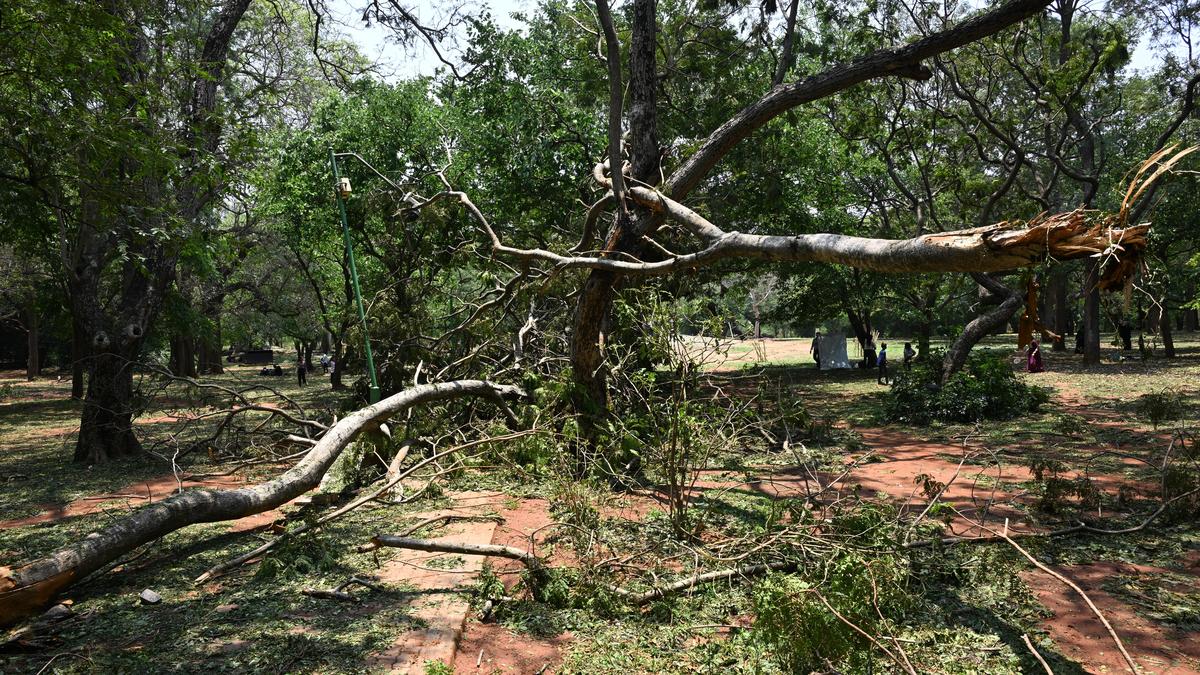
| Photo Credit: ALLEN EGENUSE J.
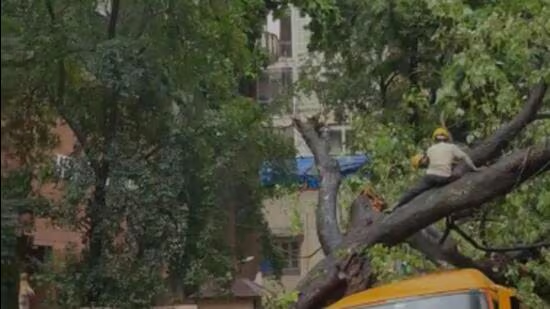
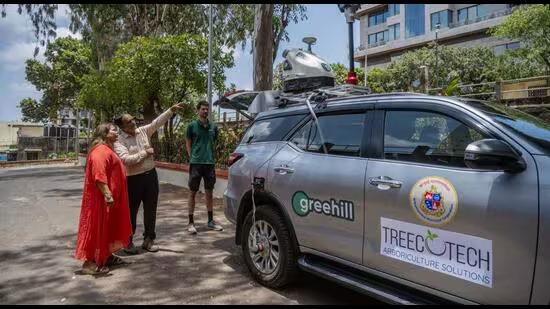
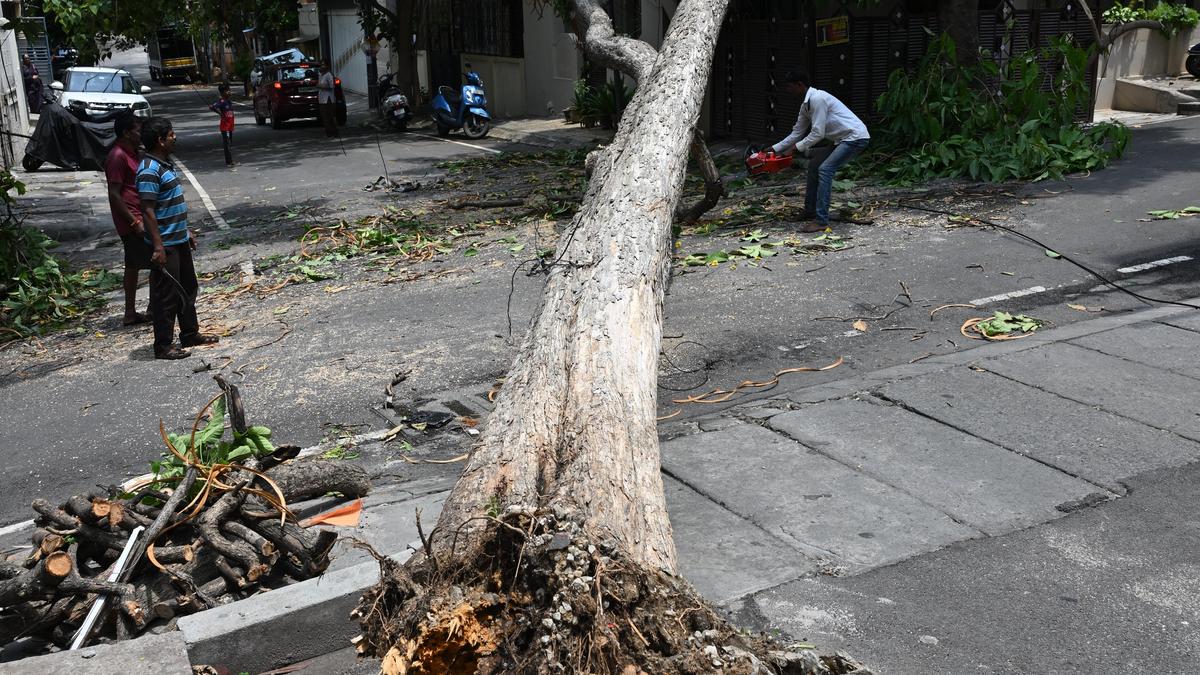
In the light of mass uprooting of trees in Bengaluru during heavy rains this season, the Indian Wood Science and Technology (IWST) has proposed conducting science-based Visual Tree Assessments (VTA) and non-invasive diagnostics to limit further damage and ensure public safety, according to documents accessed by The Hindu.The VTA is a commonly used method for assessing the health and condition of trees.G.K. Sudarshan, Deputy Conservator of Forests, Greater Bengaluru Authority (GBA), told The Hindu that the proposal has been processed and would soon be presented to the five corporations.Phased removalIf implemented, this will be the first-ever effort by Bengaluru’s civic bodies to manage trees through a scientific approach. The exercise will also facilitate the phased removal of vulnerable tree species in a time-bound manner and promote the planting of native species that can better withstand heavy rains and storms.According to GBA data, 949 trees have been uprooted in the city in 2026, even before the monsoon has set in. In comparison, 1,222 trees were uprooted in 2025, while 531 trees fell in 2024. While the trend indicates an upward trajectory, the scale of destruction is significant when viewed collectively.The Hindu has earlier reported that ageing ornamental and softwood trees were responsible for the large-scale uprooting witnessed across the city. Most of these trees were planted at least three decades ago and now require reassessment. Citing the same concerns, the IWST, a Central government organisation, has proposed the exercise “Management of Trees in Urban Landscapes: A Science-Based Risk Assessment and Capacity Building Framework for Bengaluru City Corporations”, according to the documents accessed by The Hindu.Non-invasive diagnosticsUnder the proposed study, the IWST will undertake a VTA of 300 prioritised roadside trees in each corporation. Trees identified as posing a medium or high-risk will subsequently undergo confirmatory non-invasive diagnostics using advanced tools such as a resistograph, sonic tomography, electric resistance tomography, and tree motion sensors.The study is expected to result in ward-wise geo-tagged tree risk registers, species-specific failure risk analyses, and Standard Operating Procedures (SOPs) for scientific tree management.A key component of the proposal is capacity building within the corporations. About 10 to 15 in-house staff members from each corporation will be trained in basic VTA techniques. This will enable civic bodies to make defensible and legally auditable decisions regarding tree retention, pruning, or removal while balancing urban tree conservation objectives.The proposal follows a field study conducted by the IWST on 454 street trees in Malleswaram, according to the document. “The study revealed that 223 trees, or 49.1%, were unhealthy and exhibited structural defects. The majority of these are exotic ornamental species such as Gulmohar, Copper Pod, African Tulip, and Rain Tree, which have a lifespan of 30 to 50 years and have largely exceeded this period, rendering them vulnerable to wind and rain,” the proposal noted.Budgetary allocationThe budget required for the survey of the entire city is ₹4.4 crore. This means each civic body would have to spend a budget ranging between ₹70 Lakh and ₹1 crore. Published - June 04, 2026 08:33 pm IST