LONDON -- The interleukin (IL)-17A inhibitor secukinumab (Cosentyx) was clearly effective in treating polymyalgia rheumatica (PMR) in a phase III trial, researchers reported, even as they also published final data from a failed trial with the drug in giant cell arteritis (GCA).
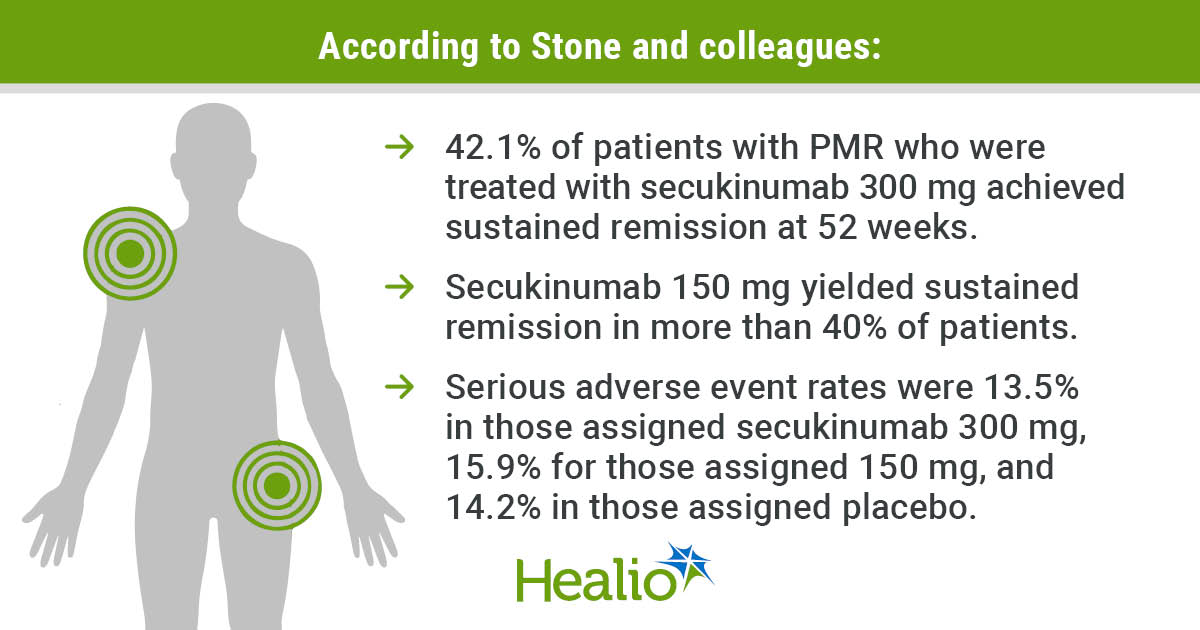
With two secukinumab dosages tested in the randomized, placebo-controlled PMR study, the drug produced sustained remission at 1 year in 41.2% and 40.6% of patients receiving 300 or 150 mg per injection, respectively, compared with 20.4% of controls (both P<0.001), according to John H. Stone, MD, MPH, of Mass General Brigham in Boston, and colleagues.
Sustained complete remission was harder to achieve, but still significantly favored the active drug: 28.2% and 24.5% of patients at the high and low doses, respectively, versus 4.7% with placebo (P<0.001), the researchers reported in the New England Journal of Medicine. The results are also to be presented here at the European Alliance of Associations for Rheumatology (EULAR) annual meeting.
Stone's group said the rationale for trying an IL-17A inhibitor in PMR and GCA stemmed from earlier research showing elevated levels of this cytokine in patients with these conditions, which appear together in about one-fifth of cases. They also observed that IL-17A "contributes to articular and periarticular inflammation, which is typical of polymyalgia rheumatica."