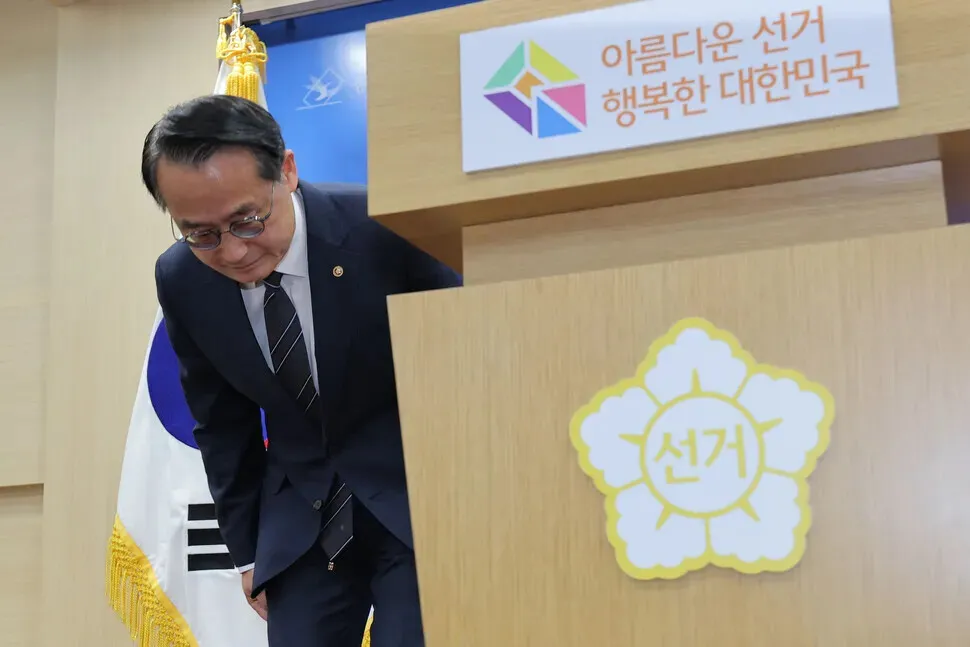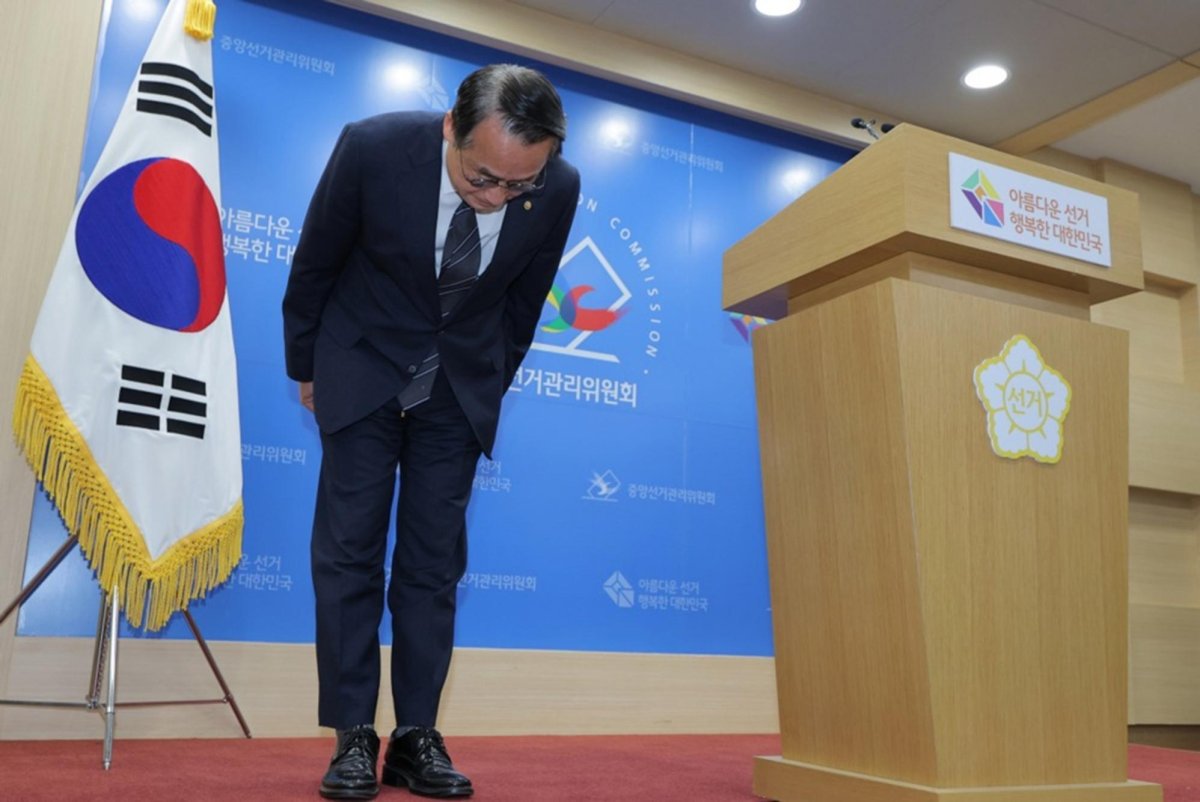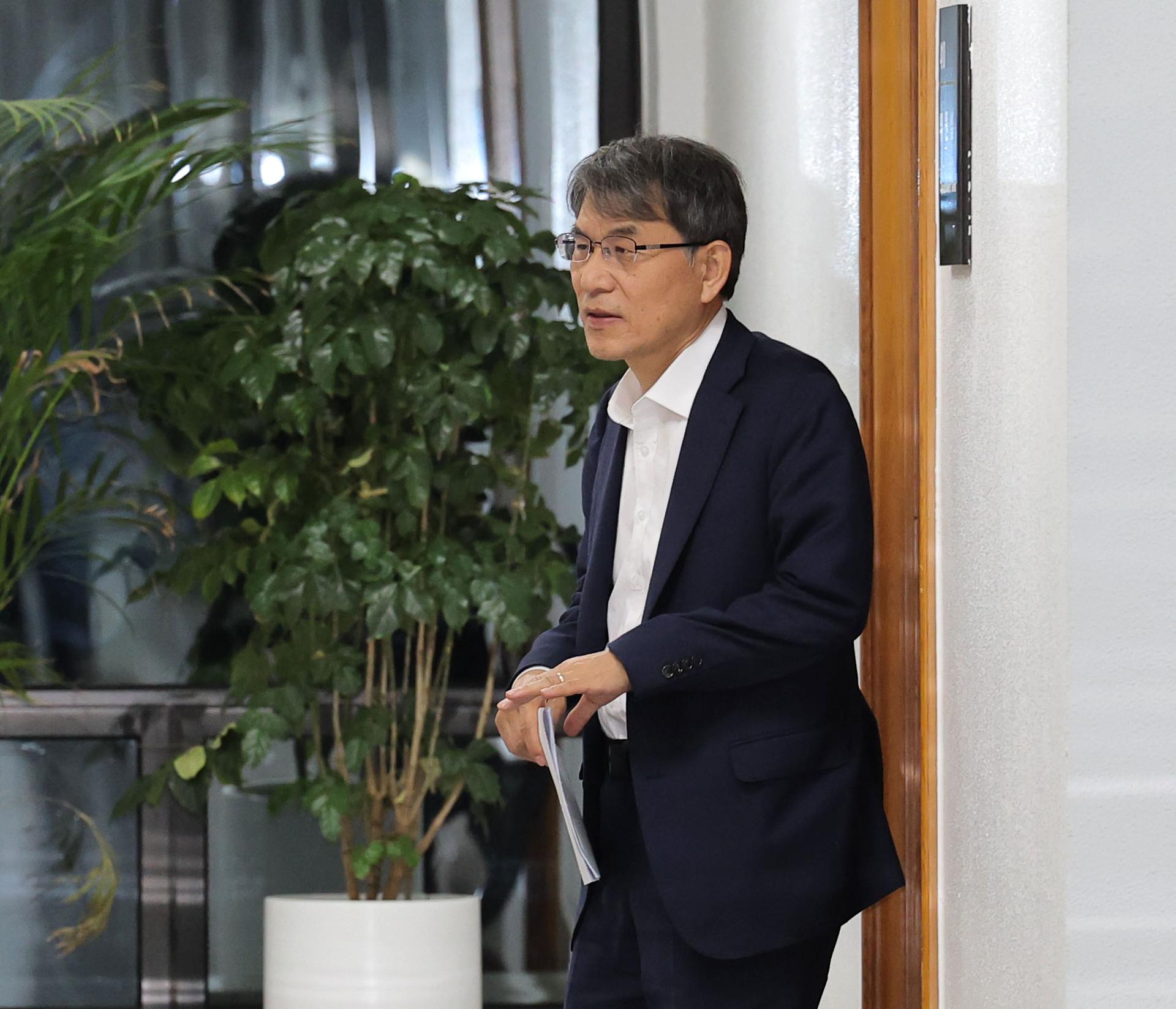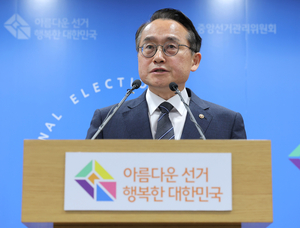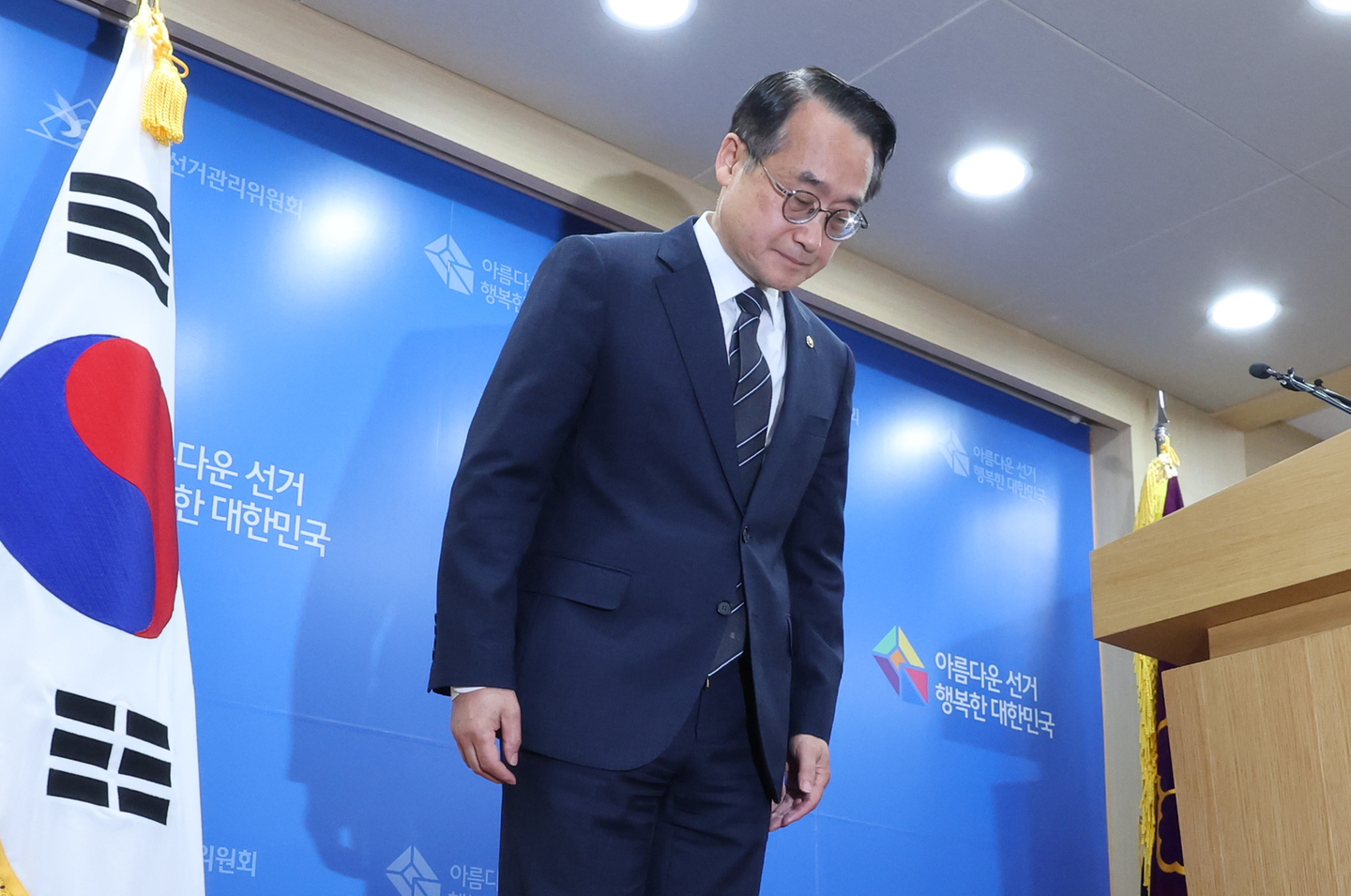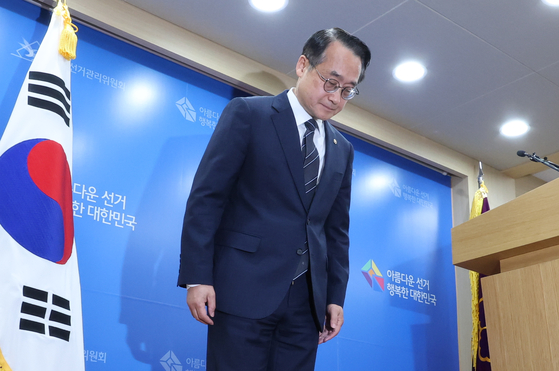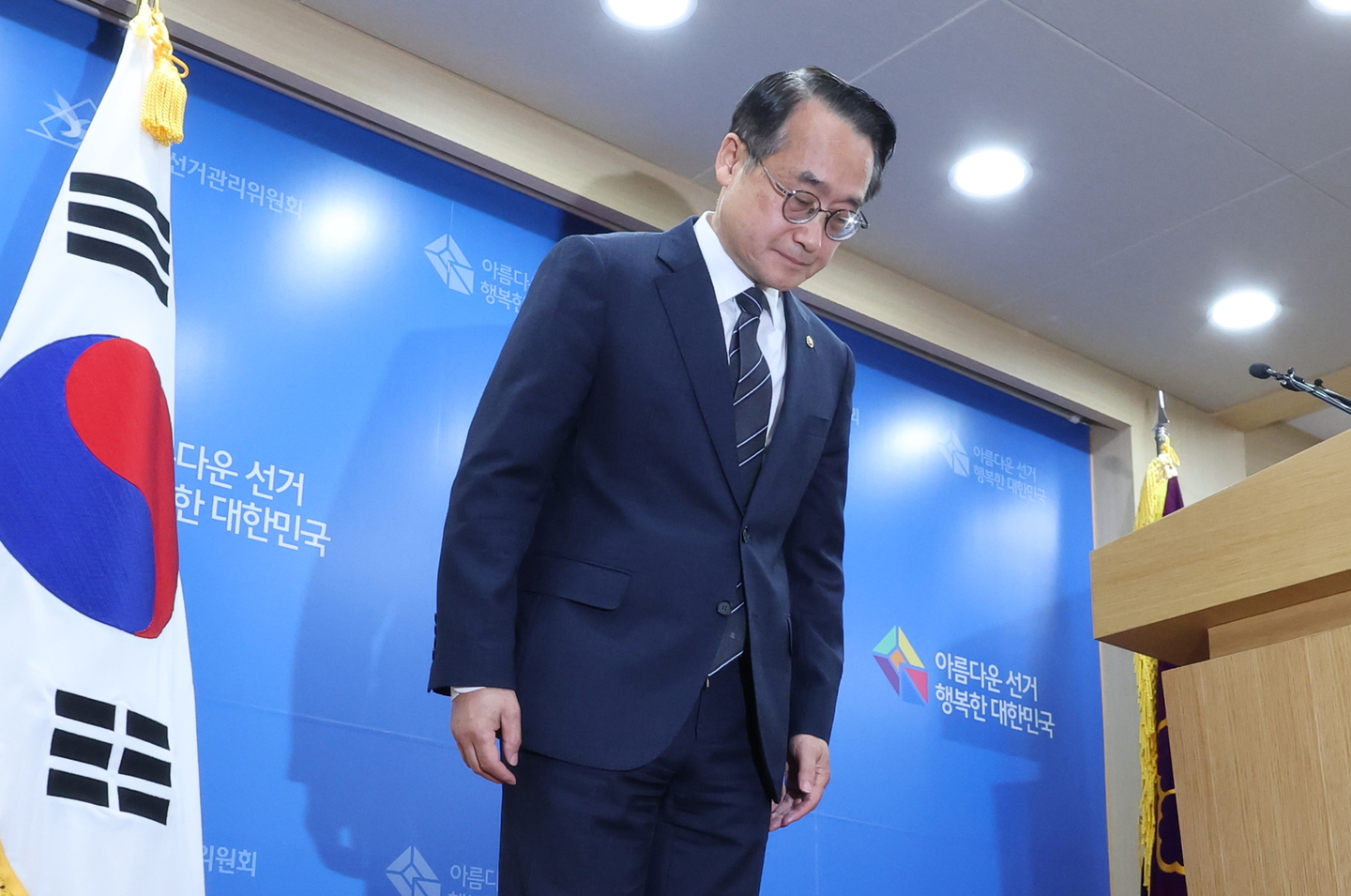
Heo Cheol-hoon, secretary general of the National Election Commission, bows his head as he apologizes for ballot shortages at the commission's headquarters in Gwacheon, Gyeonggi on June 3. [NEWS1]
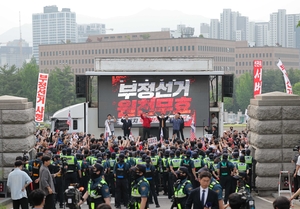
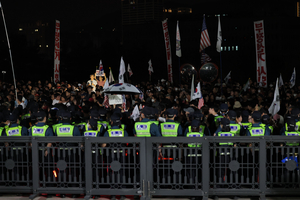
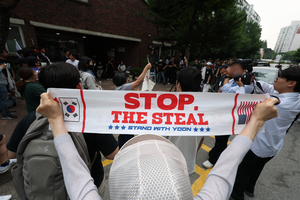
The fallout from the ballot shortage that struck 17 polling stations across Seoul, Gyeonggi and Incheon during the June 3 local elections continues to spread. Although the election has ended, a ballot box containing roughly 2,000 votes cast in Jamsil 7-dong, Songpa District, Seoul, remained unopened as of Thursday, while protests by citizens outraged over the botched administration of the vote persisted. Because the National Election Commission (NEC) failed to prepare an adequate number of ballots, voters’ fundamental political rights were ultimately infringed upon, and confidence in the fairness of the election was severely undermined.
President Lee Jae Myung on Thursday rebuked the commission, saying that “gaps in election management that are difficult to understand or justify” had occurred. The Democratic Party raised questions about the future of Secretary-General Heo Cheol-hoon, while the People Power Party called for the immediate resignation of all officials responsible for the fiasco, including NEC Chairman Rho Tae-ak. Yet given the gravity of the matter, it is doubtful that the resignation of a handful of officials alone can calm public anger. Such a bewildering administrative blunder — the kind more commonly associated with poorly governed states — can only be explained by a comprehensive breakdown of discipline and accountability. A thorough investigation into the decision-making process that led to the ballot shortage is the bare minimum. Those responsible must be held fully accountable, both legally and administratively.