It’s never been easier to reach global customers. Thirty-six percent of Stripe businesses now have customers in more than one country, and the number selling into more than 100 countries has quadrupled in five years. Turning that reach into revenue, however, requires solving a familiar set of cross-border challenges. At Sessions, we announced dozens of new products and capabilities to localize the customer experience, maximize payment performance, move money across borders, and manage tax and regulatory compliance.Convert customers with a localized experience
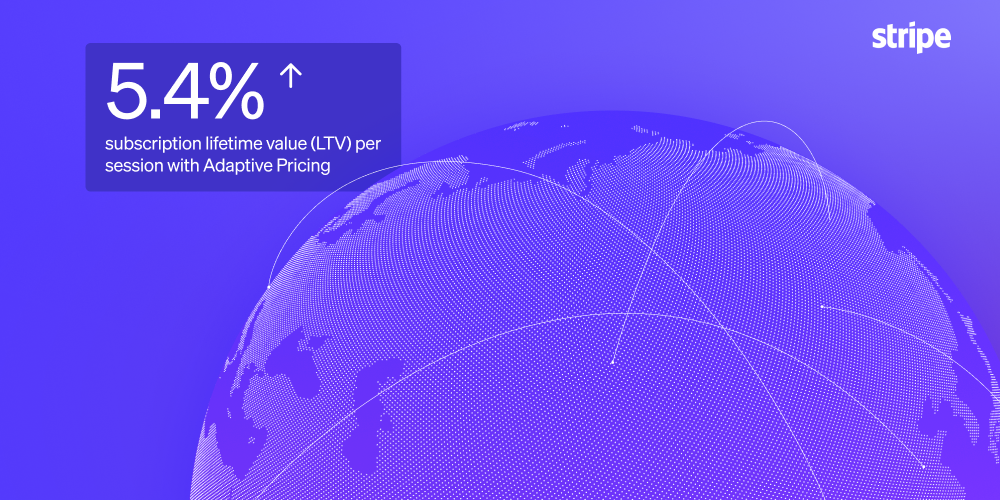
Cross-border success often depends on the customer experience at checkout. A localized experience includes core components like customers’ preferred languages, currencies, and payment methods; it also requires continuous optimization.Checkout studio, the newest addition to the Optimized Checkout Suite, provides tools for businesses to tailor their checkouts to local customers. Industry-specific recommendations and location data help surface local payment methods for each market, with built-in tracking for adoption and performance. Stripe provides access to more than 125 payment methods, including support for Sunbit, Bizum, Pay by Bank, BLIK, and TWINT. A fashion retailer expanding into Spain or Poland, for instance, might be prompted in Checkout studio to add Bizum or BLIK and A/B test against live traffic before deploying it live. Checkout studio provides recommendations to help present the right payment methods. Stripe data shows that even one geographically irrelevant payment method can decrease conversion by up to 15%. The upside of getting it right is significant: on Stripe, businesses offering Pix see up to 38.3% higher conversion from customers in Brazil, and those offering UPI see 19.8% higher conversion from customers in India.Localization also extends beyond language and payment methods to include pricing in local currencies. Stripe data shows that 76% of customers will choose to pay in their local currency when given the option. Adaptive Pricing uses AI to display prices in local currencies, while Stripe handles conversion and the operational work behind it. On average, businesses using Adaptive Pricing see a 5% increase in authorization rates and a 17.8% lift in cross-border revenue.Adaptive Pricing also supports subscription sign-ups and renewals, with guardrails built in to help keep renewal amounts consistent across billing cycles. On average, Adaptive Pricing for subscription businesses drives a 4.7% conversion uplift and a 5.4% increase in lifetime value (LTV) per session.Increase payment acceptance and reduce fraud in every market


 shopify.com