“Hi! I’m interested in buying peptides,” I wrote on WhatsApp. Two minutes later, I received a reply from a U.K. area code from someone calling herself Louise, whose profile picture was of a young woman with airbrushed skin. Louise shared a menu: testosterone boosters, synthetic growth hormones, weight-loss medications, and more.
Mindful of my expense account, I scoured the menu for a cheaper peptide, a term that describes a class of molecules that promise some type of wellness boost and include the popular weight-loss drug Wegovy. I settled on 5-amino-1MQ, a substance that one connoisseur later told me “makes a lot more sense for high-level competitive athletes,” not a first-time peptides buyer.
Louise quoted me a price of $49 for the medication, plus $60 for overnight shipping. She asked for payment, proposing the Chinese platform Alipay. Or, she said, I could send crypto. Eventually, I sent Louise $109 worth of USDC, a popular stablecoin whose price is pegged to the U.S. dollar. After I confirmed my shipping details, she responded with a heart emoji.
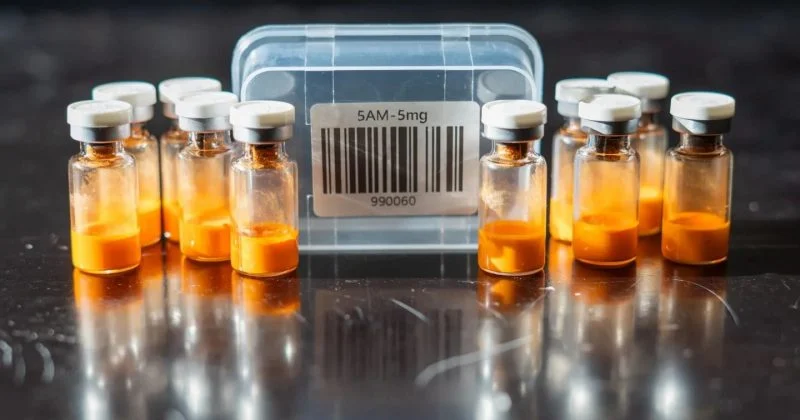
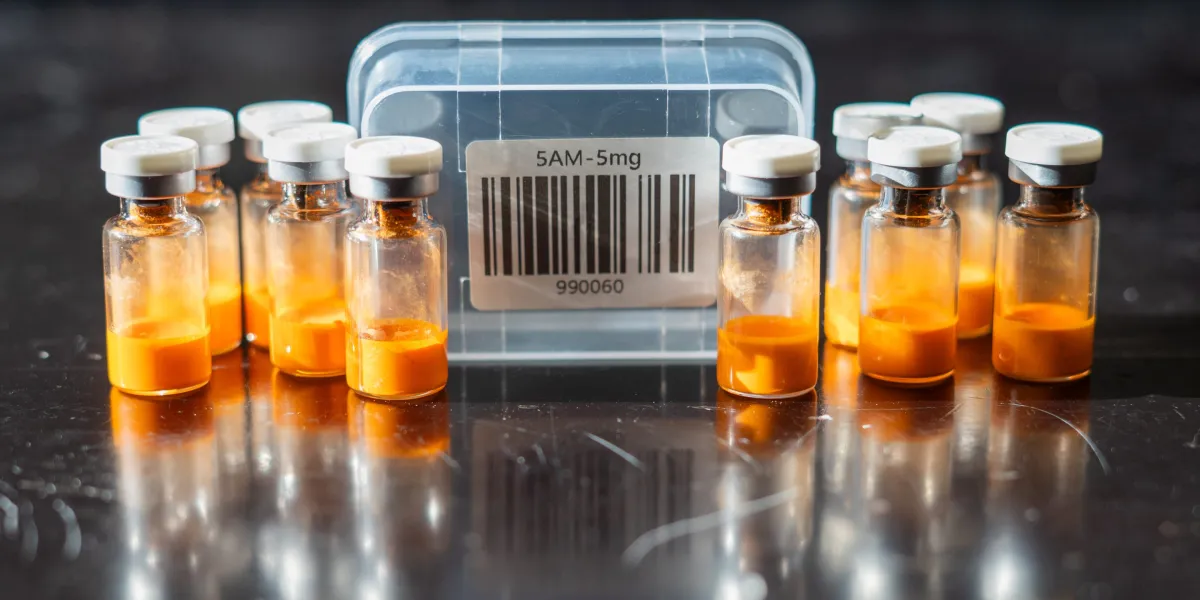
Two days later, in late May, a small package with 10 vials full of a bright-orange substance arrived at Fortune’s office from a facility in New Hampshire. I had successfully used crypto to buy peptides—and participated in a booming gray-market economy increasingly reliant on digital assets, according to data from the crypto analytics firm Chainalysis. “If this end[s] with you under investigation by a federal agency,” my editor messaged me, “I will swear it was in the name of journalism.”