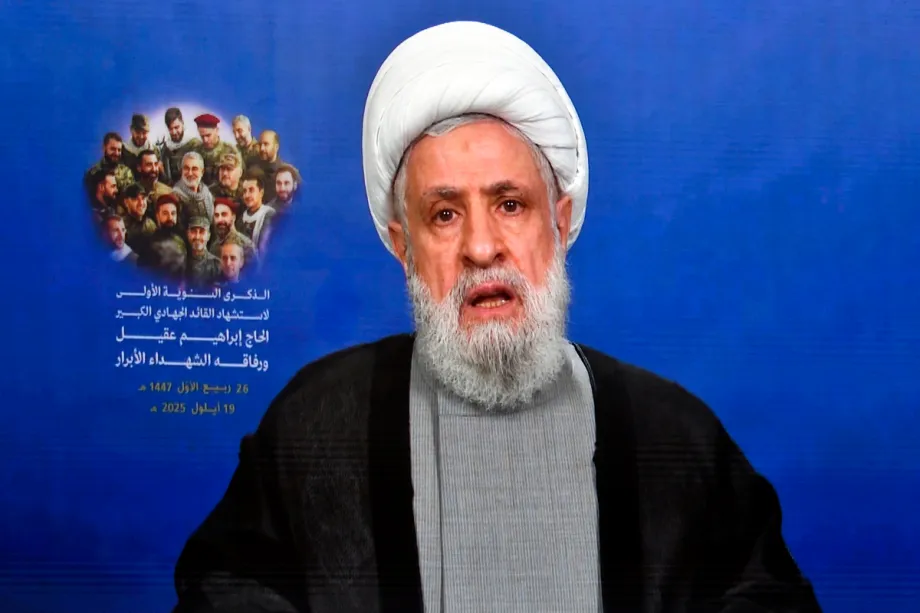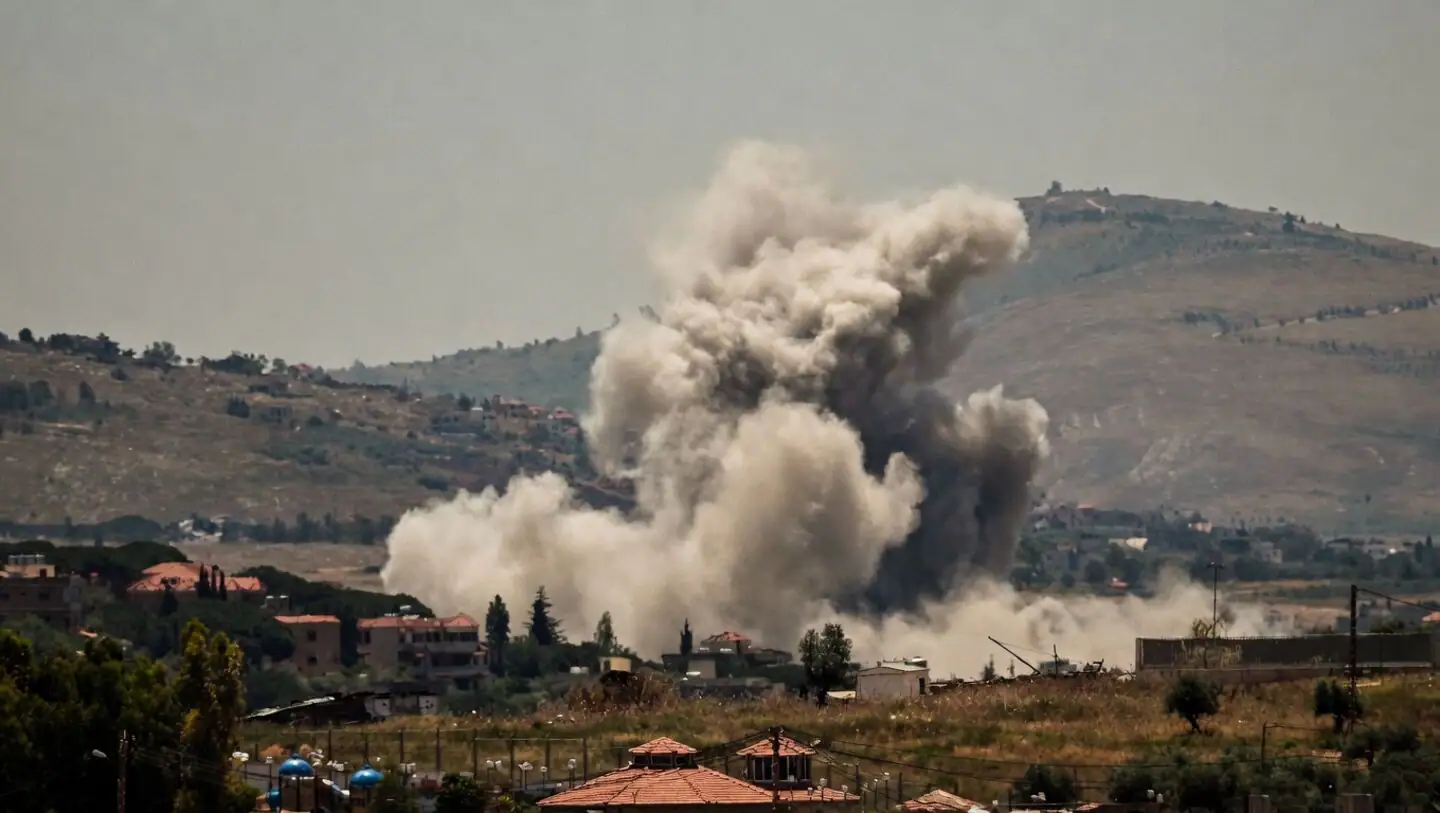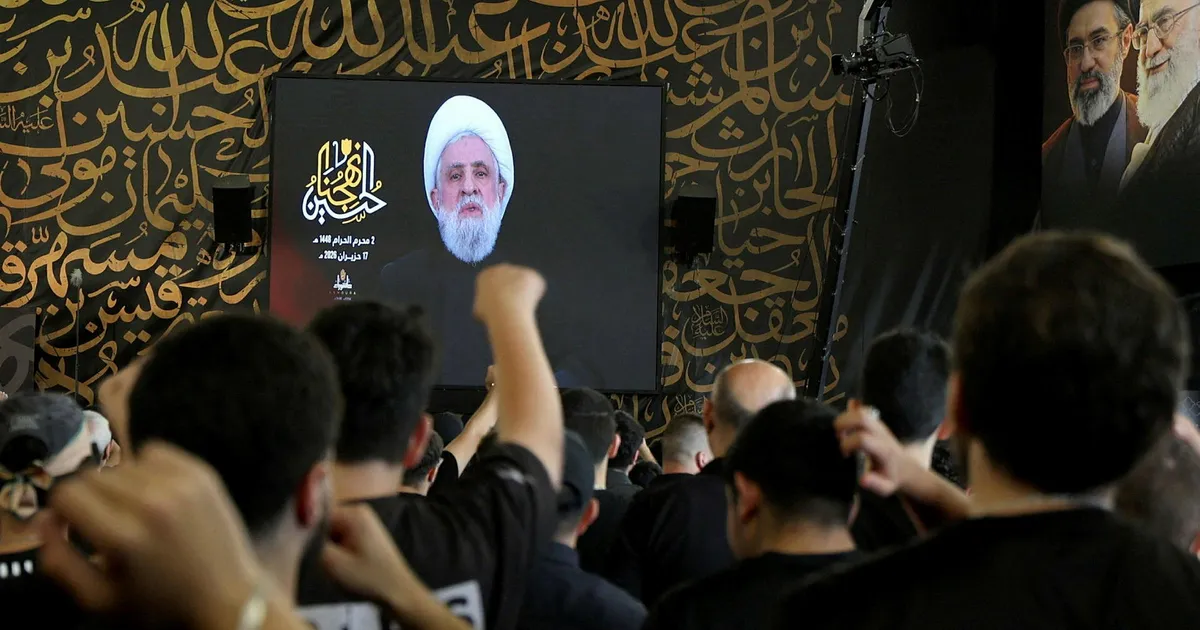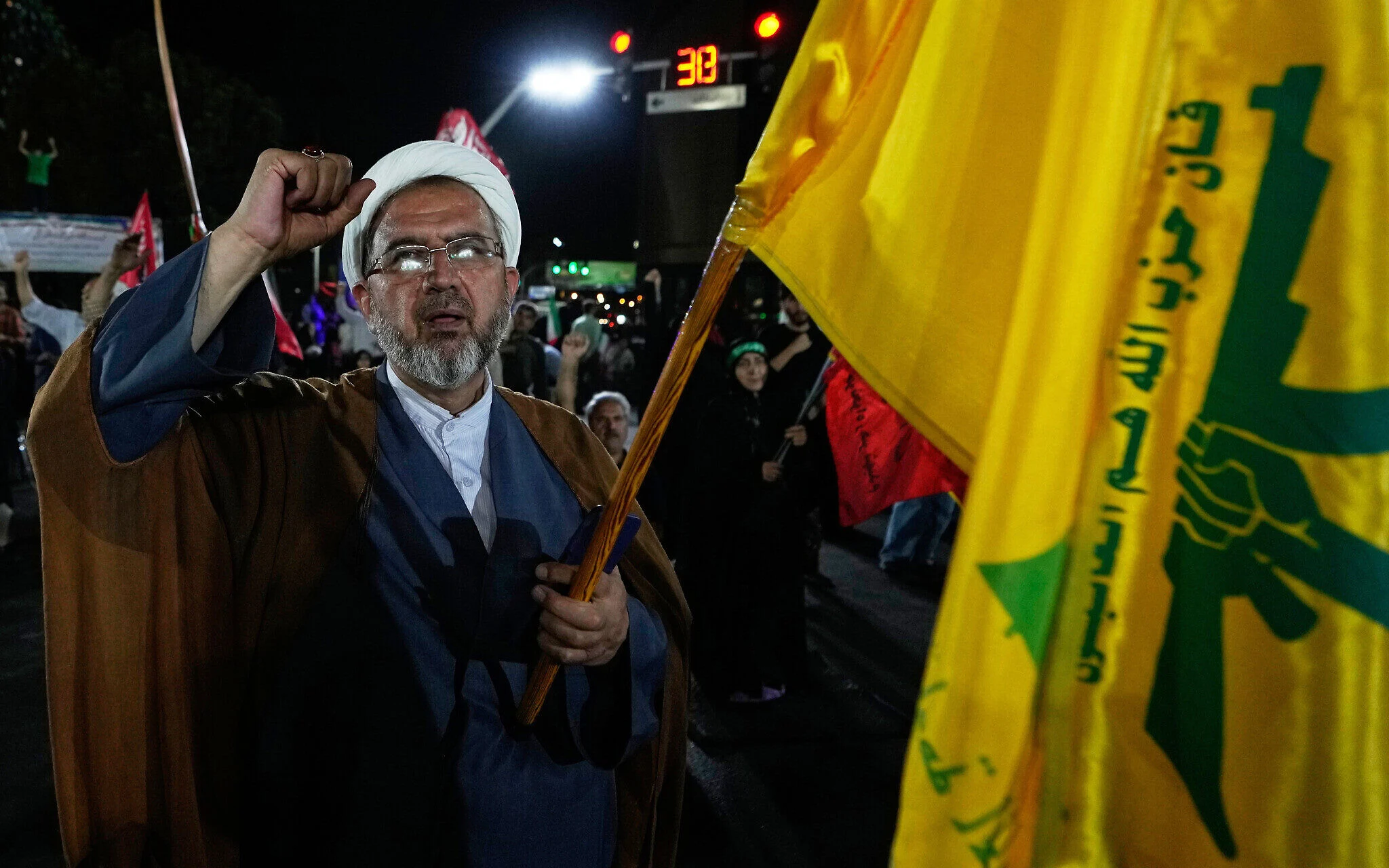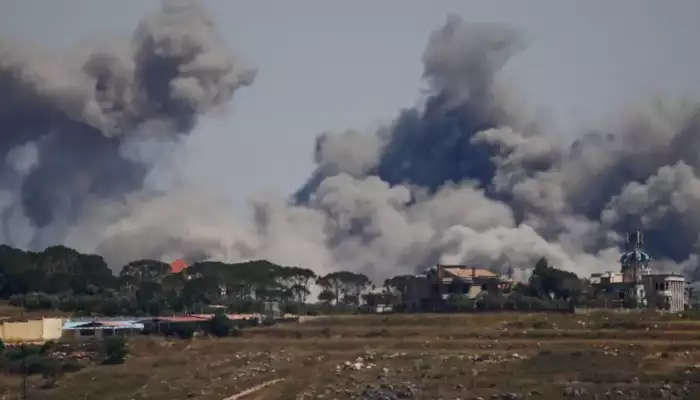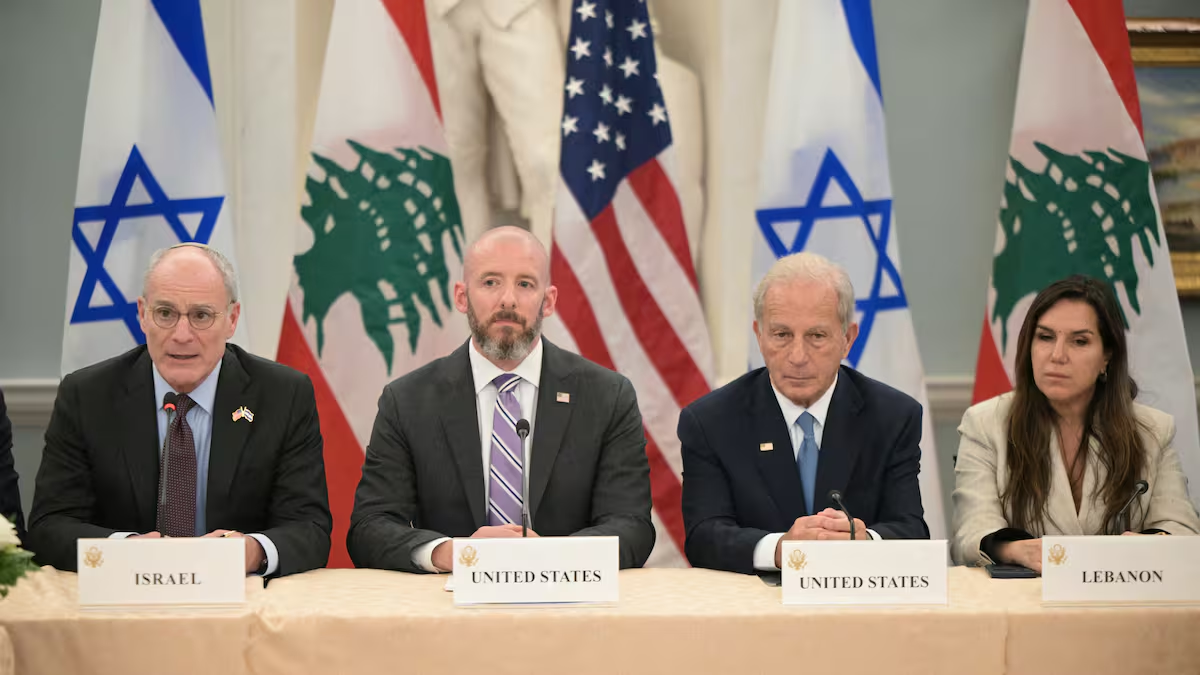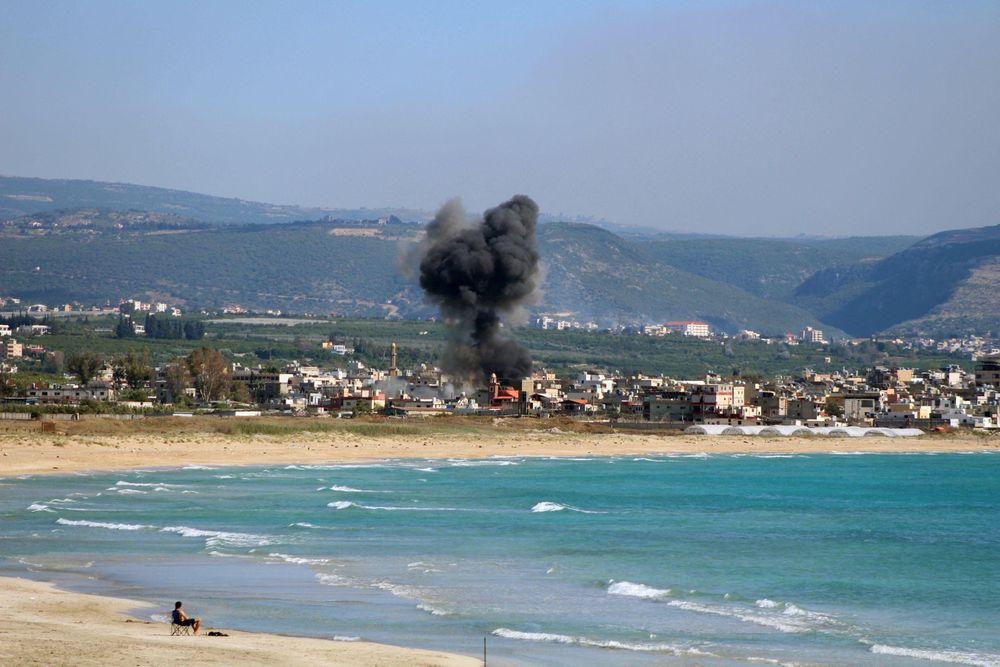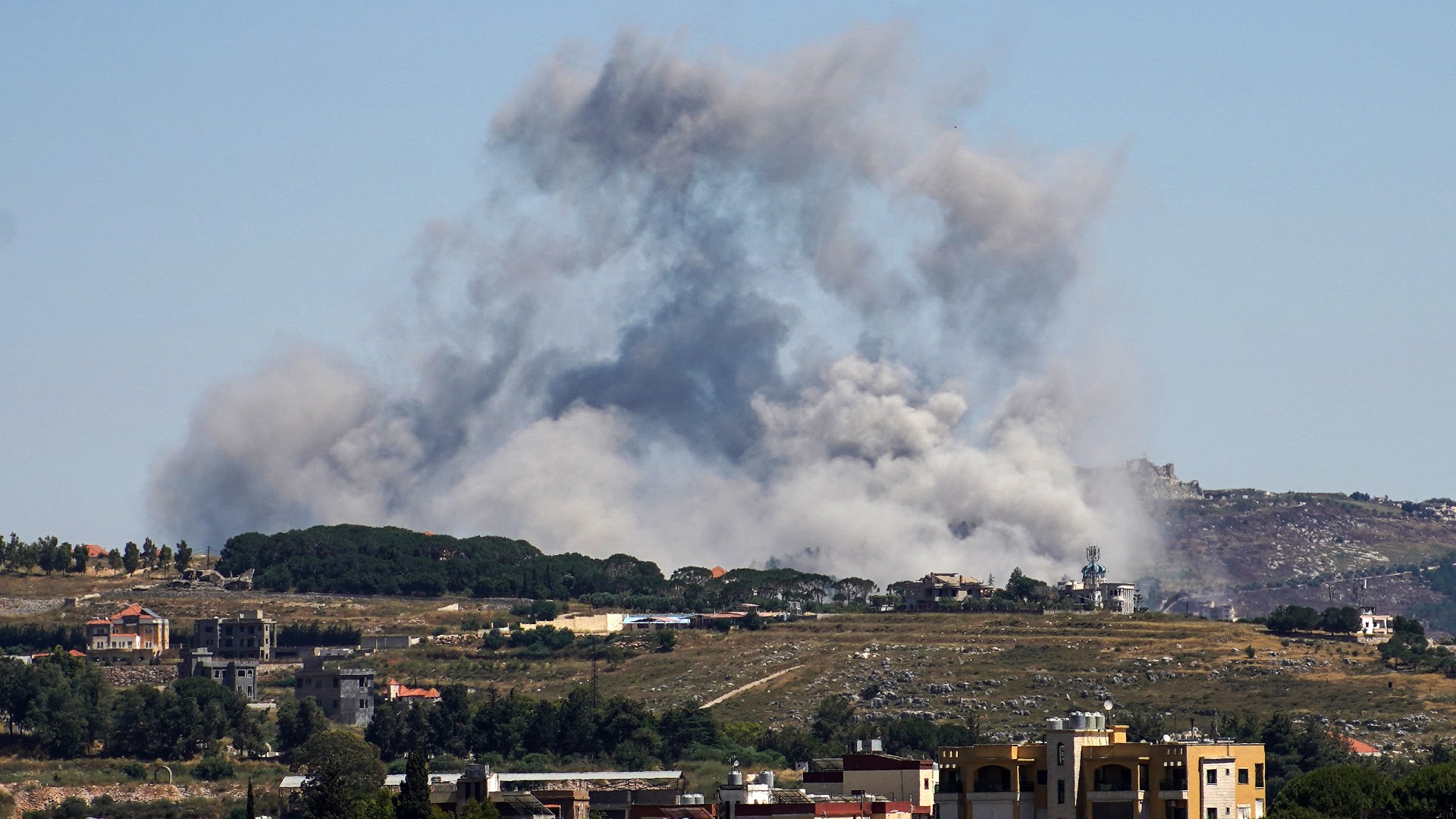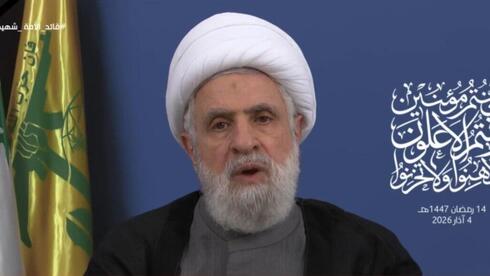
Naim Qassem says Hezbollah will not accept terms requiring it to stop fire and withdraw south of the Litani, while Israel says any attack will draw a harsh response“The result of the direct, humiliating and disgraceful negotiations is rejected by broad parts of the Lebanese people,” Qassem said. “The Washington declaration conditions the basic principles that America and Israel want, toward the subjugation of Lebanon to the Greater Israel project.”2 View gallery Hezbollah Secretary-General Naim QassemShortly after Qassem’s speech, hostile aircraft infiltration alerts were activated in a series of communities in the western Galilee. Sirens also sounded in Shlomi about 20 minutes after Prime Minister Benjamin Netanyahu left the town, where he had met with local authority heads.“The resistance in Lebanon was created under the inspiration of Imam Khomeini’s approach and ideology, but we are fighting for our land and our people,” Qassem said in remarks marking the anniversary of the death of the father of Iran’s Islamic Revolution. “We thank Iran for helping us reclaim our land and our rights in the face of the Israeli-American aggression.”Qassem claimed that “the main goal of disarming the resistance as a starting point for any agreement is to sabotage Lebanon, destabilize it and ignite conflicts within it.”“The Washington declaration is a road map for destroying part of the Lebanese people and subjugating the rest,” he said. “There can be no separation between the south and the rest of Lebanon, and we will not give the enemy a free hand to kill in Lebanon. As long as the occupation exists, the resistance will continue.”He emphasized that Hezbollah had “not committed to refraining from resistance to aggression.”2 View gallery IDF strikes in Lebanon (Photo: Jalaa Marey/ AFP)“As long as the aggression continues, we will confront it with all our force,” Qassem said. “As long as our villages are not safe, are attacked and destroyed, and our people are killed, the settlements will not be safe either. See our strength and our power. The main goal must be Lebanese sovereignty, which can be achieved through only one solution: ending the Israeli aggression against Lebanon.”According to Qassem, the main objective must be “Israel’s withdrawal from Lebanese territory, which would allow the army to deploy south of the Litani River, as well as the release of Lebanese prisoners.”“We reject any connection between the existence of the resistance and the cessation of the aggression and Israel’s withdrawal,” he said. “No one has the right to interfere in Lebanon’s internal affairs and organize the political, economic and social lives of the Lebanese.”He also called for maintaining “national unity in the face of aggression,” saying Lebanese authorities were responsible for addressing the internal divisions caused by their political choices.Golani Brigade operates in Lebanon (Video: IDF)“The authorities are responsible for initiating steps and dialogue that will lead to uniting the Lebanese people against the Israeli aggression against our country,” he said. “We call on officials to stop the direct negotiations.”Qassem concluded by saying that “the security track under the banner of a fictional ceasefire is surrender, defeat and the achievement of the enemy’s goals.”The ceasefire understandings between Israel and Lebanon were announced after months of fighting and escalation along the northern border. However, officials in Jerusalem stress that the move does not mark the end of the campaign, but rather a conditional arrangement that will be tested by Hezbollah’s conduct on the ground.Israeli officials made clear that any fire toward Israel would be met with a harsh response, including against targets in Beirut, and that the IDF would continue to hold areas it captured in southern Lebanon, including the Beaufort area.Under the understandings, the ceasefire would take effect only if Hezbollah fully stops firing and removes its operatives from south of the Litani River. Israel, meanwhile, would retain freedom of action against emerging threats, similar to the model currently in place in the Gaza Strip.According to the joint statement issued in Washington, the sides agreed to establish pilot zones where the Lebanese army would receive exclusive control and act to remove all armed groups that are not part of the state. The Lebanese army would operate in areas of southern Lebanon not captured by the IDF.Israel views this as a central test for Lebanon’s government and military. If they succeed in enforcing the arrangement and distancing Hezbollah, officials believe the sides could move to the next stage of talks.Diplomatic and security tracks are expected to resume as early as the week of June 22, with the aim of reaching a broader agreement. Jerusalem sees the move as an unprecedented opportunity to advance normalization or a diplomatic agreement with Lebanon, but stresses that any progress will depend on full implementation of the security demands and the dismantling of Hezbollah infrastructure.The understandings have sparked disagreement within Israel’s political system. Netanyahu and Defense Minister Israel Katz have presented the move as a diplomatic and security achievement, while National Security Minister Itamar Ben-Gvir has called it a grave mistake that could allow Hezbollah to rebuild in the future.Ben-Gvir argued that Netanyahu should have stood firm and said “no” to U.S. President Donald Trump. The IDF also had reservations and sought to expand its plans against Hezbollah.At this stage, the understandings do not include an Israeli withdrawal. The IDF remains along the yellow line up to the Beaufort area. A senior Israeli official said that if southern Lebanon is “clean” within a year or two, withdrawal could be discussed, subject to security guarantees and a peace agreement with Lebanon.Lebanon’s government would like to see a faster withdrawal, but Israel warns that without guarantees, Hezbollah will reestablish itself. Officials in Jerusalem assess that, depending on developments, Israel may agree to small withdrawals or adjustments.One of the most prominent elements of the new understandings is the American effort to separate the Lebanese arena from Iranian influence. In the joint statement, the three countries condemned Iran’s regional activity and its support for its proxies, chiefly Hezbollah.Israeli officials say that, for the first time, there is a basic Israeli-Lebanese-American agreement that Hezbollah and Iran are the central obstacle to stability in Lebanon.From Washington’s perspective, the goal is to strengthen the Lebanese army through American assistance and enable the government in Beirut to exercise sovereignty without dependence on the Shiite terrorist organization.Still, Israeli officials acknowledge that the chances of success are far from guaranteed. Hezbollah has not announced that it accepts the demand to disarm, and security officials assess that if it refuses, it will be portrayed as the party obstructing the arrangement, potentially giving Israel broader legitimacy to continue military action against it.Despite the ceasefire announcement, officials in Jerusalem stress that this is a fragile pause that could last for a long time, but could also collapse within days if one side violates the terms.Many in Israel are skeptical about the move’s chances of success, with some describing it as a ceasefire in name only. Critics argue that the Lebanese government not only does not want to disarm Hezbollah, but is also incapable of doing so. Hezbollah members sit in the government, some in the Lebanese army are loyal to the organization and roughly 40% of Lebanon’s population is Shiite, they argue.So why proceed? Because U.S. officials believe that if an agreement is reached with Iran, there may be a chance to free Lebanon from Iran’s grip and give it a more hopeful future. The problem is that in today’s Lebanon, even those who oppose Hezbollah admit that it is the only force challenging the IDF. Without it, they say, Lebanon would become a submissive state.A senior European diplomat said the only way to solve the problem is to integrate Hezbollah members into the Lebanese army, pay them salaries and also raise the salaries of Lebanese soldiers, which are dramatically lower than the wages Hezbollah pays its operatives.
Hezbollah chief rejects ceasefire deal, calls it ‘humiliating’ as sirens sound across Galilee
Naim Qassem says Hezbollah will not accept terms requiring it to stop fire and withdraw south of the Litani, while Israel says any attack will draw a harsh response
1,298 words~6 min read