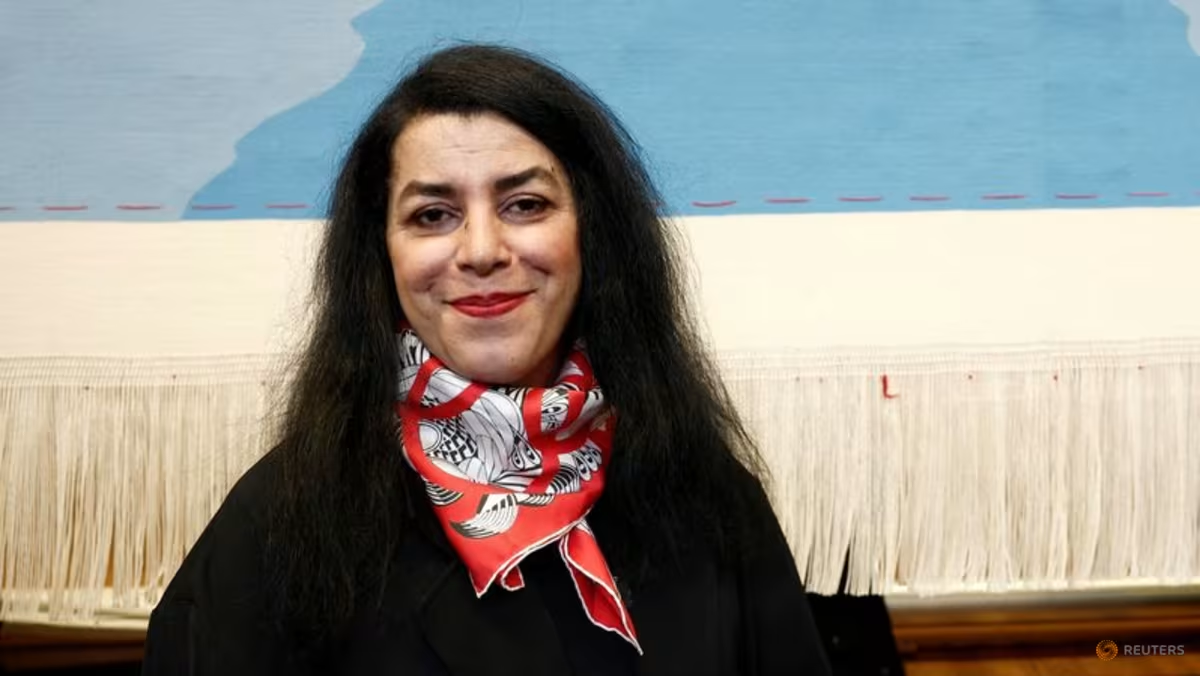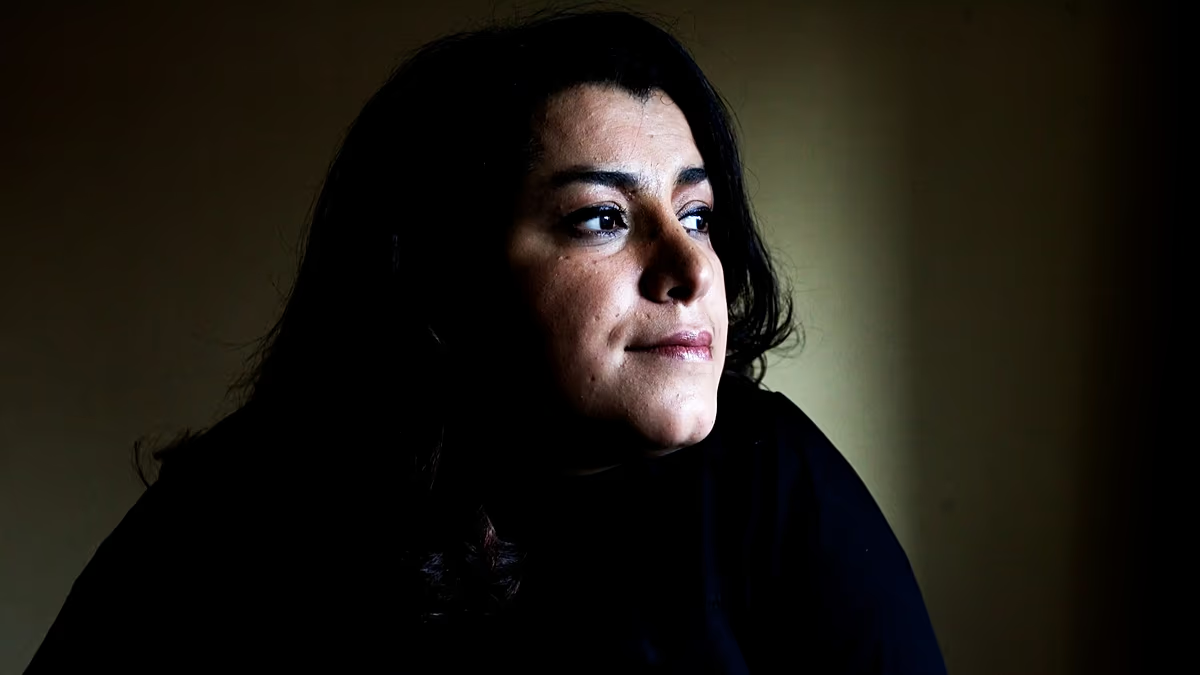
“At the end of your life there’s two things that remain: your dignity and your style,” Marjane Satrapi told The Irish Times in 2020. “I want to do a good job. That’s the only thing I’m interested in.”The Iranian film-maker and graphic novelist, who has died in France at the age of 56, stuck with that principle. She was best known for the ground-breaking Persepolis, a series of graphic novels that ran from 2000 until 2003. Depicting her early life in Iran – and later exile in Austria – either side of the 1979 Islamic revolution, the books tell grim stories of how the political changes curtailed women’s freedom, but they were also bursting with humour and vivacity. In 2007, co-directing with Vincent Paronnaud, she turned Persepolis into an adored animated film of the same name. Hugely well reviewed, it won the jury prize at Cannes film festival and secured a nomination in best animated feature at the Academy Awards. Satrapi was the first woman to be shortlisted in that category.Further acclaim arrived with films such as Chicken with Plums in 2011, The Voices in 2014 and, starring Rosamund Pike, a biopic of Marie Curie entitled Radioactive in 2020. “Marjane Satrapi died of sadness a little over a year after the death of Mattias Ripa, her husband and the love of her life,” a poignant statement from Satrapi’s family announced. Ripa, a Swedish film-maker, was known as the producer of films such as Dear Paris and La bande des Jotas.Satrapi was raised in a middle-class family in Tehran. Both parents were active in leftist politics and, following the revolution, watched as friends and family were arrested and persecuted. A rebel throughout her life, the young Satrapi, as detailed in Persepolis, was often in trouble for defying dress codes and advertising an interest in western culture. A famous image from Persepolis has the protagonist being chastised while wearing headdress and a denim jacket sporting the legend “Punk Is Not Ded”.“Suddenly it was written that women were worth half of what men are worth,” Satrapi told this newspaper. “They tell you that you are worth half of what a man is worth and you know that’s not true. And then you have to try twice as hard to show them.”Her family, aware that Satrapi needed to stretch out, eventually sent her, at the age of 14, to study at the Lycée Français in Vienna. In her early 20s she found herself selling drugs while living in a squat with eight gay men and she eventually ended up in hospital with a case of bronchitis. Satrapi returned to study in Iran, but subsequently settled in France, where she grew into a cultural figure of significant importance.[ Marjane Satrapi: ‘I did not want a monkey Madame Curie’Opens in new window ]Originally published in French, Persepolis won the Angoulême Coup de Coeur Award at the Angoulême International Comics Festival. Later, after translation into English, it got caught up in an exhausting censorship battle in the US. In March 2013, Chicago schools were ordered to remove the book from the curriculum as “it contains graphic language and images that are not appropriate for general use in the seventh grade”. Satrapi responded with characteristic vigour. “Seventh graders have brains and they see all kinds of things on cinema and the internet,” she said. In January 2025, Satrapi refused the Légion d’honneur, France’s highest honour, mentioning the “nation’s hypocritical attitude toward Iran”.Satrapi, who visited the Dublin International Film Festival for the domestic premieres of Chicken with Plums and Radioactive, was a frantic talker with an irrepressible sense of humour. “You know dear, I will live maximum another 30 years,” she told The Irish Times in 2020. “So let’s be optimistic and say I’m working for 27 years and let’s say I make a film every three years. So that means nine films. Less than I can count on my two hands. So it has to be something that inspires me.”
Marjane Satrapi: Iranian film-maker and graphic novelist ‘dies of sadness’ at 56
Satrapi was known for Persepolis, a graphic novel series later turned into award-winning film
662 words~3 min read