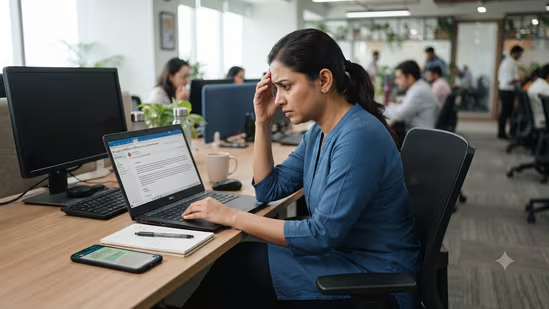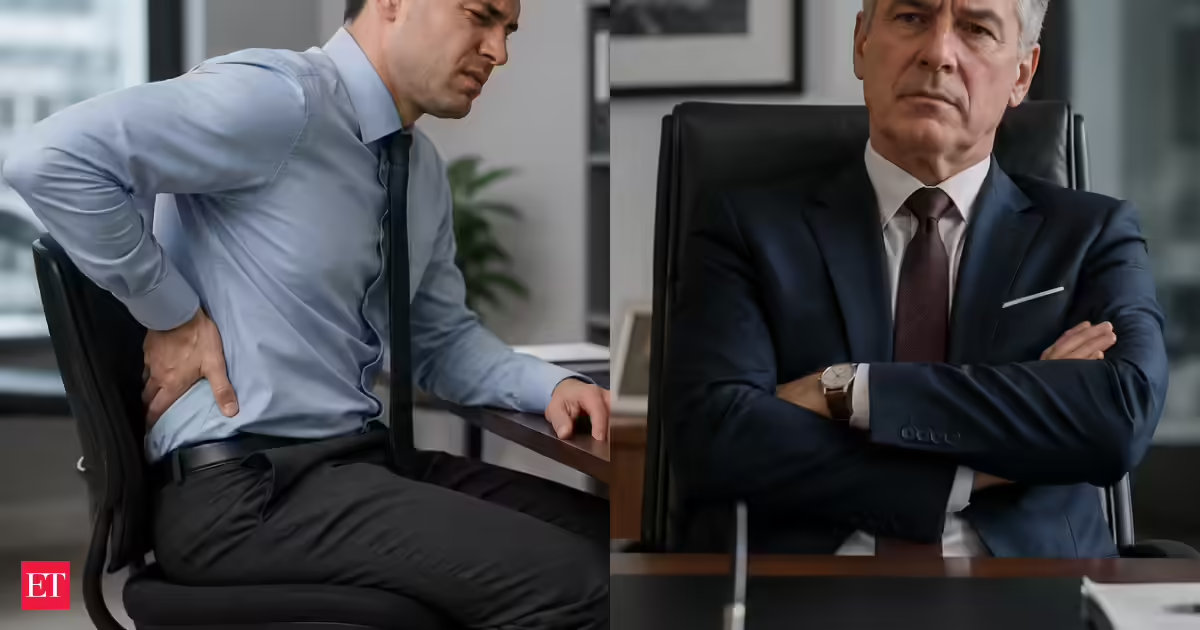
What started as one employee’s attempt to manage serious back pain turned into a weeks-long standoff with HR, a rotating list of explanations from management, and a Reddit post that has people asking: is it really worth the fight?A pain problem that wouldn’t go awayThe employee, who posted anonymously on Reddit, works in a corporate office where everyone has the same standard chair. It could be fine for most people, but for this tall employee, the thin padding and rigid backrest were causing severe lower back pain that radiated down his leg. He tried a seat cushion. It didn't work. It only got worse.So he did what many resourceful millennials would do: found a solution himself. He bought a second-hand ergonomic office chair from an online marketplace, brought it in and set it up at his desk. Problem solved, or so he thought.The chair heard 'round the officeHis manager saw it immediately. The employee got a “new chair, eh?” and then a visit from the facilities manager who explained personal chairs weren’t allowed because if he had a different chair, everyone would want one.The employee explained his back pain and volunteered to get a note from a doctor. He was told he would need to have one. That evening he scheduled an appointment, obtained the note, and sent it to his manager with HR copied in.That was when the explanations began to shift. Suddenly it wasn't about fairness. It was about vendor rules. They said all furniture had to go through an approved vendor and a replacement would be ordered. It would be six to eight weeks. He may have to work from home in the interim. He nodded, but it seemed a little unnecessary.When he looped in HR, he thought it would help. Instead, it opened a whole new front in the chair debate. Image Credits: ChatGPTThen the offer of replacement was taken back. Eventually, a chair appeared from “another facility.” When it arrived, it was the same model he had brought in himself, just a smaller size, not nearly big enough for his frame. His legs dangled off by about eight inches and the backrest didn’t even touch his shoulder blades. To add to the confusion, the chair was not even one sold by the company’s own vendor, directly contradicting their previous explanation about vendor rules.When he pointed this out and told them it would cause the same pain as the original chair, management told him to use it for a week to “see how it felt.” He pushed back. Finally, they let him back into his own chair for one more day, anyway, and said they would “discuss it further.”Why this matters beyond one Reddit postWhat makes this story resonate with so many people is not just the absurdity of the bureaucratic back-and-forth. It's that the stakes are real.A systematic review published in the journal BMC Musculoskeletal Disorders found that ergonomic chairs, especially those that support the natural curves of the spine, can play a meaningful role in reducing pain in the back, neck, and shoulders. For someone already having shooting pain down their leg, the difference between a properly fitted chair and one that isn't is not a matter of comfort; it is a matter of injury.The wider picture is just as striking. According to a peer-reviewed meta-analysis published in the Journal of Clinical Medicine, one-third of all workplace injuries in the United States are musculoskeletal disorders, costing employers an estimated $50 billion annually in compensation and lost productivity. Permitting an employee to use a chair that avoids that sort of injury is not a benefit; it’s a practical business decision.They went through weeks of excuses to deliver a chair that was somehow worse than the problem. Image Credits: ChatGPTThe changing story and what it meansWhat most frustrated commenters was not that the company had a policy. It’s that the policy kept changing. First it was a matter of optics. Next, vendor contracts. Then, “personal assets.” None of the explanations held up under scrutiny, especially when the replacement chair wasn’t even bought from the vendor they claimed it was, and when personal items like desk decorations were still perfectly fine to have in the office.For employees, this kind of moving-target management erodes trust fast. And for a generation of workers who are increasingly asking that their workplaces take their physical wellbeing seriously, it’s a telling message about priorities.The employee concluded his post with a blunt question asking if he was wrong “for taking it this far?” The comments and the evidence give a pretty resounding no verdict. It's a chair and it matters.
An employee requested an ergonomic chair for severe back pain, but his toxic boss treated the request like a 'code red' violation
An employee faces a standoff with HR and management after requesting an ergonomic chair to alleviate severe back pain, revealing the broader implications of workplace wellness and bureaucracy.
767 words~3 min read