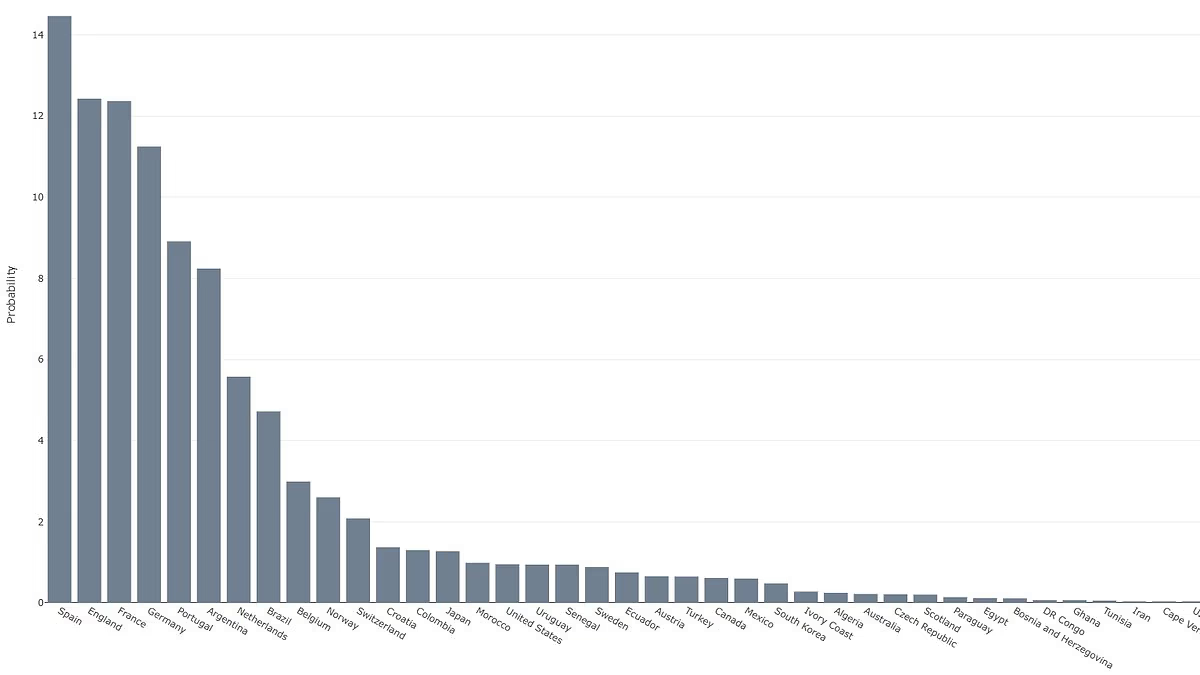
The FIFA World Cup is just a matter of weeks away now, with matches set to be held in Canada, Mexico and the US from June 11 to July 19. Now, scientists have revealed which teams are most likely to take home the trophy. Experts from the University of Innsbruck have calculated the chances of winning for all 48 participating teams. And their findings will come as good news for Spain fans. According to the researchers' calculations, Spain is the favourite, with a 14.5 per cent chance of winning the tournament. However, England fans will be relieved to hear that England is close behind (12.4 per cent), just ahead of France (12.4 per cent) and Germany (11.2 per cent). 'Compared to previous tournaments, this year's title race is very tight,' said co-lead author, Achim Zeileis. In contrast, Jordan is the least likely to win the World Cup, according to the researchers – while Scotland has just a 0.2 per cent chance of winning.
Experts from the University of Innsbruck have calculated the chances of winning for all 48 participating teams According to the researchers' calculations, Spain is the favourite, with a 14.5 per cent chance of winning the tournamentTo come up with the odds, the researchers used a broad range of data. This included the teams' performance in past international matches, bookmaker odds for the upcoming tournament, player ratings from club and international matches and the average market value of the squads.This information was then combined using a machine learning algorithm.'More specifically, the algorithm estimates the predicted number of goals for all possible matches between all 48 teams in the tournament,' the researchers explained. The algorithm reveals that Spain, England, France and Germany are the clear favourites to win the tournament. Somewhat further back are Portugal (8.9 per cent), and Argentina (8.2 per cent), as well as the Netherlands (5.6 per cent) and Brazil (4.7 per cent). At the other end of the list, the algorithm suggests Jordan are the least likely to win, ahead of Qatar, Iraq, South Africa and Curacao. The researchers highlight that the forecasts are probabilistic, and are 'by no means certain'.