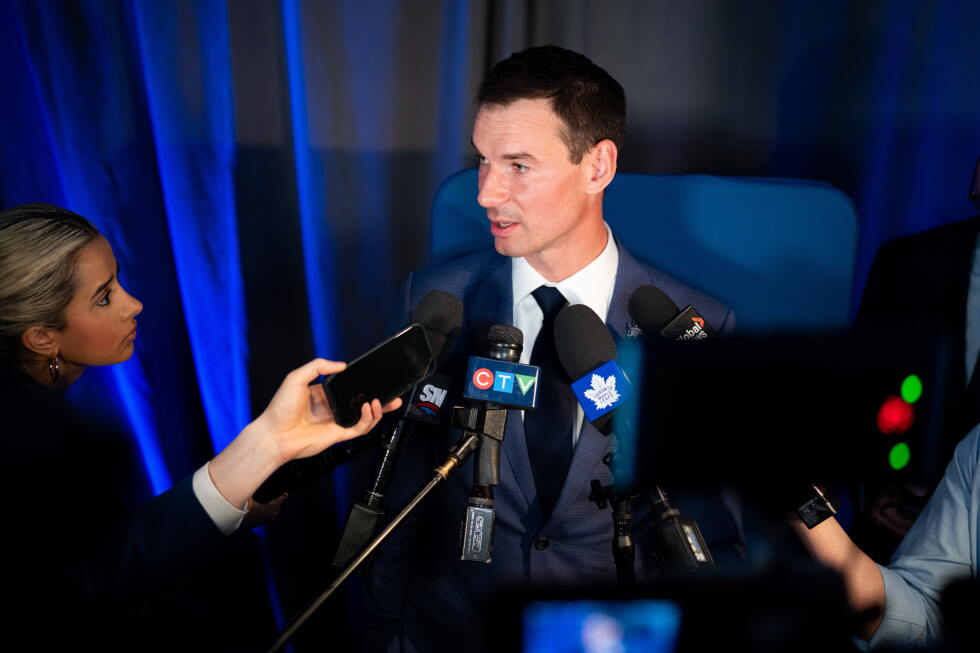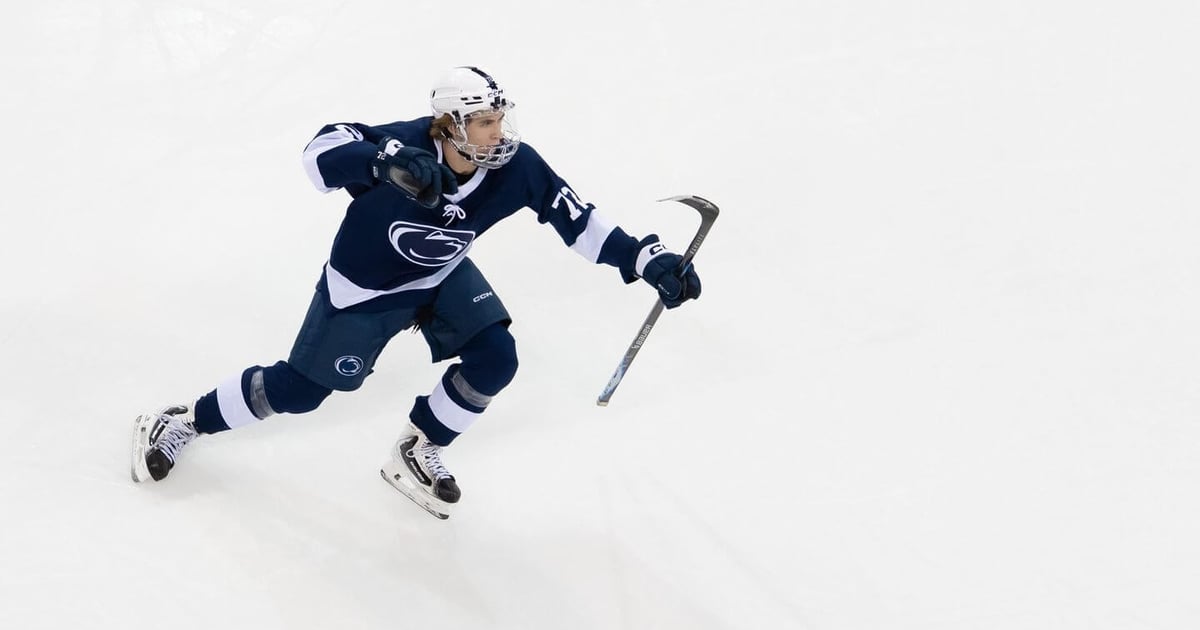
On June 26, when the 2026 NHL Draft begins, the future of the Maple Leafs will be dramatically altered.Exactly how, though, remains up for debate.The Leafs won the draft lottery and hold the first pick. In contrast with many previous drafts, there is diverging thought as to what the team will do. There is a presumptive No. 1 in Gavin McKenna, but there is also no Macklin Celebrini or Connor McDavid in this draft: a clear-cut, slam-dunk No. 1 pick that can change the course of a franchise.The Leafs are also in a different place than most teams that pick No. 1: they are not starting from the ground up and looking to rebuild their team around one player. That’s what makes the decision fascinating.With the draft now on the horizon, we’ll be making the case in a series of stories for three different players: McKenna, Ivar Stenberg and Chase Reid. We’ll be looking at each player through a Leafs-specific lens while also considering the case against drafting each player, with final thoughts from draft expert Corey Pronman.One year ago, NHL scouts just had to sneak in the same question with Kyle Raftis.Teams were calling the Soo Greyhounds general manager almost daily about Brady Martin, their tenacious centre who would end up going fifth in the 2025 NHL Draft. The best scouts understood Martin’s strengths, but were curious about another up-and-comer born just 2 ½ months after the 2025 draft’s cutoff date, also playing for the Greyhounds.“So,” Raftis said, his voice rising to mimic a curious scout, “where do you think Chase Reid would go in this draft?”Early in the 2024-25 OHL season, it would have been silly for any scout to even ask that question. Reid was a growing defenceman who had begun the year with the Bismarck Bobcats of the NAHL, a second-tier junior league. He could fly on the ice, sure, but his profile didn’t scream high draft pick.Yet day by day after Reid moved north to the Soo and began his OHL career, his game improved. The Greyhounds were losing defenceman Andrew Gibson to Canada’s World Junior team. The organization thought about going after a veteran defenceman to fill that hole in their roster and stay competitive. Instead, Reid became available and they took a flier on the seventh-round pick in the 2023 OHL Priority Selection.Development not being linear, Raftis would shake his head at how quickly Reid began ascending.“Every game, it was like, ‘Let’s throw more at him,’” Raftis said, “because every day he came in with a smile on his face and just wanted more. More video, a tougher assignment.”The hockey world’s attention didn’t come to Reid en masse. In his first draft ranking of the 2025-26 season, The Athletic’s Corey Pronman had Reid as an honourable mention, outside his top 18 players.Yet the way Reid’s game and development took off this season suggests he might be at the beginning of a special trajectory as a two-way, minutes-munching, right-shot defenceman who can lead a blue line for years to come.For as long as anyone in Toronto can remember, one question pops up regularly: How can the Leafs finally acquire a premier top-pair defenceman, the kind many Stanley Cup-winning teams seem to have? It’s one of the most desirable player types in all of hockey, after all.The steps Reid has taken in a short period suggest he could have a tantalizing future as the productive No. 1 defenceman the Leafs have lacked for generations.“There’s a lot of hype around a lot players at younger ages. There’s always a lot of debate on ‘when is development done?’ Some believe it’s never done. Some believe you top out,” Raftis said. “With Chase, every year he’s been able to take another huge leap. And it’s not because he’s been far off, but even with his physical maturity, which is still coming, what excites me the most is every time you fast-forward six months, he’s taken huge steps.”Though there is still further evolution necessary in his game, what Reid is now should be incredibly attractive to the Leafs: an elite combination of brains, size and skating ability.“Those things are hard to teach,” Raftis said.Reid can drive play with his elite skating. His hands and hockey IQ suggest he could be a top-end point producer in the NHL. Reid’s 1.07 points per game in the OHL this season were tops among all undrafted 18-year-old defencemen.Reid generates offence from all areas of the ice. His shot is powerful and he loves to rip a puck from anywhere, and his mobility and work ethic makes him remarkably competitive in all areas of the ice. His 6-foot-2 frame allows him to protect pucks. How often does any NHL team get a chance to tick so many boxes in a player with franchise defenceman upside? And how long have the Leafs coveted a defenceman like Reid?The Leafs might consider Reid because of the man running the draft: director of amateur scouting Mark Leach. This will be Leach’s second draft for the Leafs. Both his picks last year and those in the past with the Detroit Red Wings and the Dallas Stars generally have a common thread; Leach is willing to gamble on a player with a longer development path if he believes the payoff will be immense.That’s Chase Reid.While Stenberg and McKenna would likely jump into the NHL next season, Reid would very likely return to the OHL, lead the Greyhounds in all situations and be a force on the United States World Juniors team.Maybe the Leafs’ desire to compete for a playoff spot next season — which could be bolstered by McKenna or Stenberg — outweighs the desire to take more of a long-term project like Reid. For Reid to be considered ready for the NHL, more defensive improvements and more size need to be added. It’s also generally easier for forwards to jump into the NHL than it is for defencemen. Some seasoning in the AHL shouldn’t be considered out of the question either.“For somebody like (Reid), like any of the prospects in this range, we’re talking about, ‘What can they get to?’” Raftis said. “With (Reid), we’re probably talking about how we’re not even seeing him close to his full potential yet.”What might make Reid so valuable to the Leafs is his rarity. Yes, McKenna and Stenberg could become productive first-line wingers. It is still far easier to acquire scoring wingers than it is first-pair defenceman. NHL teams hold onto those players for dear life. Those players can be the catalyst on Stanley Cup-winning teams.Instead of wondering every season how to acquire a key piece of the Stanley Cup puzzle — and giving up prime assets as the Leafs have done for Jake Muzzin and Brandon Carlo — the Leafs have a prime opportunity to add, and then mould, that defenceman now.The cost would be turning away from the likes of McKenna and Stenberg.Consider the teams that have lapped the Leafs in the Atlantic Division. It was possible to see these teams coming from a mile away: Rasmus Dahlin bloomed into one of the very best defencemen in the league in the playoffs with the Buffalo Sabres. The Montreal Canadiens can boast about having Lane Hutson and Noah Dobson on a pair.The Leafs cannot boast. And if they’re being honest with themselves, they haven’t been able to for too long.Reid’s character makeup suggests he could do well in a market with different expectations than most in the NHL.“(Reid) doesn’t have a big ego but he’s extremely confident and I think he’s somebody that knows what he is, knows what brings to the table,” Raftis said. “His family’s very grounded. He just has that blind belief that things are going to work out for him.”Raftis saw virtually nothing this season that suggested moving to a Canadian market would rattle Reid. Consider that another box ticked when it comes to what makes Reid potentially desirable to the Leafs.“(Reid) just continues to elevate his game and has a belief,” Raftis said. “Obviously, when you’re under the microscope, that comes into effect way quicker.”The case againstOf course, drafting for position this high in the draft can be a risky proposal. The players bypassed by teams who do draft for position are often high-end if not outright elite. The case against Reid is less about him — the Leafs would have been thrilled to get him had they stayed in the No. 5 spot — and more about the opportunity cost.And so perhaps the way forward for the Leafs when it comes to Reid is to get creative. Is there a way to trade down in the draft, acquire another asset or two and still land Reid?Could the Vancouver Canucks be sold on adding McKenna, the franchise star they need, if it means giving up their third pick plus other assets? If Reid is then available at three, could the Leafs leave Day 1 of the draft with both a possible future franchise defenceman and other premium future players?You could make a case that by doing cartwheels to select Reid, the Leafs may be complicating the gift of winning the No. 1 pick. Of course, that would be overlooking Reid’s potential.“(Reid) just keeps passing people around him,” Raftis said. “There are always things that are really hard to predict with players because sometimes it can happen quickly, sometimes it takes an adjustment period. But he’s a sponge. He wants to please his coaching staff, he want to be there for his teammates, but it’s the way he can just elevate himself and putting in that work that’s been really impressive.”Pronman’s take: Reid is a talented defenceman with a lot of offensive tools. He has the speed, hands, vision and shot to generate chances and be a leading scorer for an NHL team. Reid can create in transition and off the blue line with his feet and creativity, showing high-end improvisation skills. Reid isn’t overly physical, but he works hard enough and makes plenty of stops due to his reach, feet and compete level even while playing an aggressive style of play offensively. He projects as a major-minutes NHL defenceman who can run a first power play.
Maple Leafs draft decision: The case for Chase Reid
A quick riser in draft rankings, Chase Reid might have a tantalizing future as the No. 1 defenceman the Leafs have lacked for generations.
1,700 words~8 min read