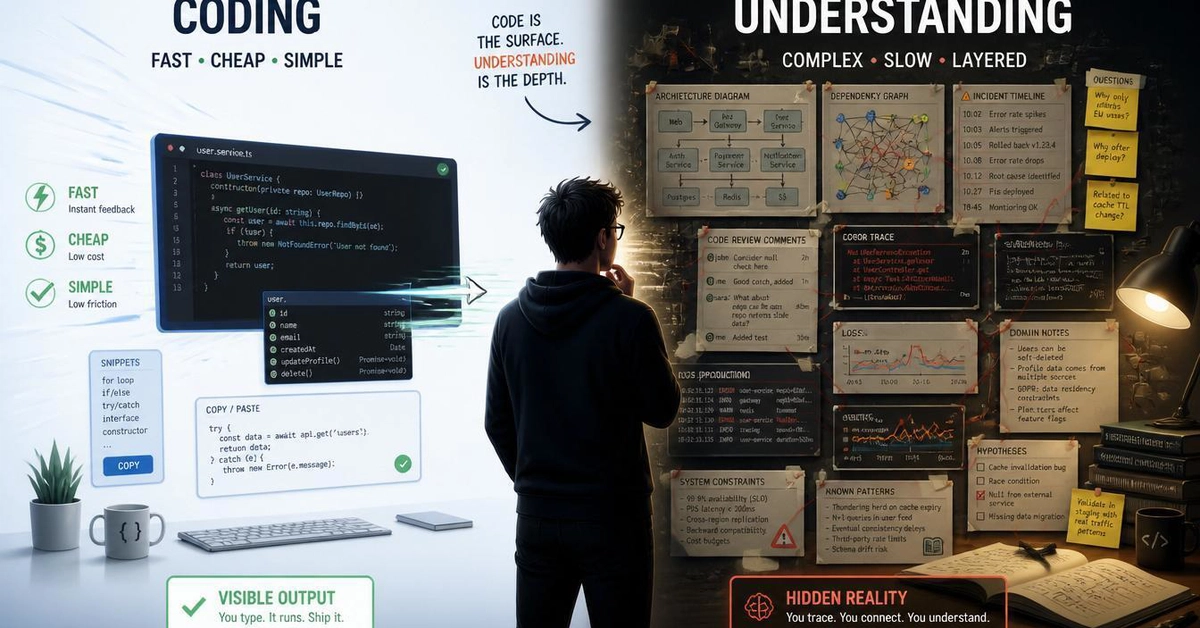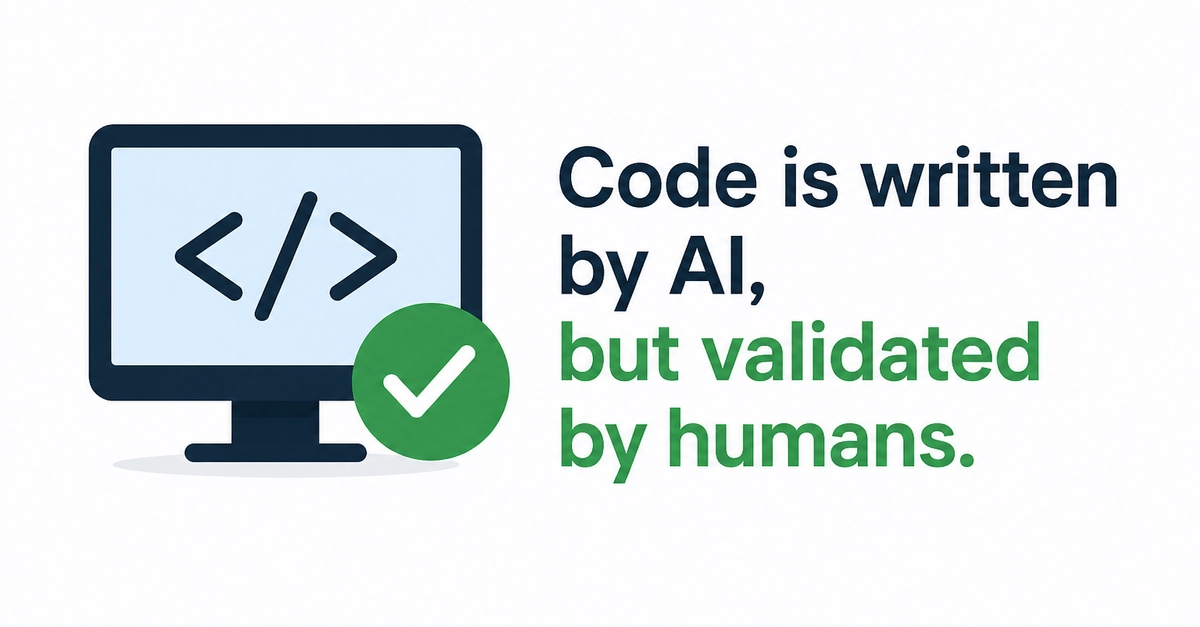
AI has made writing code faster than ever. The harder work is understanding a system and changing it without breaking it. That has not gotten cheaper, and it now decides how much you can hand to a machine.
Introduction
In 1987, in an essay called “No Silver Bullet,” Fred Brooks predicted that no tool or technique would bring a tenfold gain in software productivity within a decade [1]. The decades since have largely proven him right, and the reason is that his argument never rested on the technology of its day. Brooks split the difficulty of building software into two kinds. Accidental complexity is the incidental effort our tools impose: syntax, boilerplate, plumbing. Essential complexity is what the problem itself demands: working out what the system must do, and designing a structure that holds up as it grows. Tools, he argued, only ever chip away at the accidental. The essential is left untouched, and the essential is most of the work.
AI coding assistants are the most effective attack on accidental complexity yet. They write a function or scaffold a whole test suite in seconds, and they have made the mechanical parts of programming cheaper than ever. That has encouraged a conclusion repeated often enough to sound obvious: code is cheap now, so the code itself barely matters. Describe what you want, let the model generate it, and when something breaks, change the description and regenerate.