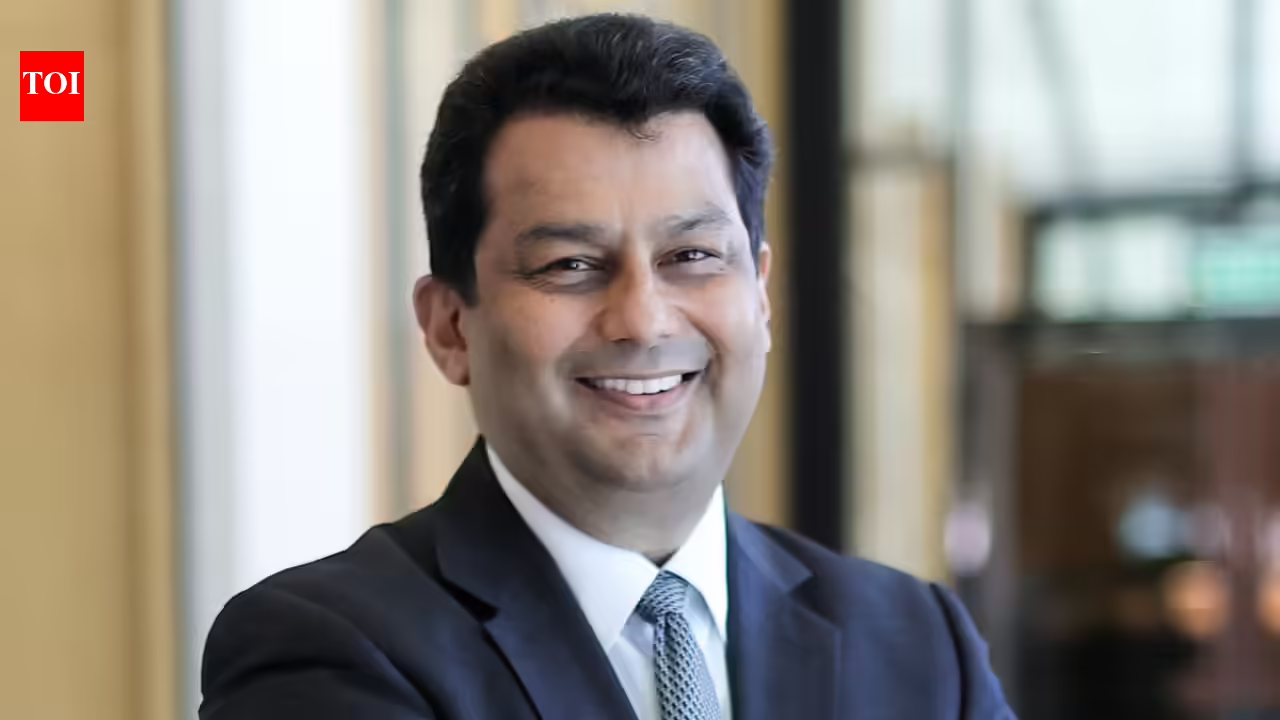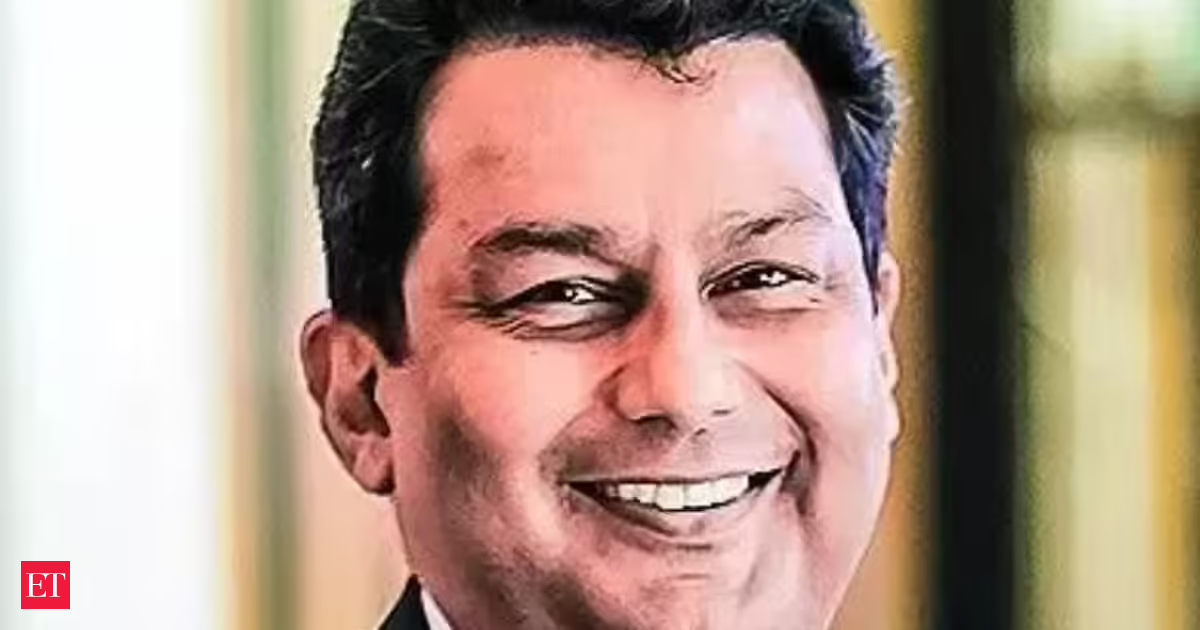
Global investors continue to view India as an attractive long-term destination despite periodic market volatility and a challenging external environment, according to Bank of America's India chief Vikram Sahu.Sahu said corporate and strategic investors have largely maintained their commitment to India, underpinned by confidence in the country's economic scale, growth trajectory and institutional framework.In an interview to ToI's Mayur Shetty, Sahu noted that long-term investment decisions are being guided more by structural opportunities than by short-term market fluctuations.Investor engagement also appears to be improving, Sahu said. Participation at Bank of America's flagship India-focused investor conference rose sharply this year, reflecting renewed interest among global investors evaluating opportunities in the country's equity and corporate sectors, he added.Also read | Why Amazon has struggled to crack IndiaAccording to Sahu, many investors are reassessing valuations and considering whether current market levels present a more attractive entry point compared with the elevated valuations seen over the past two years.Foreign institutional investor (FII) ownership in Indian equities has fallen to multi-year lows, but Sahu attributed much of the decline to valuation concerns rather than any deterioration in India's underlying economic prospects.He said Indian markets had traded at a substantial premium to historical averages around 18 months ago, prompting investors to become more selective and cautious.The valuation challenge coincided with a series of external developments that clouded sentiment, Sahu said. These included uncertainty surrounding global trade arrangements, tensions in West Asia that affected energy markets, and questions over how advances in artificial intelligence could reshape growth expectations across emerging markets, including India, he observed.Also read | The rupee warning: Six actions for business leadersAccording to Sahu, such periods of investor recalibration are a normal feature of market cycles. As valuations become more reasonable and macroeconomic conditions stabilise, capital tends to return to markets supported by strong fundamentals.He pointed out that concerns related to global trade have eased in recent months following progress on several trade agreements, including developments involving the United States. Trade flows have remained resilient despite geopolitical disruptions, helping maintain confidence in the broader economic outlook.However, Sahu identified the situation in West Asia as a significant source of uncertainty for global investors. Any improvement in regional stability could provide a meaningful boost to sentiment, while a prolonged conflict could continue to weigh on markets through its impact on energy prices and global risk appetite.From a banking and investment perspective, Sahu sees considerable opportunities emerging from India's manufacturing ambitions. Manufacturing currently contributes about 15% to the country's gross domestic product, well below the government's long-term aspiration of increasing the sector's share to 25%.He said the gap should be viewed as an opportunity rather than a weakness, highlighting electronics manufacturing as one area where India has demonstrated rapid progress in recent years. Continued expansion in manufacturing could create significant investment opportunities across supply chains, infrastructure and financial services.On equity markets, Sahu said foreign investors are increasingly focusing on companies with strong governance standards, sustainable earnings growth and durable competitive advantages. While selective inflows have already resumed, a broader return of foreign capital will likely depend on two factors: greater clarity on geopolitical developments in West Asia and the conclusion of the ongoing earnings downgrade cycle.He added that domestic liquidity continues to provide strong support to Indian capital markets. Robust demand for initial public offerings and sustained participation from domestic investors have helped maintain market activity even as foreign investors remain cautious.As earnings expectations stabilise and global uncertainties recede, India could once again attract larger and more durable foreign capital flows, he said.
India a strong long-term bet despite everything, says BofA India chief
Global investors see India as a strong long-term investment choice; despite market ups and downs, confidence in India's economy remains high, says BofA India CEO Sahu. According to him, manufacturing expansion offers significant investment potential.
586 words~3 min read