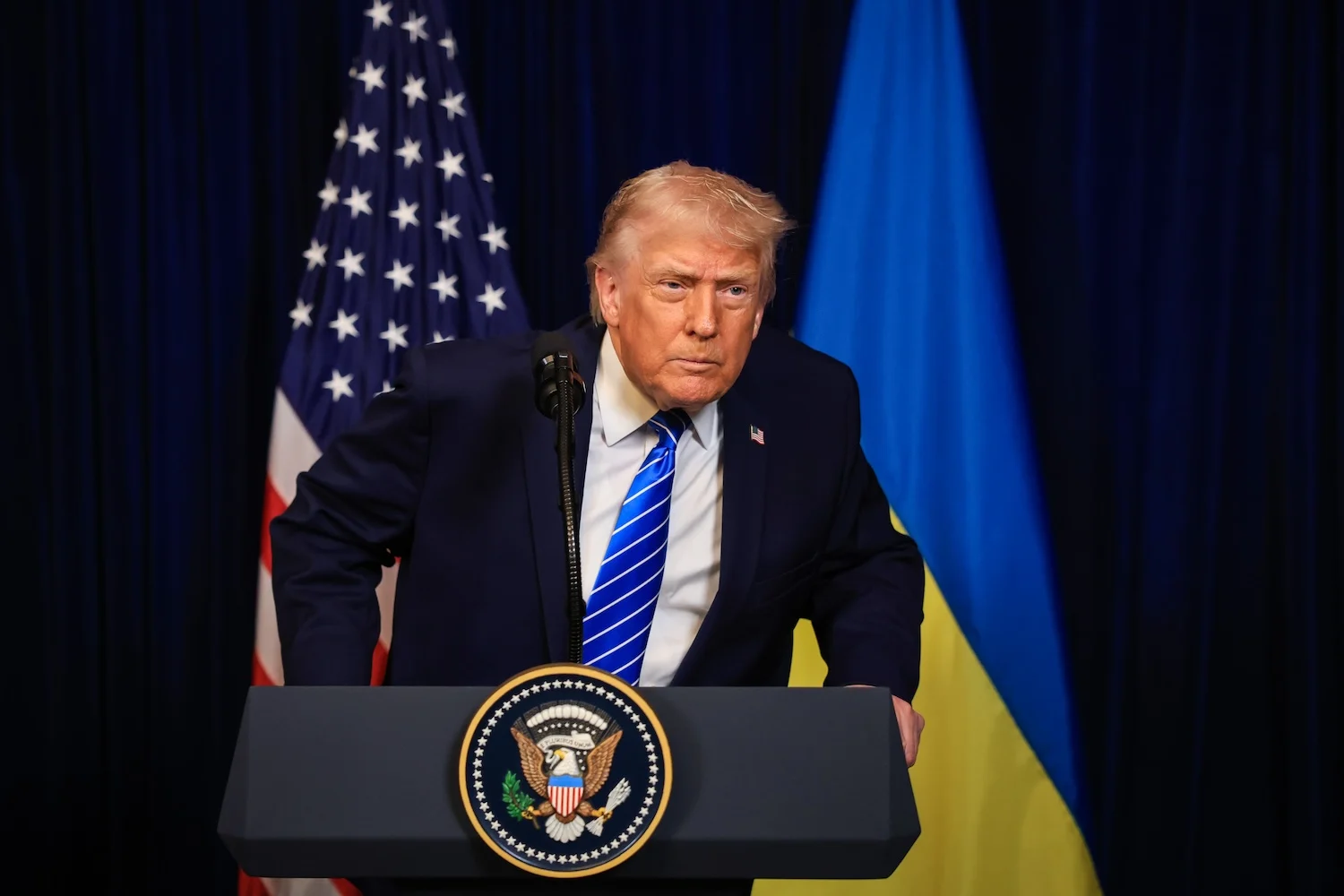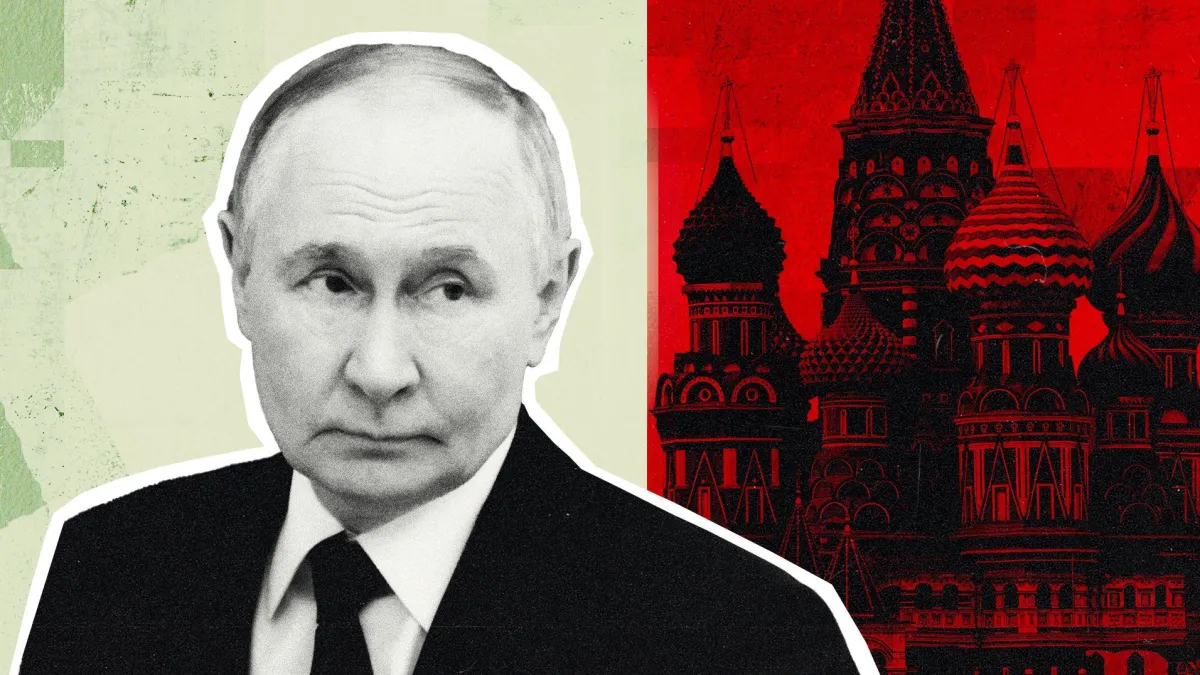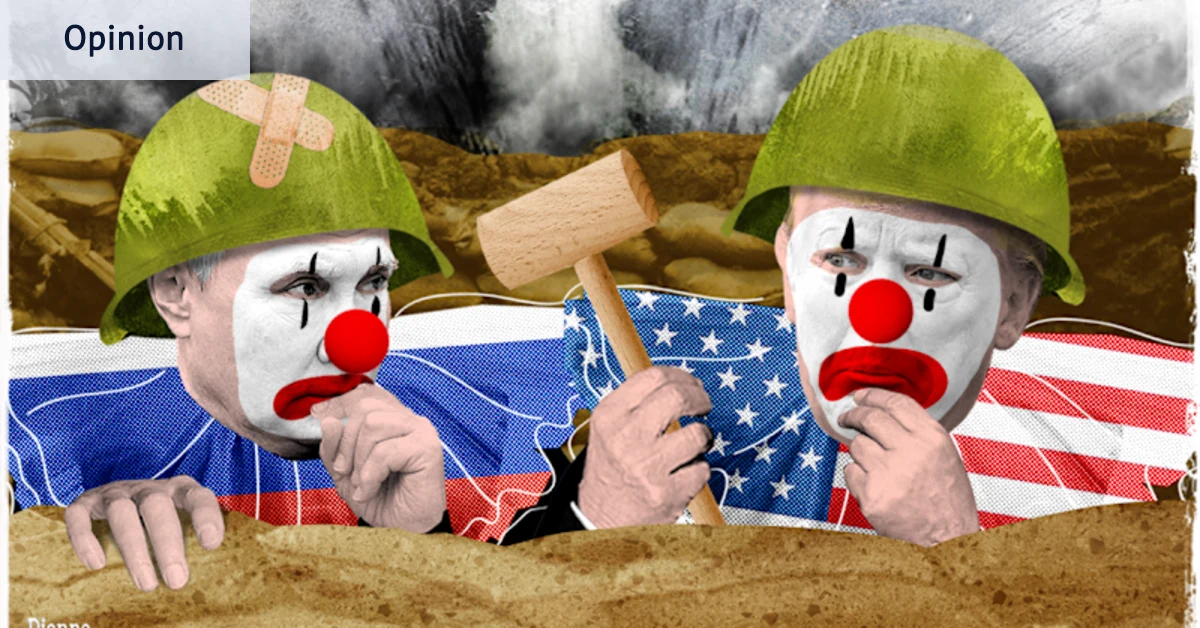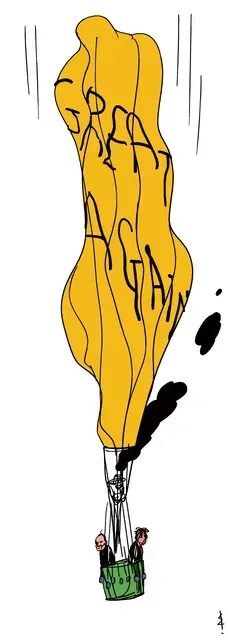
Illustration by Kim Dae-jung.
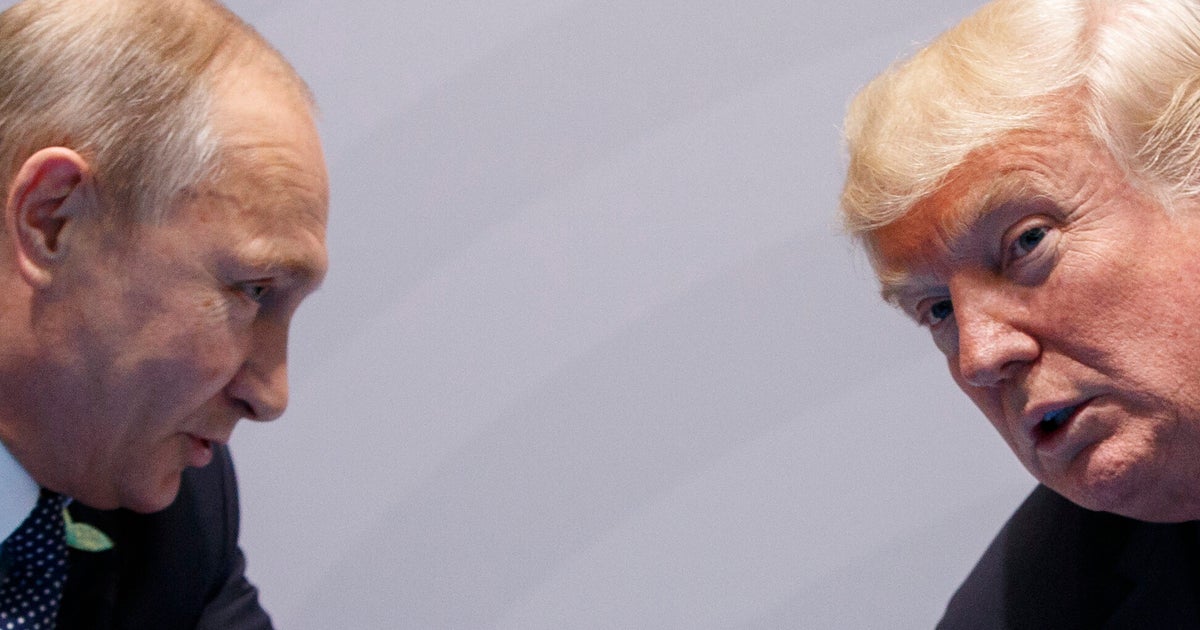
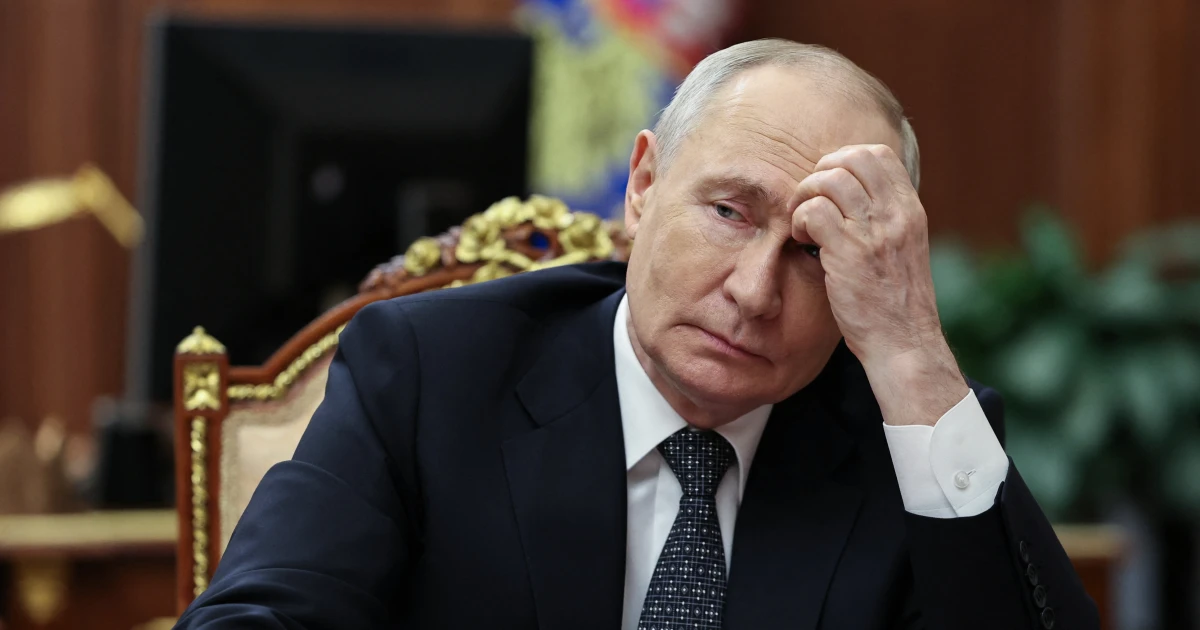
By Pak Noja (Vladimir Tikhonov), professor of Korean studies at the University of OsloVladimir Putin, born in 1952, is younger than Donald Trump, born in 1946. But in terms of his political career, Putin, who became president of Russia in 2000, has clear seniority.Long before Trump built the MAGA movement, Putin was working overtime to “make Russia great again.” His goal is restoring great nation status to Russia, which deindustrialized and lost its superpower credentials after the collapse of the Soviet Union. His project has been in motion for over two decades now.Now that time has passed, we can offer some predictions about how Putin will be judged by history. It’s true that the Russian economy has seen modest growth, its military power has expanded, and its bureaucracy has been upgraded. Nevertheless, Putin has failed to orchestrate a recovery from the collapse of the Soviet Union and the turmoil of the 1990s.First, in the area of values, the Soviet Union was a society that prioritized equality. To be sure, that value was never perfectly achieved, but the Soviet Union had a decent Gini coefficient in its later years, on the level of Sweden.But today, the wage gap has grown nearly as wide as in the US. In terms of concentration of wealth in the top 1%, Russia’s inequality is even worse than that of the US.Instead of redistribution and equality, the Russian government preaches militant nationalism and “traditional values.” But these retrograde ideas are generally ignored not only outside of the country, but even by Russian youth. In terms of soft power, there’s simply no comparison between Russia and the Soviet Union, which enjoyed the halo effect of its revolutionary past.Second, on an economic and social level, the chaos of the 1990s had a catastrophic impact not only on the manufacturing sector inherited from the Soviet era but also on Russia’s scientific establishment, which had at one time rivaled that of the US.Over the past 26 years, Russia’s manufacturing sector has not recovered — if anything, manufacturing’s share of GDP has slid from 15% to 14%. The country’s scientific sector has also been mired in chronic stagnation and decay since the traumatic 1990s.In raw numbers, Russia has fewer researchers than Korea, and its total research budget (converted into purchasing power) is less than half that of Korea. A comparison with China or the US would be completely out of the question.Third, given its failure to reverse these long-term declines, the current Russian regime has sought to assert its “dignity” both at home and abroad and win the people’s hearts through military victories since the late 2000s.Initially, some of those military operations — such as the annexation of Ukraine’s Crimean Peninsula in 2014 — seemed to be a success.But successful military operations against weaker neighbors made Moscow overconfident and led to a disastrous miscalculation of its prospects in the all-out war it initiated against Ukraine in 2022. An imperialist war of aggression only served to unite Ukrainian society against Russia and ironically bolster its resistance with aid from the West.During the four years of its quagmire in Ukraine, Russia has sacrificed countless lives, spent huge sums of money, forfeited international prestige and squandered the opportunity for development in nonmilitary areas. This unjustifiable war has caused a slump verging on a rapid collapse.To be sure, simple comparisons between the US and Russia are not very meaningful. They’re not on the same level in terms of their economic scale or international standing.But that said, Trump today is repeating all the errors of the Putin administration. If the US holds that course, its ultimate destination will be a swift decline reminiscent of what we’re seeing in Russia today.First, in terms of values, the US has been a society that advocates openness and seeks to attract talented people from countries around the world. It’s not a perfectly open society, to be sure, but a remarkable 15% of American citizens are first-generation immigrants born overseas.The fact that around half of start-up entrepreneurs in Silicon Valley are foreign-born shows that American openness has played a key role in the country’s economic development.But as a result of Trump’s hard-line anti-immigrant policies, there were more emigrants leaving the US last year than immigrants entering the country.In effect, Trump is hacking away at a central pillar of the US economy and society. Like Putin, Trump advocates militant nationalism and “traditional values” rather than openness. But even in American society, MAGA devotees are ultimately the minority. When it comes to soft power outside the country, Trump’s America has essentially thrown in the towel.Second, on an economic and social level, the US’ gradual decline meant the hollowing out of the manufacturing sector and a narrowing gap with China in the latest tech advances.Because of the confusion and mishandling of Trump’s steep tariffs, the crisis in the US’ manufacturing sector has only worsened, with close to 100,000 jobs evaporating last year alone.The US continues to lose ground to China in advanced technology and science as a result of cuts to research budgets under the Trump administration. China has 42 of the world’s top 100 universities for science and technology, compared to 36 in the US.Third, after radically accelerating the US’ long-term decline, the Trump administration is attempting to distract the public from his failures with military victories.Initially, the US’ daring kidnapping of the president of Venezuela in January looked like a success.But this successful military operation against a weaker neighbor made Trump overconfident and led to a disastrous miscalculation of his prospects in his subsequent attack on Iran. An imperialist war of aggression served to unite Iranian society against the US.Unable to reclaim the Strait of Hormuz from Iran or defend its allies in the Gulf, the US’ unjustifiable war has caused a slump verging on a rapid collapse.Putin and Trump have sought to compensate for Russia and the US’ respective crises in capitalism through an expansion of the military sector. Both have espoused traditional values and embraced militant nationalism. Both have suffered international humiliation through their failed attempts to circumvent internal crises through war.Both are apathetic or hostile to scientific research. Neither have ever cared about the actual items on humanity’s future agenda, such as the climate crisis.Both are focused on the past rather than the future. Both are driving their countries even further into decline despite their rhetoric about returning to greatness.Both Russia and the US have been tracing a downward curve over the past few years, and the slope of that curve has recently gotten much steeper.And barring the emergence of political resistance at the grassroots level, both countries will face recurring tragedies in the years to come.Please direct questions or comments to [english@hani.co.kr]