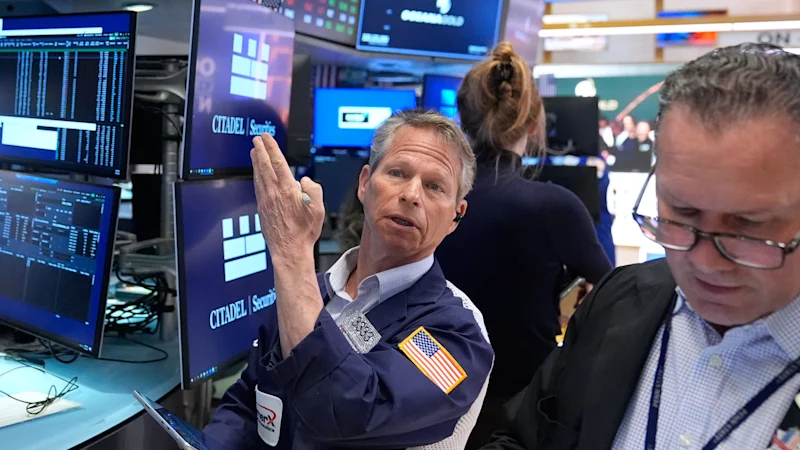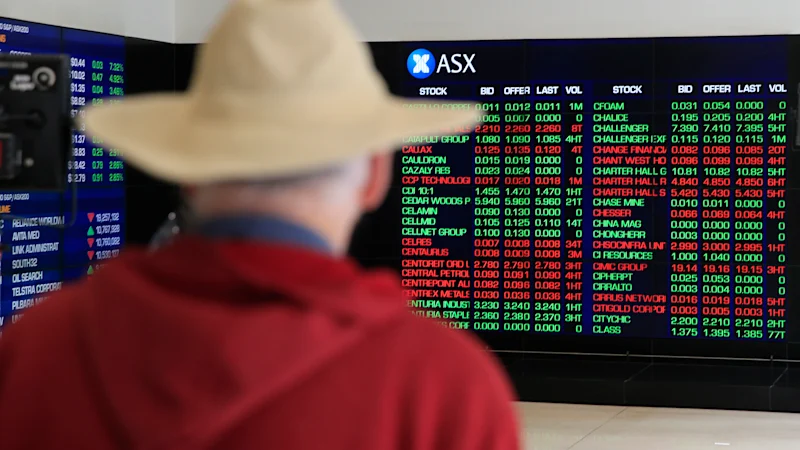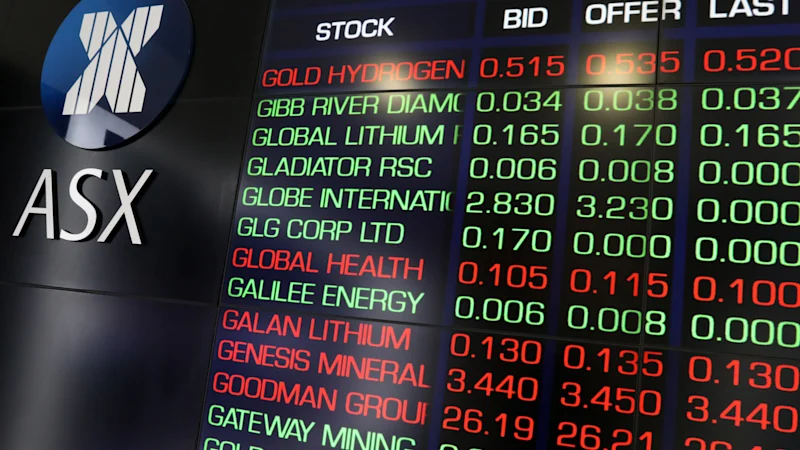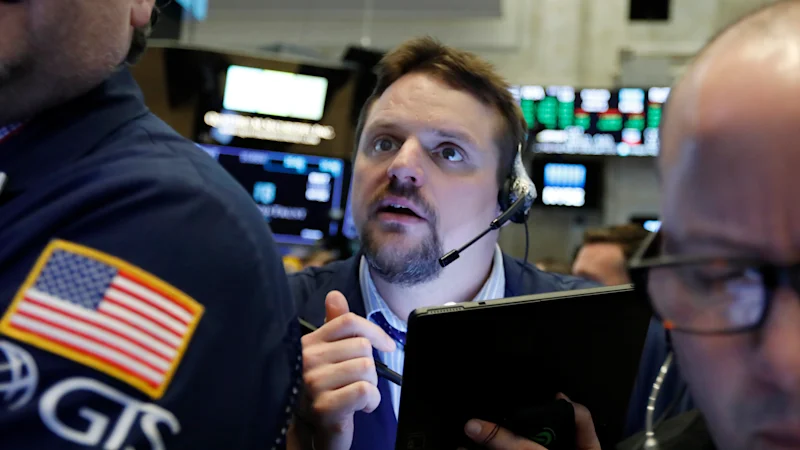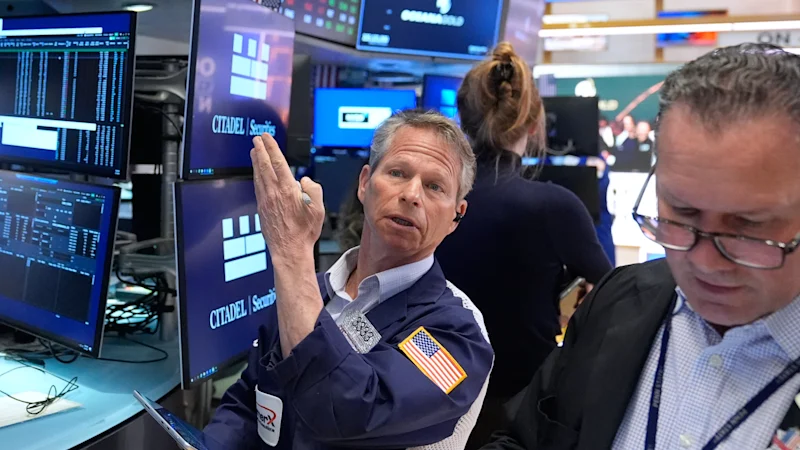
Staff writersUpdated June 4, 2026 — 5:11pm,first published June 4, 2026 — 5:20amThe Australian sharemarket fell on Thursday as iron ore prices hit a two-month low after a report showed exports from Guinea’s Simandou project, dubbed the Pilbara Killer, have surged last month, weighing on the local mining giants.Investors also had jitters over the latest flare-up in fighting in the Middle East, the Trump administration’s new 12.5 per cent tariff on Australian exports and a weak forecast from US chipmaker Broadcom, which dented the AI-fuelled enthusiasm for tech stocks.The S&P/ASX 200 slumped 99.60 points, or 1.1 per cent, to 8686.10, with six of its 11 industry sectors in the red. The losses come after the ASX added 0.7 per cent on Wednesday. The Australian dollar traded at US71.34¢.Wall Street’s winning streak has ended, setting the tone for Thursday’s session on the ASX.APInvestors had expected the ASX to follow the weak lead of Wall Street, where the S&P 500 fell from its all-time high overnight after oil prices jumped again amid fears an escalation of hostilities between the US and Iran will hinder prospects for a peace deal. Kuwait and Bahrain also got caught up in one the most serious flare-ups since a ceasefire went into effect in April.The developments followed days of rising tension, including over Israeli operations against Hezbollah in Lebanon, that threatens to derail US-Iran talks. However, oil prices eased after the close of Wall Street as Washington said Israel and Lebanon have agreed to a ceasefire, which would remove a key sticking point in the peace talks with Tehran. West Texas Intermediate traded around $US97 a barrel, while West Texas Intermediate was near $US96 after rising almost 10 per cent.While oil prices let up, local investors were also watching the latest developments in Donald Trump’s trade war on the rest of the world, including Australia. Since the US Supreme Court struck down Trump’s global tariffs in February, his administration has been working to reconstruct them, exploring legal options that would let them build back the wall of tariffs on imports into the US.After the close of markets on Wednesday, the Trump administration unveiled part of its Plan B: a tariff of 10 per cent to 12.5 per cent on 59 countries and the 27-member European Union. The levies were intended to pressure governments that the US claims have not enacted or enforced laws against trading goods made with forced labour. Those tariffs could go into effect as soon as July.Prime Minister Anthony Albanese has called the fresh tariff threats “unjustified” as he defended Australia’s slavery response.Mining stocks led the day’s losses, with the iron ore heavyweights slumping heavily after a report showed exports from Guinea’s Simandou iron ore project surged in May, six months after its first shipment to China. It marks a milestone in the ramp-up of the high-grade mine that has the potential to reshape the global market and take business away from the Australian miners. BHP and Rio Tinto both lost 3.3 per cent and Fortescue slumped 4.1 per cent.Gold miners were also lower, with Northern Star Resources plunging 6.1 per cent and Evolution Mining losing 3 per cent.Technology stocks were sold down after US semiconductor maker Broadcom delivered a disappointing forecast for artificial intelligence chip revenue, testing the durability of the AI rally that has powered global markets, especially tech stocks. Software makers Xero, WiseTech and Technology One finished down 4.2 per cent, 2.9 per cent and 1.9 per cent, respectively, while family-tracking app Life 360 tumbled 4 per cent.The big four banks were also lower, weighing on the broader market. CBA shed 0.6 per cent, Westpac slid 1.7 per cent, National Australia Bank dropped 0.6 per cent and ANZ Bank slipped 0.5 per cent.On the flip side, energy stocks benefited from the recent uptick in oil prices. Oil and gas giants Woodside and Santos were up 0.3 per cent and 0.8 per cent, respectively, while refiners Ampol and Viva Energy rose 4.1 per cent and 2.2 per cent. Alternative fossil fuel provider Yancoal gained 2.7 per cent.Treasury Wine Estates pulled consumer staples higher after the winemaker said it would rationalise more than half of its portfolio of brands amid a new strategy to simplify the business and invest in fewer, stronger brands such as Penfolds and Squealing Pig. Its shares soared 13.1 per cent, with its halo also boosting bottle shop owner Endeavour Group, which gained 3.8 per cent.In New York trading overnight, the S&P 500 fell 0.7 per cent for its first drop in 10 days. The Dow Jones Industrial Average dropped 1.2 per cent, and the Nasdaq composite sank 0.9 per cent.Palo Alto Networks helped drag the market lower, falling 5.6 per cent even though it reported profit for the latest quarter that topped analysts’ expectations. Investors may have been looking for even more after its stock came into the day with a surge of 61.3 per cent for the year so far, more than quintuple the S&P 500’s already big 11.2 per cent rise.Meanwhile, SpaceX publicly set a $US135 price for shares in its initial public offering, upending the longstanding Wall Street price-discovery apparatus and underscoring Elon Musk’s determination to raise record sums his way.The company’s decision to publish a price a week ahead of its landmark offering has few if any precedents among major US IPOs, and reflects Musk’s standing in the financial world as an adventurer with a golden touch. SpaceX’s amended IPO filing confirms a Reuters report on the $US135 price from earlier this week.The company is aiming to raise $US75 billion ($105 billion), the most ever for an IPO, in a deal that would value it at $US1.75 trillion, immediately placing it among the top 10 most valuable US-listed firms. That would put Elon Musk’s net worth at $US988 billion, according to calculations by the Bloomberg Billionaires Index, putting him in touching distance of becoming the world’s first trillionaire.The company was due to kick off an investor roadshow on Thursday, with pricing expected on June 11; trading in shares will begin on the Nasdaq the next day.US stocks also felt pressure from higher yields in the bond market, which climbed with the price of oil. The yield on the 10-year Treasury rose to 4.49 per cent from 4.46 per cent late Tuesday and from just 3.97 per cent before the war began.In other international markets, European indexes fell following a mixed finish in Asia.Excitement around the boom created by AI technology has been a huge engine for stock markets worldwide. On Wall Street, Marvell Technology rose another 3.7 per cent following its best day on record, a surge of 32.5 per cent, after Nvidia CEO Jensen Huang suggested at a conference in Taiwan that Marvell could be “the next trillion-dollar company”.The last company to enter the expanding club of behemoths was Micron Technology, which is likewise riding the AI wave.AP, with Reuters, BloombergThe Market Recap newsletter is a wrap of the day’s trading. Get it each weekday afternoon.From our partners
ASX slips as miners and tech stocks slump; Treasury Wine Estates rallies
The Australian sharemarket fell on Thursday as investors were shaken by the latest flare-up in fighting in the Middle East and a falling iron ore price.
1,165 words~5 min read