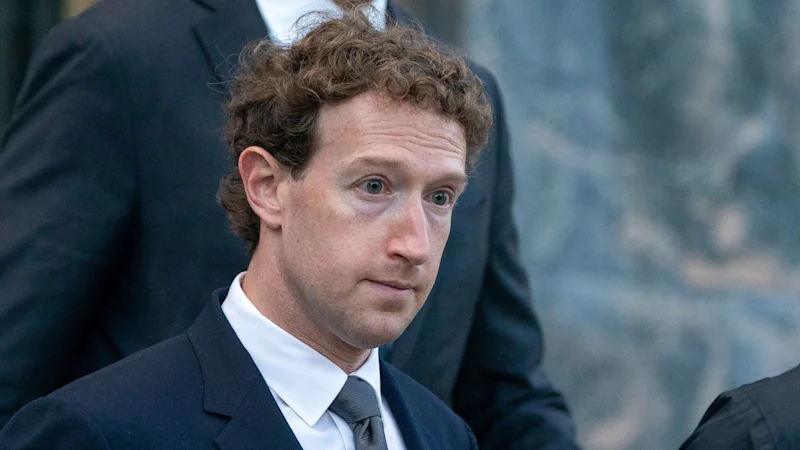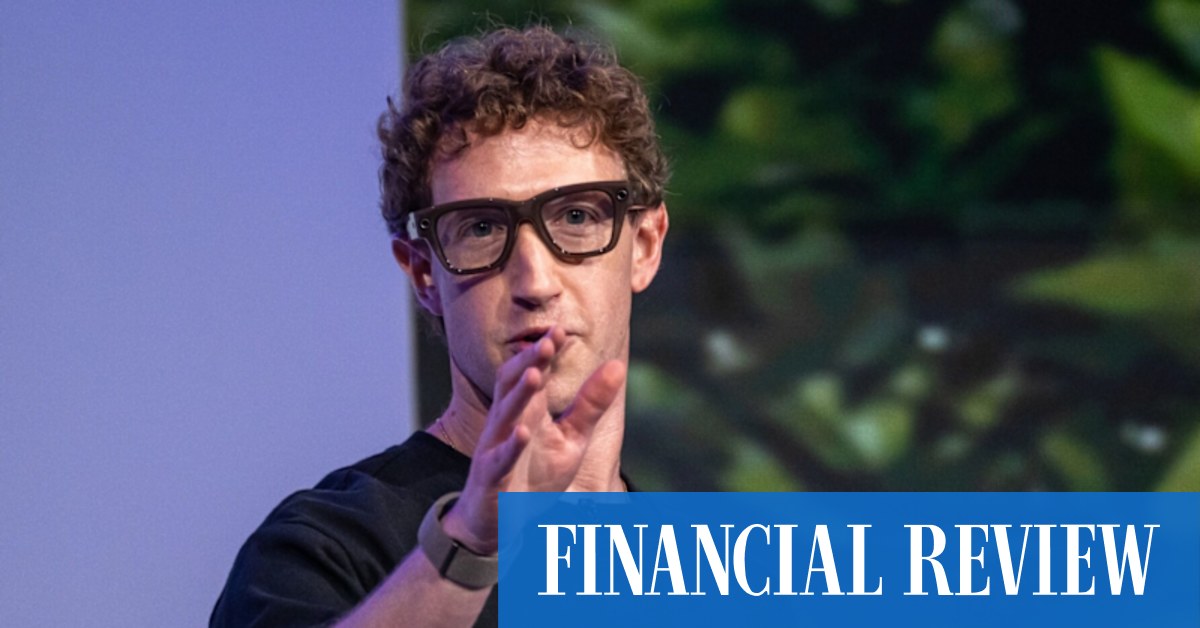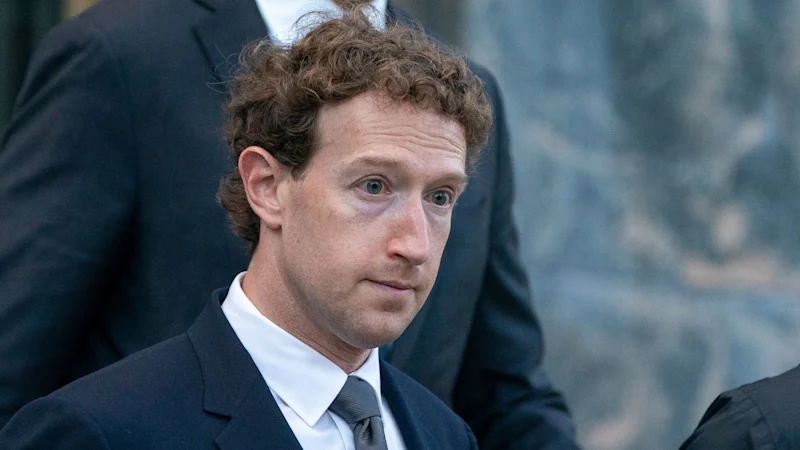
Updated June 4, 2026 — 11:36am,first published June 4, 2026 — 8:47amThe Albanese government is standing firm behind its plan to make the world’s largest technology companies fund Australian journalism, brushing off a scorching attack from Meta that brands the proposed regime a “discriminatory tax built on a false premise”.Consultation on the exposure draft of the News Bargaining Incentive is complete, and the government has signalled it will press ahead regardless of industry pushback. Assistant Treasurer Daniel Mulino, who is leading the push, is considering submissions on the draft legislation.“We want the platforms to do deals with the news media companies,” Mulino said. “Under the incentive, digital platforms are encouraged to do commercial deals with eligible news publishers, with generous offsets provided to reduce their liabilities.”Mulino’s comment came after Meta, the company that owns Facebook, Instagram, WhatsApp and Quest virtual reality headsets said it was “vehemently opposed” to the government plan, which is designed to compel Meta, Google and TikTok into striking commercial deals with news publishers.Meta CEO Mark Zuckerberg: His company’s central objection is the breadth of the levy. Bloomberg“Our position is clear: this law is poorly designed, grossly unfair and will fail to deliver a diverse and sustainable news industry,” the company wrote in a blog post. “Call it what it is: a discriminatory, retroactive tax targeting a handful of foreign companies while competitors offering comparable services face no equivalent obligation.”The incentive, championed by Prime Minister Anthony Albanese, would apply a 2.25 per cent charge on the total Australian revenue of the three platforms, with the proceeds flowing to businesses that employ journalists. Companies can offset the charge by signing tax-deductible deals worth about 1.5 per cent of revenue. Treasury estimates the policy will deliver between $200 million and $250 million a year to local media, and the government wants it legislated this winter.Mulino is overseeing the early negotiations; however, revenue collected by the incentive would be distributed back into the news media sector under the auspices of the communication’s minister.A consultation paper released in April proposed a proportional distribution model in which funds are allocated based on the number of full-time journalists across eligible organisations.The definition of who is considered a full-time journalist would probably be contentious. The discussion paper extended the definition to include “core news content” producers as well as photojournalists, videographers and graphic designers, but excluded news presenters and anchors. There is ambiguity over whether key roles such as fact-checkers or digital producers would be included.Opposition communications spokeswoman Senator Sarah Henderson said the government was seeking to dismantle the former Coalition government’s work on the code and was putting journalists at “serious risk”.“The Albanese government’s incompetence means big tech is continuing to profit from the use of Australian news content with no solution in sight … Labor’s News Bargaining Incentive, as it stands, is a farcical tax grab,” she said.Meta displays virtual reality headsets at a trade fair in Germany in 2024, the year it walked away from an Australian agreement.BloombergMeta’s central objection is the breadth of the levy, which captures “consolidated revenue attributed to Australia”. That definition sweeps up sales of its Quest devices and other products that the company says have nothing to do with news.The case for extracting money from social media, where publishers voluntarily post their content, was not supported by the evidence, the company argued, and extending that logic to virtual reality headsets and smart glasses was “indefensible”.Asked at the announcement of the incentive about repercussions from the US administration, Albanese said: “We’re a sovereign nation and my government will make decisions based upon the Australian national interest.”It’s a familiar fight: Meta walked away from its deals under the original 2021 News Media Bargaining Code in March 2024, arguing that news held little commercial value for Facebook. The incentive was explicitly engineered to close the loophole that allowed it to do so, with the charge now applying regardless of whether a platform carries news at all.Meta has also invoked trade law, arguing that the scheme breaches the Australia-United States Free Trade Agreement by failing to grant American companies treatment “no less favourable” than local peers. That theme has been echoed by US business lobby groups, and the White House has described the policy as “foreign extortion”, though it has not yet imposed retaliatory measures.Australian media bosses have strongly backed the scheme.News Corp Australasia executive chairman Michael Miller rejected Meta’s characterisation, describing the incentive as “an attractive incentive for Big Tech (not a tech tax) designed to open a clear pathway for fair commercial agreements”.“The government only built this path because Meta refused to sit down at the negotiating table, and again they are flipping the script rather than adhering to Australia’s proposed laws,” he said.Nine chief executive Matt Stanton said it was disingenuous to suggest that requiring companies to follow Australian law was a disincentive to investment.“This initiative would be completely unnecessary if these companies simply adhered to existing Australian law, came to the bargaining table and reached deals for the fair use of our commercial property,” Stanton said. “It’s time these companies stopped riding roughshod over the Australian public, respect our laws and pay their fair share.”Nine chief executive Matt Stanton said it was disingenuous to suggest that requiring companies to follow Australian law was a disincentive to investment.Oscar ColmanAlbanese reiterated his support for the policy on Tuesday night at an event in Canberra marking the 195th anniversary of The Sydney Morning Herald.“The News Media Bargaining Code is something that is not easy for us to progress, but we are determined to do so because journalism is an honourable profession,” Albanese said. “You deserve to be paid for it rather than having some of the foreign-based sites be able to just essentially steal your property … We want to make sure that journalism not only continues to survive, but that it thrives into the future as well.” Google, which has continued to honour and re-sign its existing deals covering more than 90 news businesses, faces a potential annual liability of about $202.5 million if it refuses to strike agreements, against $33.75 million for Meta and $16.9 million for TikTok.Industry lobby group FreeTV has urged Treasury to widen the net to include Microsoft and Apple, while a separate carve-out for Microsoft’s LinkedIn – which runs its own editorial team and news tab – has irritated the platforms already in scope.The Business Briefing newsletter delivers major stories, exclusive coverage and expert opinion. Sign up to get it every weekday morning.From our partners
Labor holds firm on plan to make tech giants pay for news as Meta attacks
The government is pressing ahead with its plan to make tech giants fund journalism, shrugging off Meta’s claim it amounts to a “discriminatory tax”.
1,082 words~5 min read