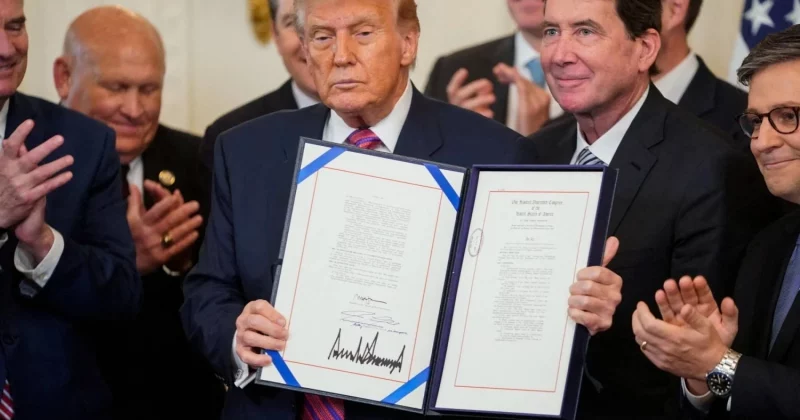
The GENIUS Act (Guiding and Establishing National Innovation for U.S. Stablecoins Act) was the first major piece of crypto legislation in the United States, signed into law last year and passed with broad bipartisan support. Since GENIUS provided a clear legal pathway for stablecoins, we’ve seen stablecoin innovation and volume accelerate in the United States. This matters even beyond the crypto and traditional finance industries, because stablecoins give us something we’ve never really had before: open money infrastructure.
GENIUS demonstrates what’s possible when effective policy and technology work together. Now it’s time to get the implementation in practice right.
The U.S. Treasury Department recently issued a Notice of Proposed Rulemaking (NPRM) to clarify how each state can comply with and implement this historic federal legislation. Specifically, this NPRM aims to define when a state’s regime is “substantially similar” to the federal framework — which determines how a state-regulated stablecoin issuer will operate across the country, and how an issuer can transition to federal oversight after they exceed the state regulation threshold of $10 billion in total outstanding issuance.