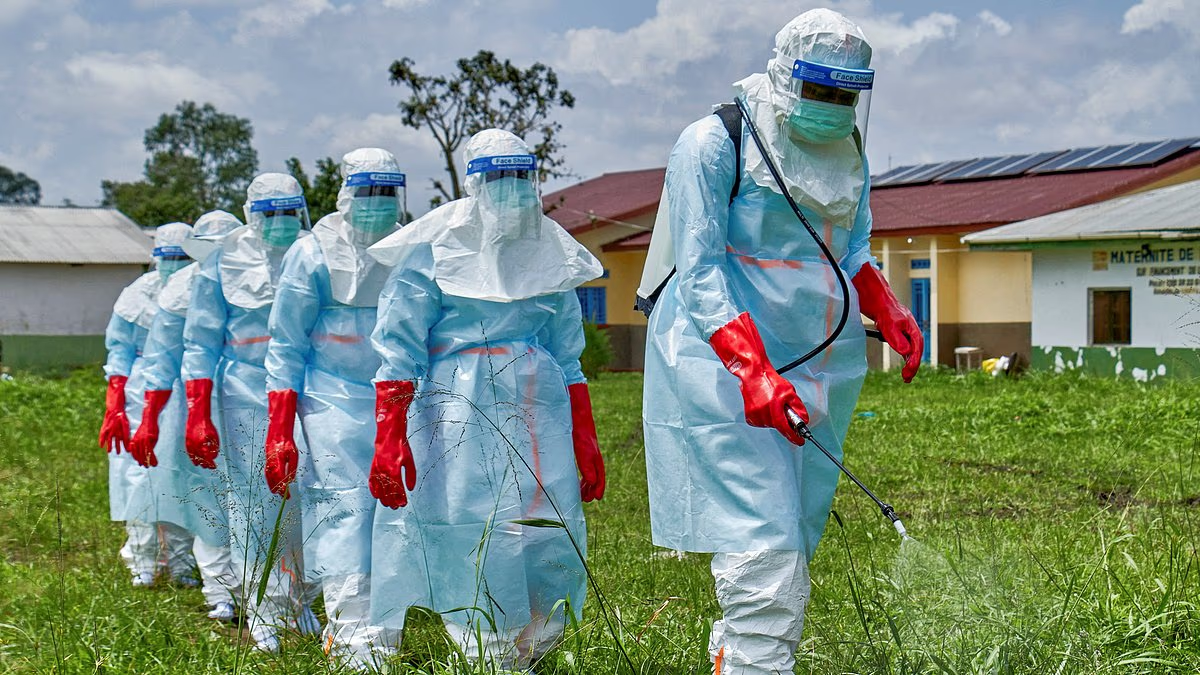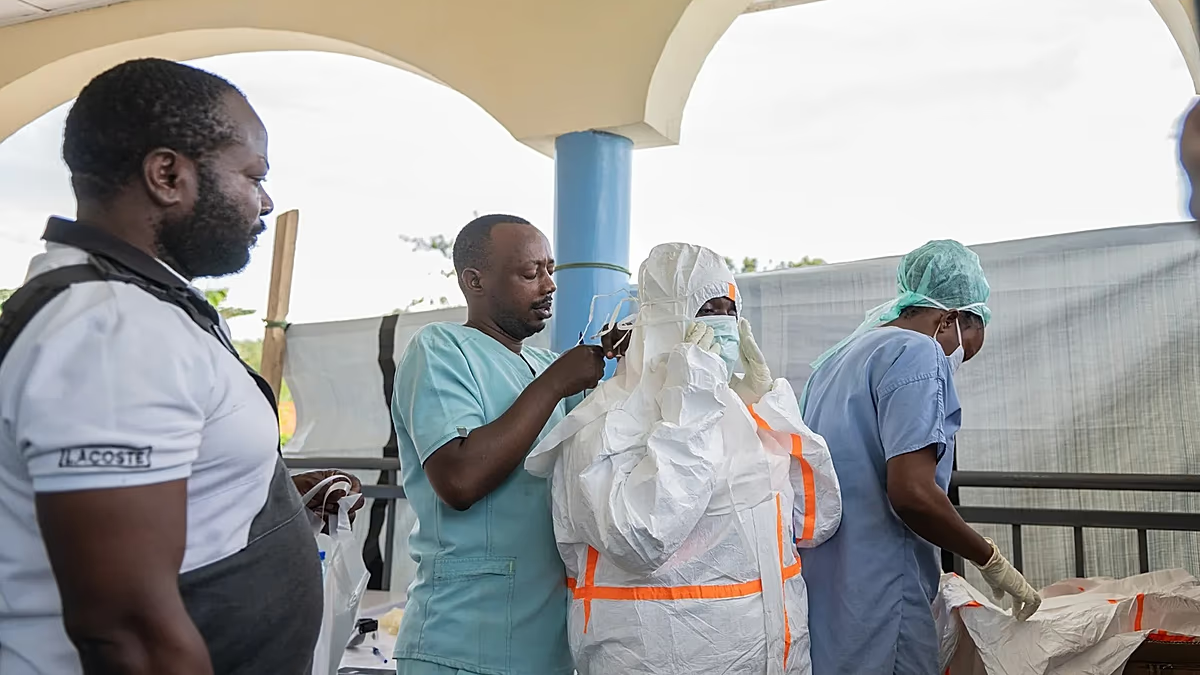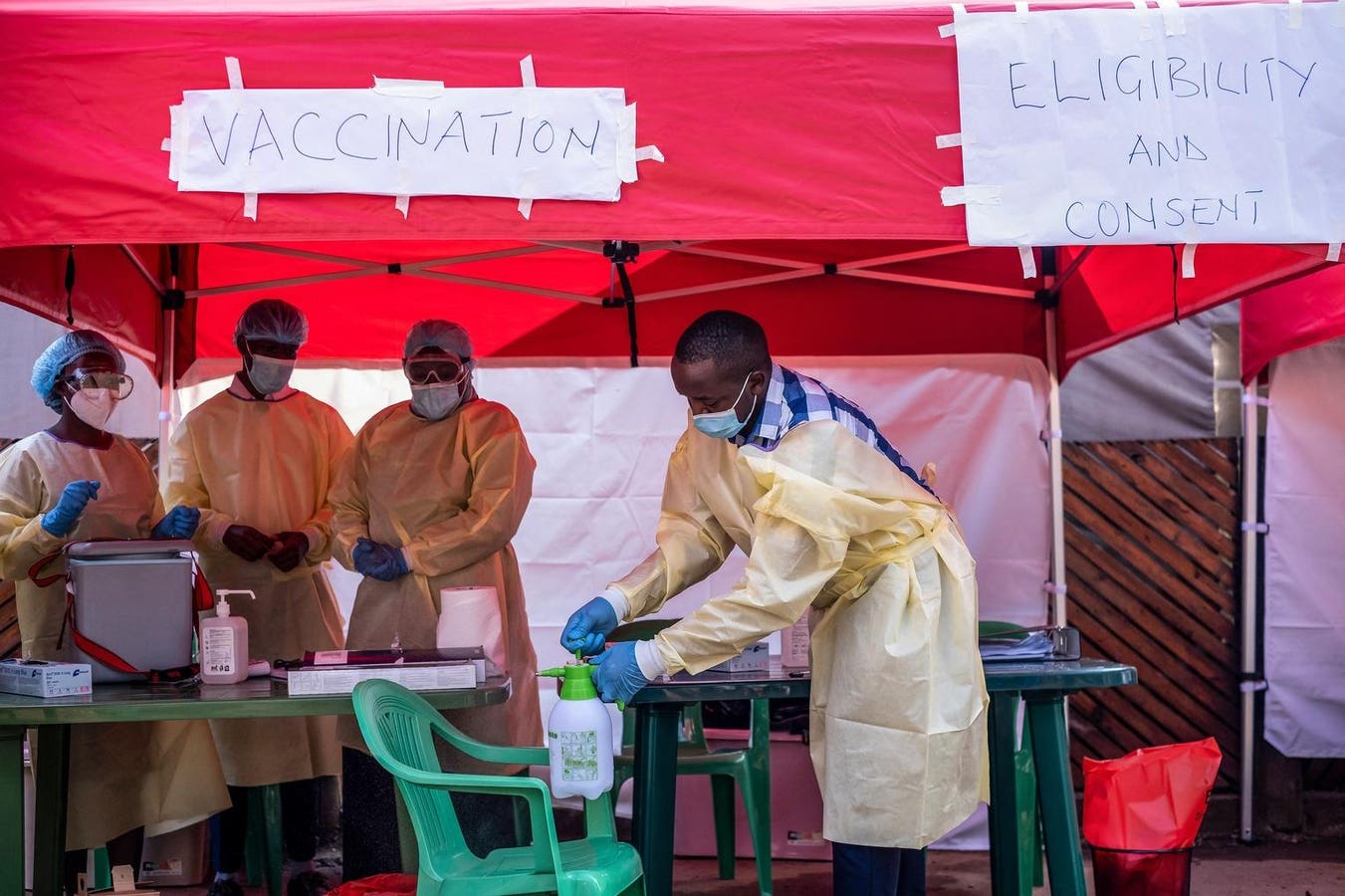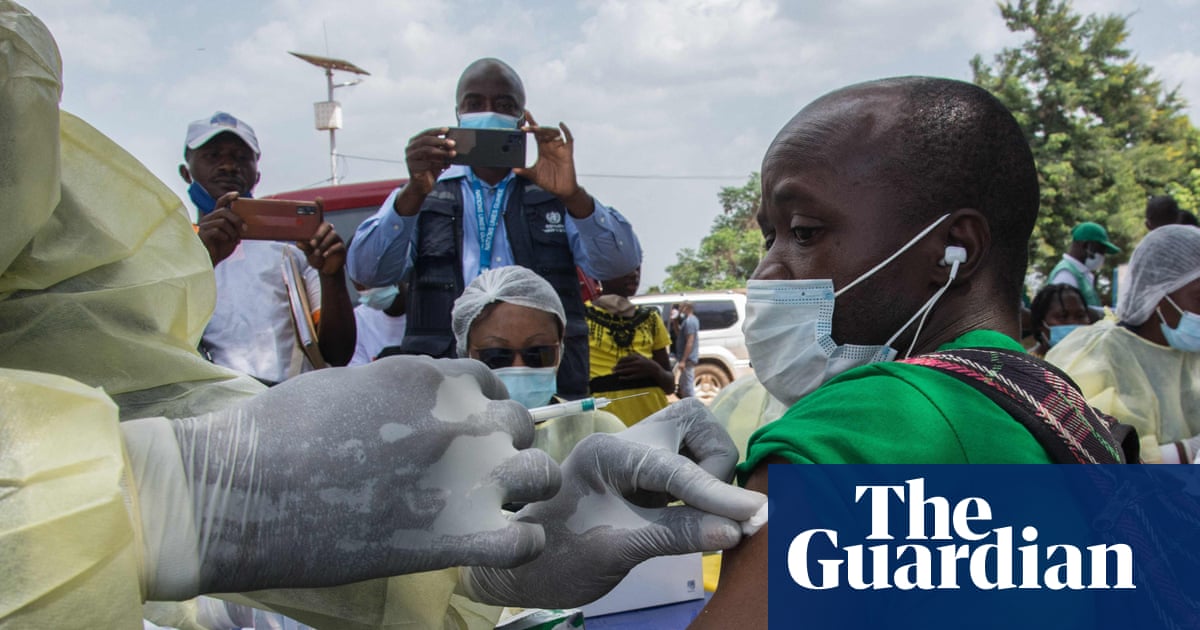
East Africa is currently in the throes of a rapidly spreading Ebola epidemic, with governments scrambling to contain the virus and hundreds of people confirmed with the infection.The outbreak of the viral haemorrhagic fever, which has been triggered by a rare and deadly strain of Ebola, was first declared by the Africa Centres for Disease Control and Prevention on May 15 in the conflict-wracked eastern Democratic Republic of the Congo (DRC). The disease has since spread to neighbouring Uganda, which shares border communities with eastern DRC.Recommended Stories list of 4 itemslist 1 of 4Kenyans protest Ebola quarantine centre for US citizenslist 2 of 4High Court orders Kenya government to release details of Ebola facilitylist 3 of 4Spain bans DR Congo World Cup warm-up due to Ebola fearslist 4 of 4Protesters use ‘Ebola coffin’ to rally against US quarantine centreend of listThe World Health Organization (WHO) declared a public health emergency two days after the outbreak was announced. By that time, hundreds had been infected. Last week, the WHO warned that ongoing conflict in the DRC was hampering efforts to contain Ebola’s spread.While three vaccines are being researched and are set to be fast-tracked for trials, there is no approved vaccine for this strain as yet.Here’s what we know:Charred hospital beds stand in a smouldering Ebola treatment centre after the facility was set on fire by people angry at being stopped from retrieving a body, according to a witness and police, in Rwampara, the Democratic Republic of the Congo, May 21, 2026 [Dirole Lotsima Dieudonne/AP]How bad is the outbreak, and where has it spread?The outbreak began in eastern DRC’s Ituri province, where conflict is ongoing between armed rebels and the Congolese army, and where healthcare resources are already severely limited.At least 321 cases had been confirmed by June 2 in the DRC, according to WHO, with another 116 cases suspected.There have been 48 recorded deaths, with six patients in the country recovering.In Uganda, which shares busy border communities with the DRC, WHO confirmed nine cases and at least one death on Tuesday.The Ugandan government added later on the same day that six new cases had been discovered, bringing the total to 15. Cases have been confirmed in the capital Kampala, hundreds of kilometres from the DRC border.Experts are warning that the outbreak could rival some of the most severe Ebola epidemics. The worst was in West Africa in 2014. Within two years, about 29,000 people had been infected by the Zaire virus. More than 11,000 people died. Combined with a lack of vaccines and protective gear for health workers, the outlook for this epidemic is bleak, experts say.“It’s always challenging to respond to any Ebola outbreak, and this is in the context where there are already massive humanitarian needs,” said Trish Newport, deputy manager of Ebola programmes in DRC for Doctors Without Borders (MSF).Newport noted that funding cuts – such as sweeping cuts to United States foreign aid by the administration of US President Donald Trump last year – have also seen many health and aid organisations pull out of Ituri, affecting the response.Why is there no vaccine for this strain of Ebola?The strain responsible for the current outbreak is the Bundibugyo virus, a rare species of Ebola that first surfaced in Uganda in 2007 and then again in DRC in 2012.It is not the same as the Zaire Ebola virus that has been responsible for more recent epidemics, such as the West Africa epidemic of 2014-2016 and the DRC outbreak that occurred between 2018 and 2020.There are two vaccines for Zaire Ebola, the most lethal strain of the virus, with a 50-70 percent death rate. The first is the Ervebo vaccine manufactured by Merck. The second is the two-dose Zabdeno and Mvabea vaccine produced by Johnson and Johnson.Because outbreaks of Bundibugyo, which has a 30-50 percent death rate, occur less frequently, there have not been enough opportunities for vaccine research and trials, however.MSF’s Newport said, “This is only the third time in history that there’s an outbreak with the Bundibugyo virus, so it’s not something that attracts the attention of research and development for pharmaceutical companies. For them, they don’t see it as a priority.”Vaccines created for different strains are not interchangeable without testing and formal approval by the WHO.In addition to vaccines against the Zaire virus, there are also experimental treatment therapies approved for the disease such as MBP134, an antibody treatment. Last week, WHO independent experts recommended using the medication for the current outbreak.For now, general treatment for Bundibugyo remains similar to that for the flu virus, said Joanne Liu, Ebola expert and associate professor of medicine at Canada’s McGill University. This includes ensuring proper hydration and correct blood pressure levels.Medical staff prepare to disinfect the Ebola treatment centre following a fire at the facility in Rwampara, DRC, Thursday, May 21, 2026 [Moses Sawasawa/AP]Are any vaccines in development?Three vaccines are being evaluated for emergency trials, the Coalition for Epidemic Preparedness Innovations (CEPI), a public-private organisation that is funding the effort, said on Monday.CEPI did not reveal when the tests and trials would be carried out. However, initial vaccine research, evaluation and tests could take years, while production can take several months.Here is what we know about the three different vaccines:
What are the Ebola vaccines under research, and when will they be ready?
At least three vaccines are being funded, research being fast-tracked as the outbreak spreads faster than the response.
1,132 words~5 min read