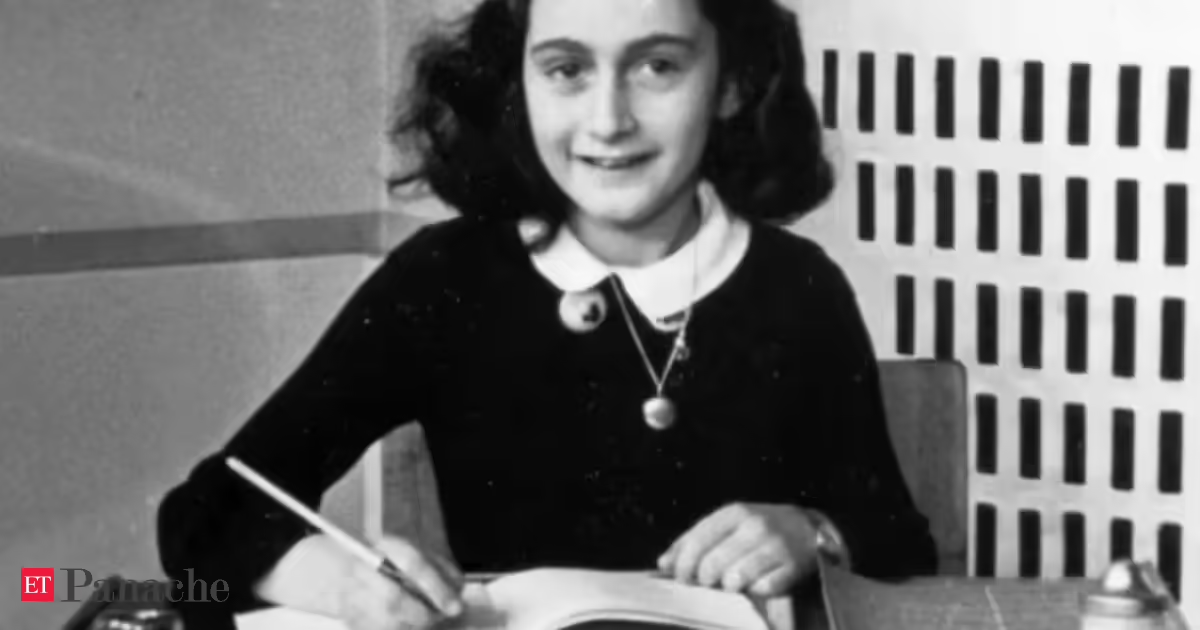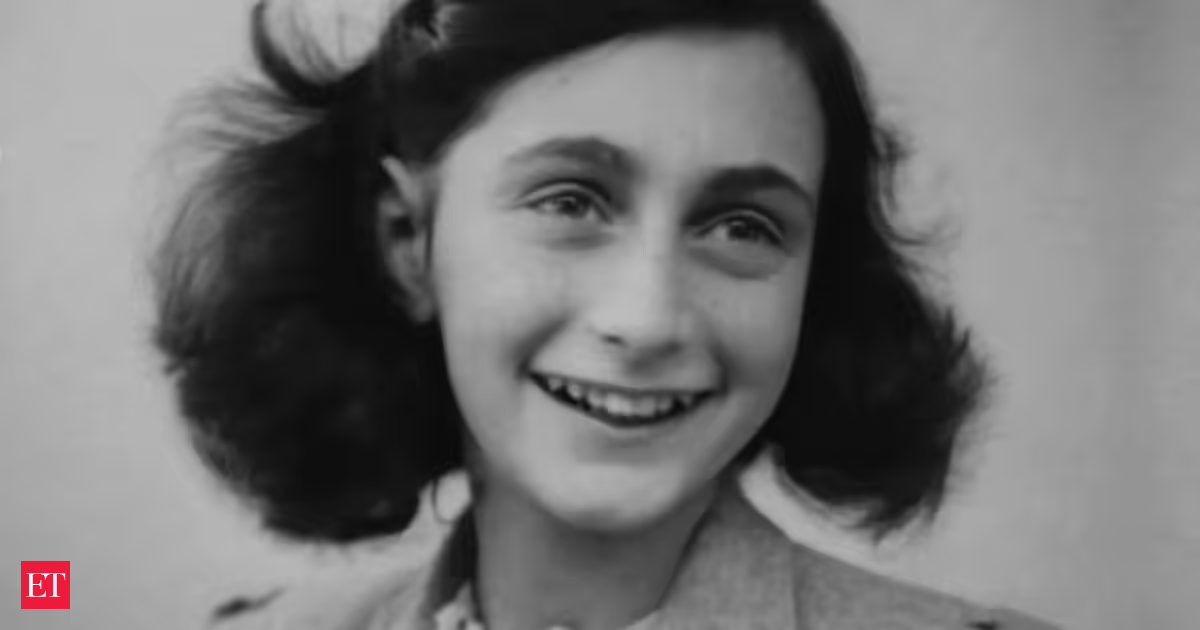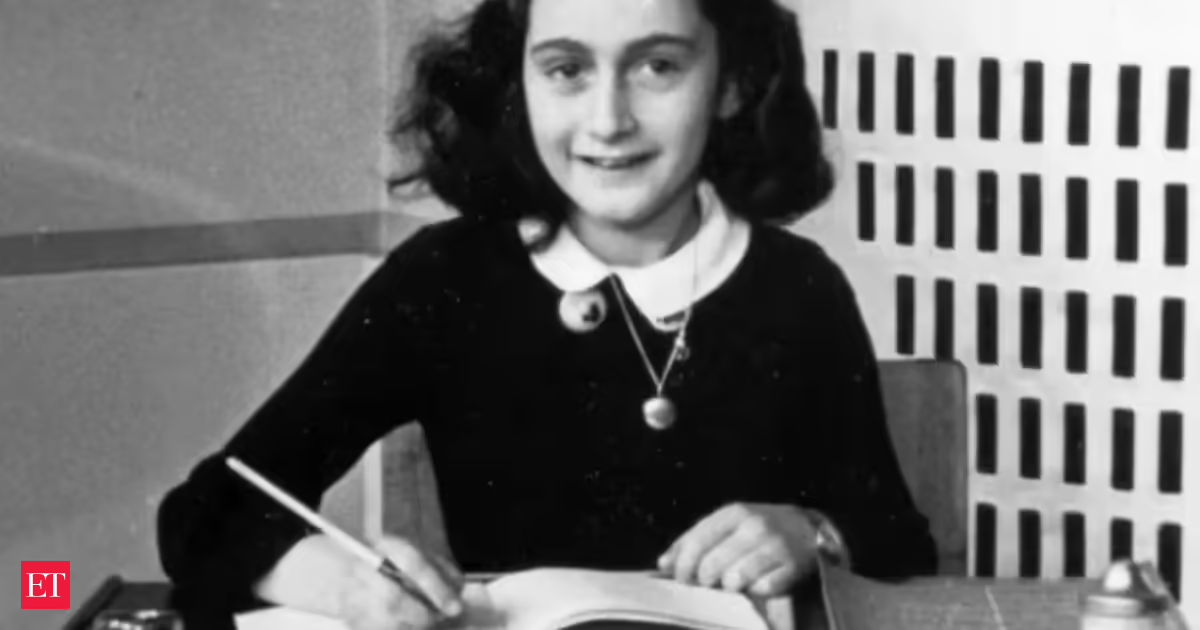
In a world where people are constantly connected through messages, video calls and social media updates, loneliness can seem like a problem of the past. Yet one quote written decades ago by Anne Frank continues to feel relatable to readers across generations. Her observation about the quiet loneliness people carry within themselves feels surprisingly relevant even today. Through a simple yet profound line, the young writer captured a truth about human emotions that many people experience but rarely talk about openly."I mean that most people, married or single, stand inwardly alone." - Quote of the day by Anne Frank, Anne Frank's Tales from the House BehindAt first glance, the quote talks about loneliness. But Anne Frank was actually speaking about something much deeper than simply being physically alone. She was referring to the emotional distance that can exist even when people are surrounded by family, friends or partners.Her words suggest that many individuals carry private fears, dreams, insecurities and feelings that they struggle to share with others. A person may have a loving family, a successful career or a large social circle and still feel that nobody truly understands what is happening inside their mind. That inner loneliness is what Anne Frank was describing.Why Anne Frank's words still matter todayOne of the most striking aspects of the quote is that it challenges a common assumption, that loneliness only affects people who are isolated or living by themselves.Anne Frank argues that emotional loneliness can affect anyone. Being married does not automatically eliminate feelings of isolation. Having friends does not always guarantee emotional closeness. Even people who spend every day with others can sometimes feel unseen or misunderstood.This distinction between physical company and emotional connection lies at the heart of her message. A room can be full of people, yet someone may still feel completely alone if they do not have a trusted person with whom they can share their true thoughts and emotions.The quote also talks about a basic human need: the desire to be understood. While people often focus on companionship, Anne's words remind readers that genuine understanding and trust are far more valuable. Casual conversations and social interactions may fill time, but they do not always satisfy the deeper need for emotional connection.That is one reason why the quote continues to resonate in the modern age. Despite living in an era of constant communication, many people still struggle with feelings of emotional isolation. Social media allows people to share moments from their lives, but it does not necessarily create the kind of deep understanding Anne Frank was talking about.How Anne Frank's own life shaped this insightThe power of the quote becomes even greater when viewed through the lens of Anne Frank's life.According to the official site, Anne Frank was born in Germany in 1929 during a period of economic hardship and political instability. As Adolf Hitler and the Nazi Party gained power, Jewish families allegedly faced increasing discrimination and danger. Fearing for their safety, Anne's parents moved the family to the Netherlands when she was just four years old.Anne grew up in Amsterdam, attended school, learned Dutch and built a circle of friends. By many measures, she enjoyed a normal childhood. However, everything changed when World War II reached the Netherlands.As Nazi restrictions against Jewish people intensified, Anne and her family saw their freedoms disappear. Jewish people were barred from many public places, faced strict limitations and lost opportunities that others took for granted. Anne's father was no longer allowed to run his business.In 1942, the Frank family went into hiding in a concealed section of a building in Amsterdam that later became known as the Secret Annex.These experiences shaped Anne's understanding of loneliness, fear and human relationships. Although she lived in close quarters with family members and others, she often felt emotionally isolated. She longed for someone who fully understood her thoughts and feelings.The diary that became her closest companionOn her 13th birthday, Anne Frank received a diary that she affectionately named "Kitty." What began as a birthday gift soon became her most trusted confidant.Anne dreamed of becoming a writer and used the diary to record both ordinary moments and extraordinary events. She wrote about books she enjoyed, film stars she admired, disagreements with her mother, friendships, personal fears and hopes for the future.More importantly, the diary became a place where she could express feelings she often found difficult to share with those around her. In many ways, "Kitty" provided the emotional outlet that Anne felt was missing in her daily life.This personal experience helps explain the meaning behind her quote. Anne understood that loneliness is not always the absence of people. Sometimes it is the absence of someone who truly listens and understands.Her writings reveal a remarkable emotional maturity. Despite being a teenager living under unimaginable circumstances, she displayed a deep understanding of human nature and the complexities of relationships.The legacy of Anne Frank's wordsAfter the occupants of the Secret Annex were discovered and arrested, Anne Frank was eventually sent to concentration camps. She and her sister Margot died at Bergen-Belsen. Anne's father, Otto Frank, was the only member of the immediate family who survived the war.One of the family's helpers, Miep Gies, preserved Anne's diary. After the war, she gave it to Otto Frank. Upon reading his daughter's writings, he recognised their significance and fulfilled Anne's dream of becoming a published author.The diary was published in 1947 under the title The Secret Annex, later becoming widely known around the world as The Diary of a Young Girl. It has since sold millions of copies and been translated into more than 70 languages.Otto Frank hoped that Anne's words would help educate future generations about the dangers of hatred, prejudice and discrimination. In 1960, the former hiding place opened as the Anne Frank House museum, allowing visitors to learn more about her life and experiences.Yet beyond its historical importance, Anne's writing continues to speak to readers on a deeply personal level. Her quote about people standing "inwardly alone" remains powerful because it captures a universal human experience. It reminds us that meaningful relationships are built not simply on proximity, but on trust, empathy and the feeling of being truly understood.
Quote of the day by Anne Frank: 'Most people, married or single, stand inwardly alone' - What The Diary of a Young Girl author teaches us about hidden emotional loneliness
Anne Frank's simple yet timeless words, "most people, married or single, stand inwardly alone," resonate deeply today. She once talked about the emotional distance felt even amidst company, a private loneliness stemming from unshared fears and dreams. Read on to know why it stills matters today.
1,032 words~5 min read