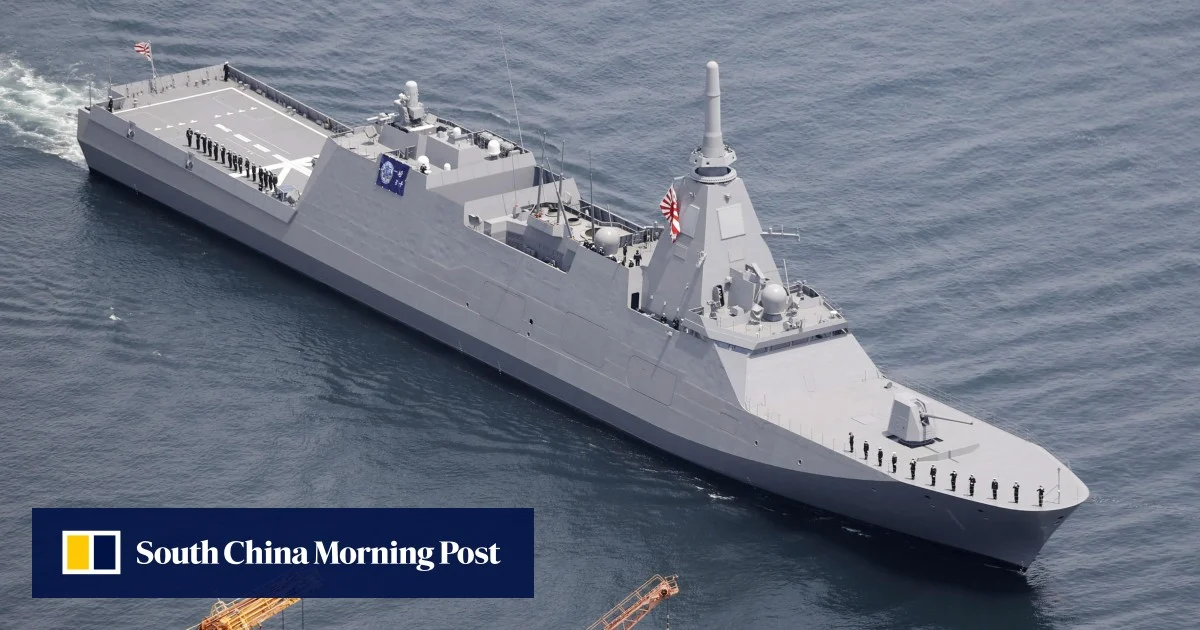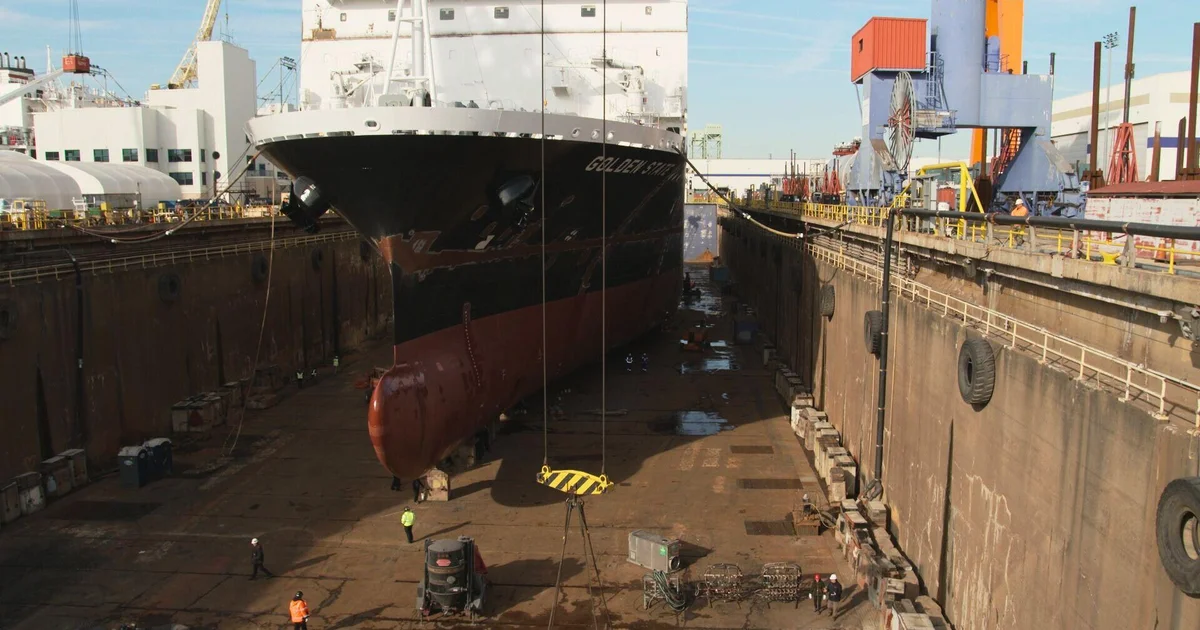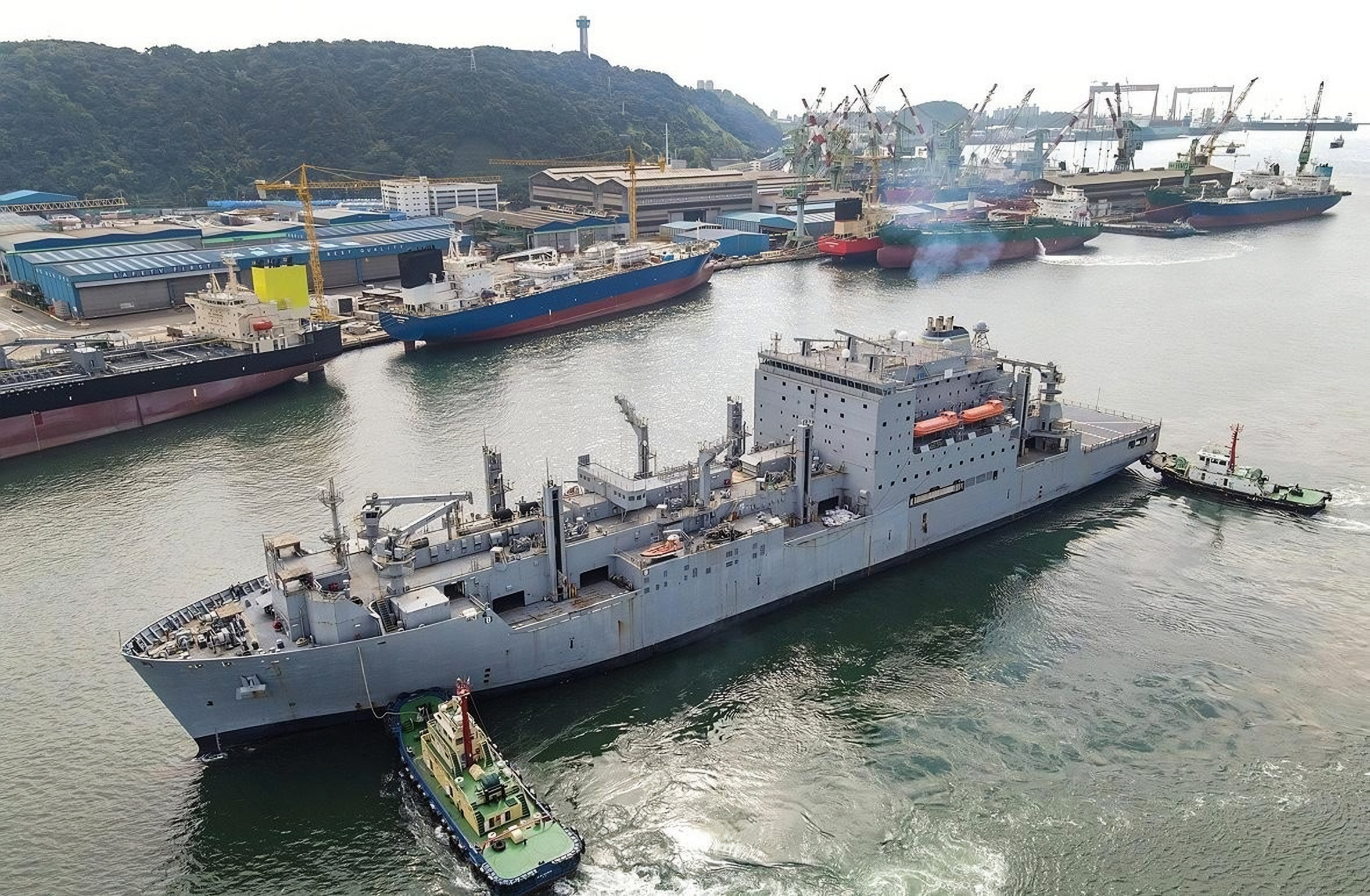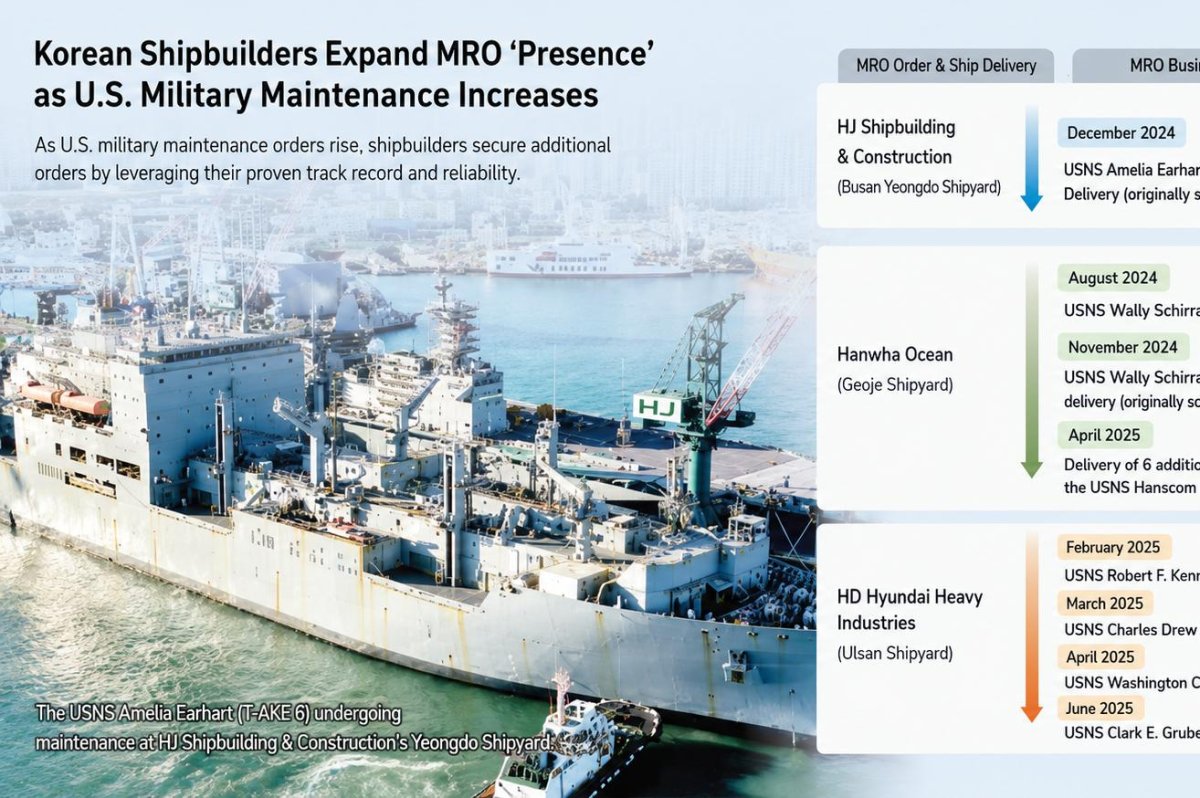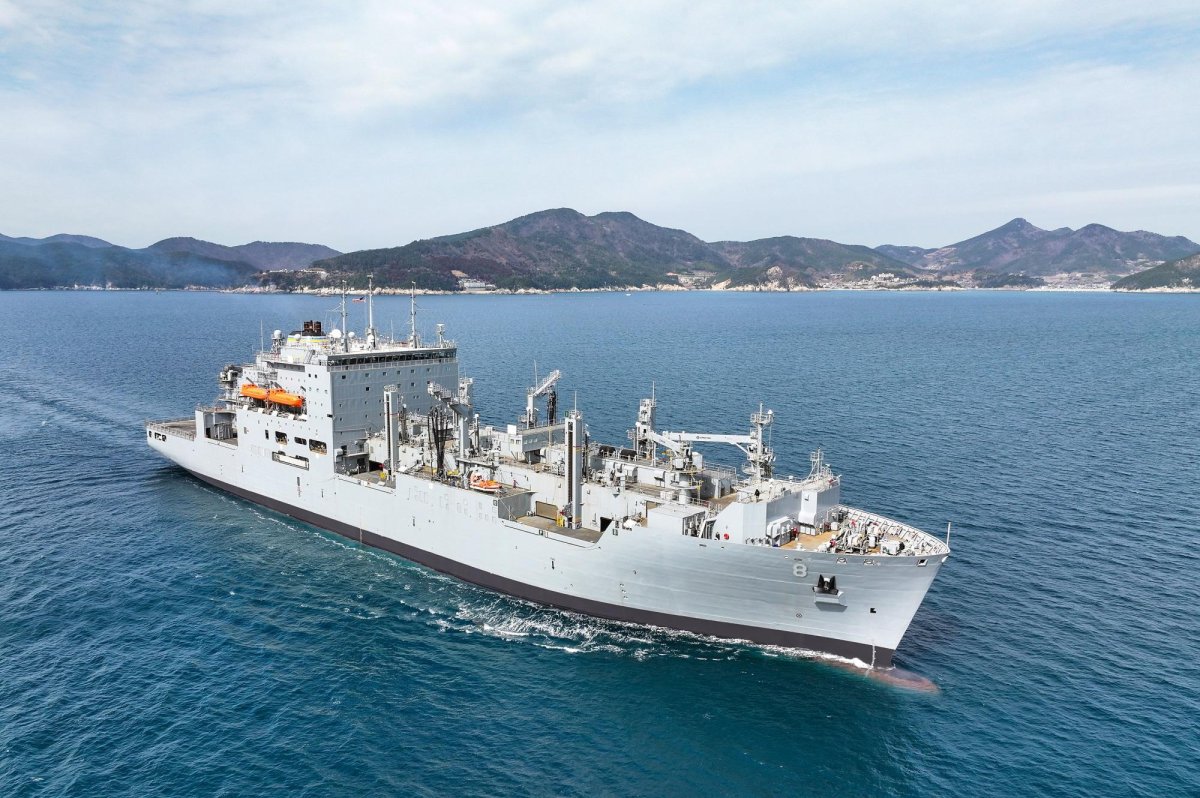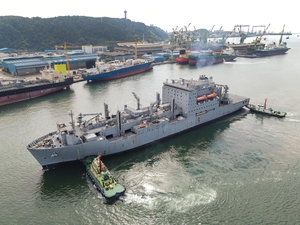
The US Navy’s 41,000-ton replenishment vessel USNS Alan Shepard arrives at Yeompo pier in Ulsan for routine maintenance provided by HD Hyundai Heavy Industries (HD Hyundai Heavy Industries) The Pentagon is considering tapping Korean or Japanese shipyards to build a US Navy vessel as part of its broader push to strengthen defense ties with allies and address shipbuilding challenges amid growing competition with China.According to a recent report by US-based Breaking Defense, the initiative is part of a proposed $1.85 billion naval funding request within the Pentagon’s $350 billion reconciliation package. The funding would support both the potential construction project and the navy’s efforts to evaluate allied shipbuilders’ capacity to produce future cruisers, destroyers and frigates.An official from the White House Office of Management and Budget cited by Breaking Defense said Washington is bankrolling a plan to build basic ship structures — including hulls, machinery and electrical systems — for up to two naval vessels in Korea or Japan. US defense contractors would then integrate combat systems and other military technologies domestically.The US has used a similar strategy in its icebreaker program with Finland, where the initial vessels would be built in Finland and then transferred to a Louisiana shipyard for later production.The official noted that Korean and Japanese shipyards can build advanced warships at lower prices compared with US companies. This makes them a cost-effective way to expand naval capacity while also lowering shipbuilding costs overall by fostering greater competition among shipyards.Potential candidates include Korean shipbuilders HD Hyundai Heavy Industries, Hanwha Ocean and Samsung Heavy Industries, alongside Japan’s Mitsubishi Heavy Industries, Kawasaki Heavy Industries and Japan Marine United.The initiative comes as the US faces mounting pressure from China’s growing military power while struggling with limited shipbuilding capacity. Korean shipbuilders have strengthened cooperation with the US Navy through maintenance, repair and overhaul contracts and the acquisition of a local shipyard.However, the official stressed that the initiative is not intended as a long-term shift of warship production overseas, but as a way to bolster US shipbuilding capacity by encouraging foreign shipbuilders to invest in local shipyards.
US considers $1.85b naval shipbuilding plan with Korea, Japan
The Pentagon is considering tapping Korean or Japanese shipyards to build a US Navy vessel as part of its broader push to strengthen defense ties with allies an
346 words~2 min read