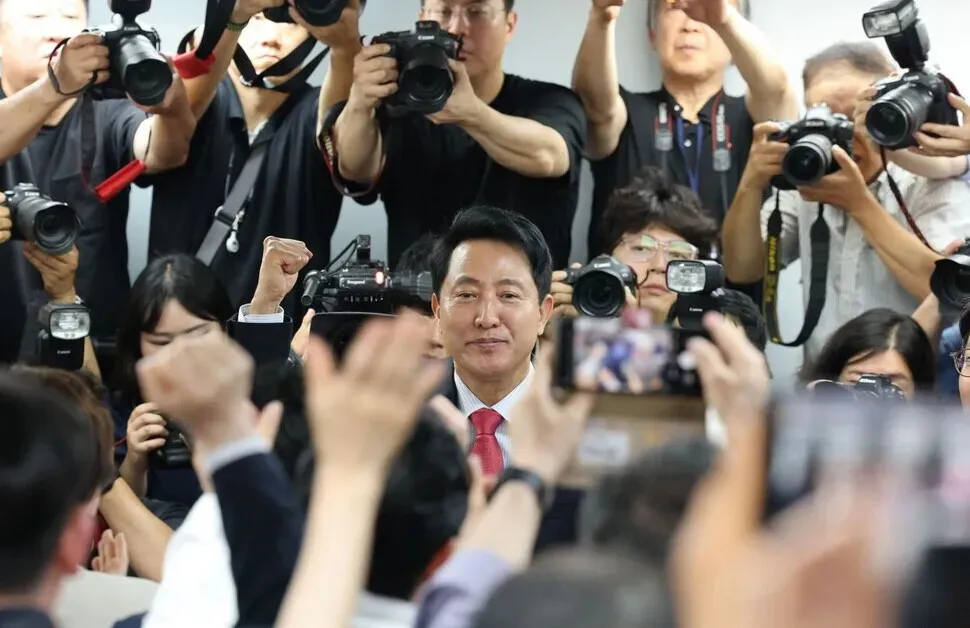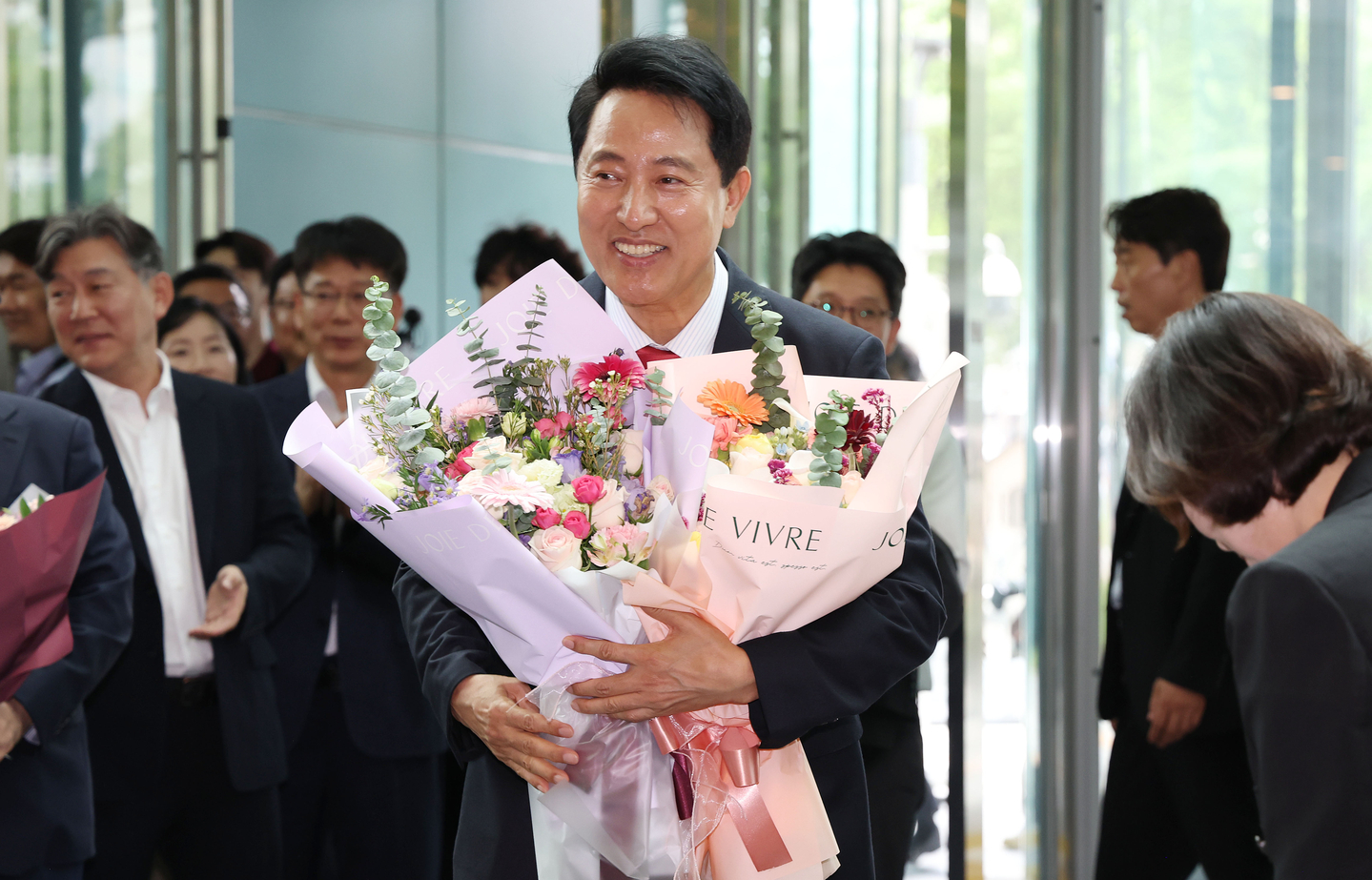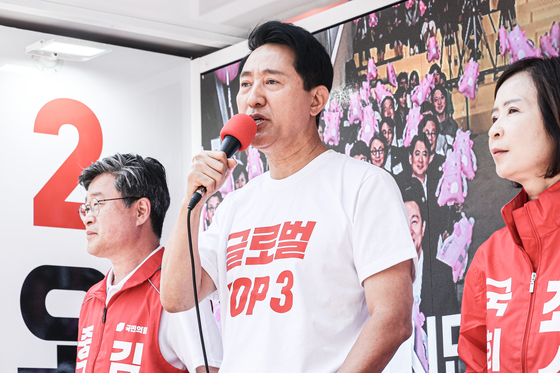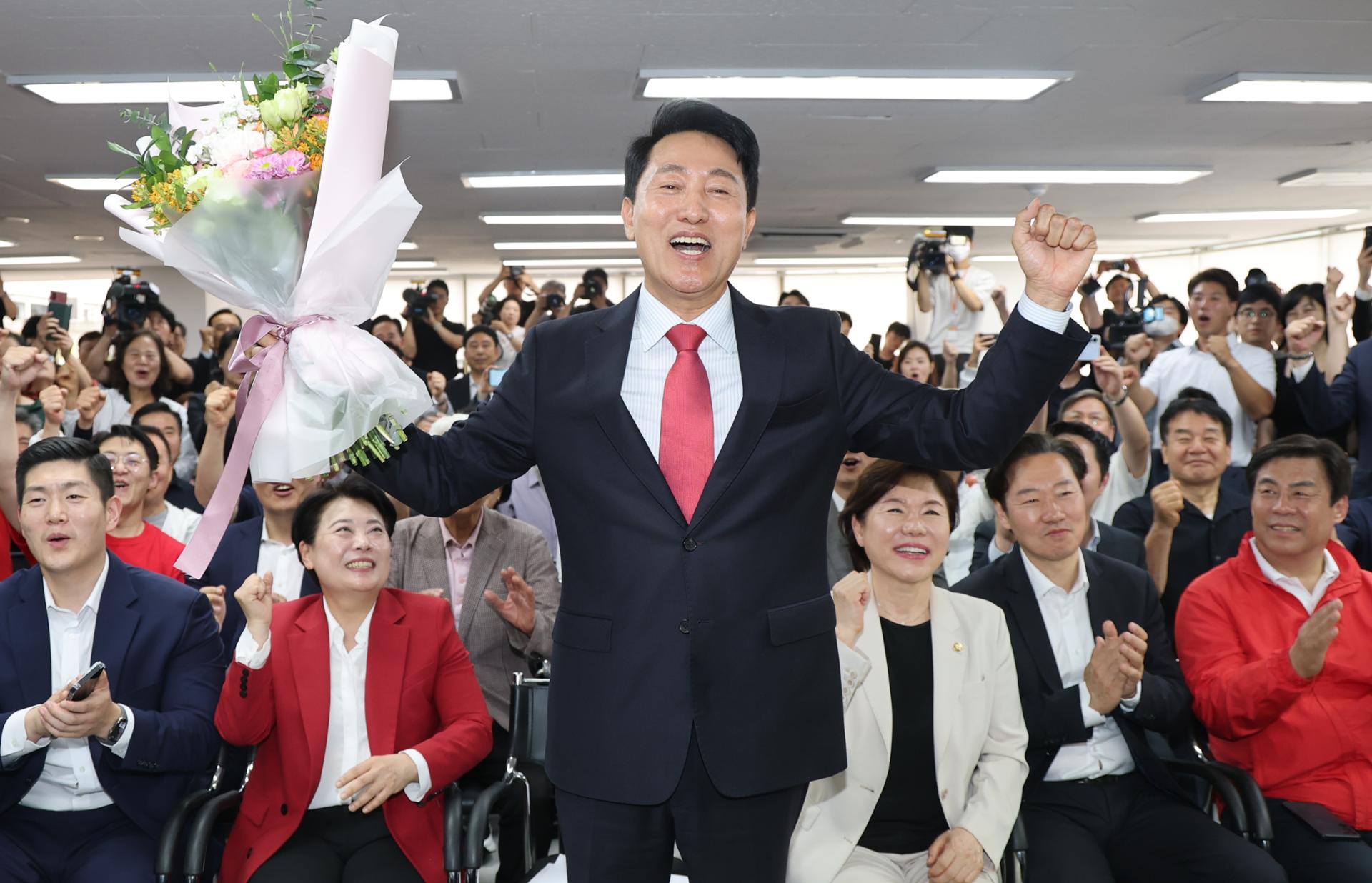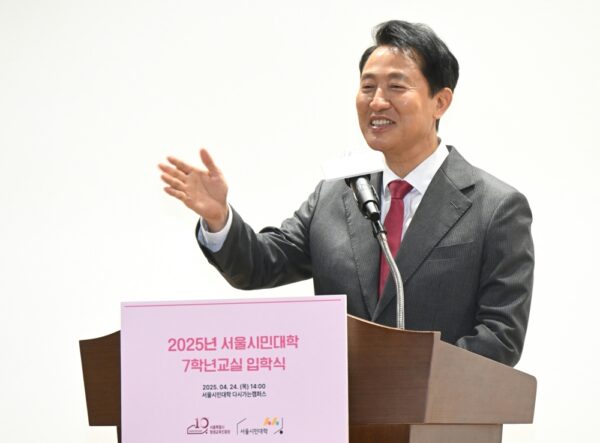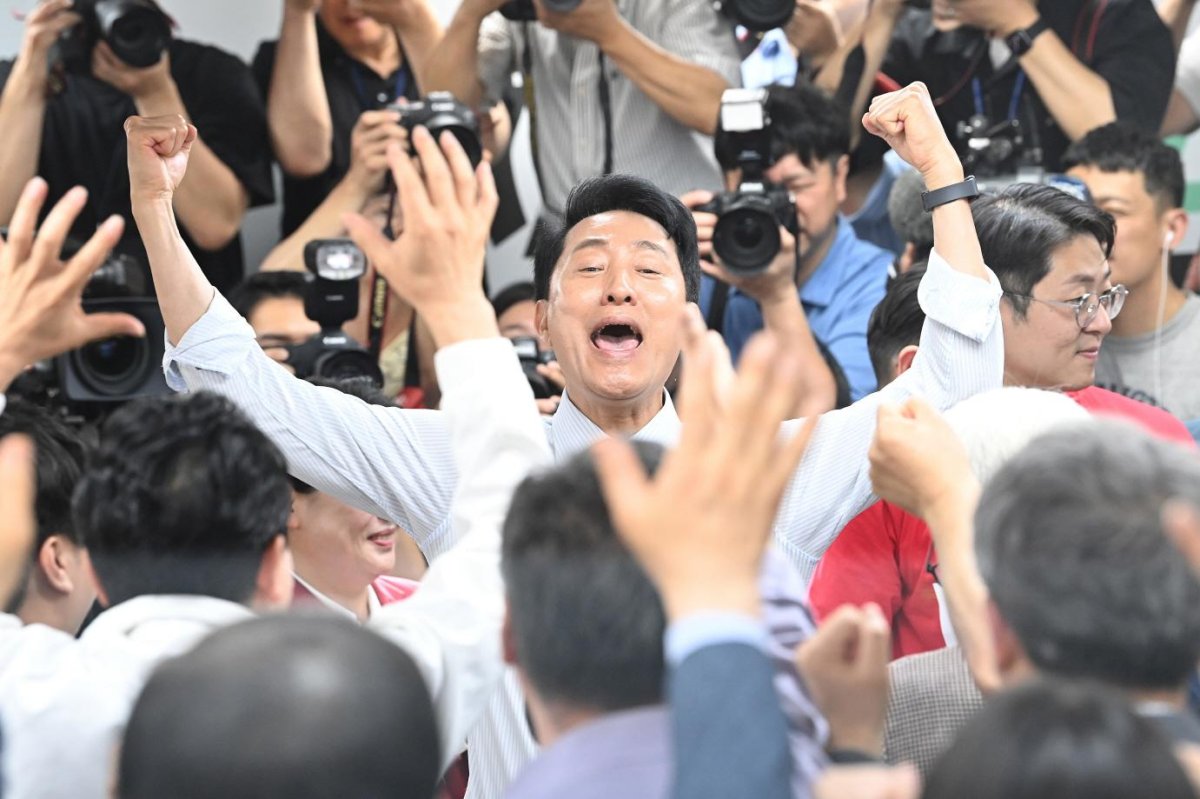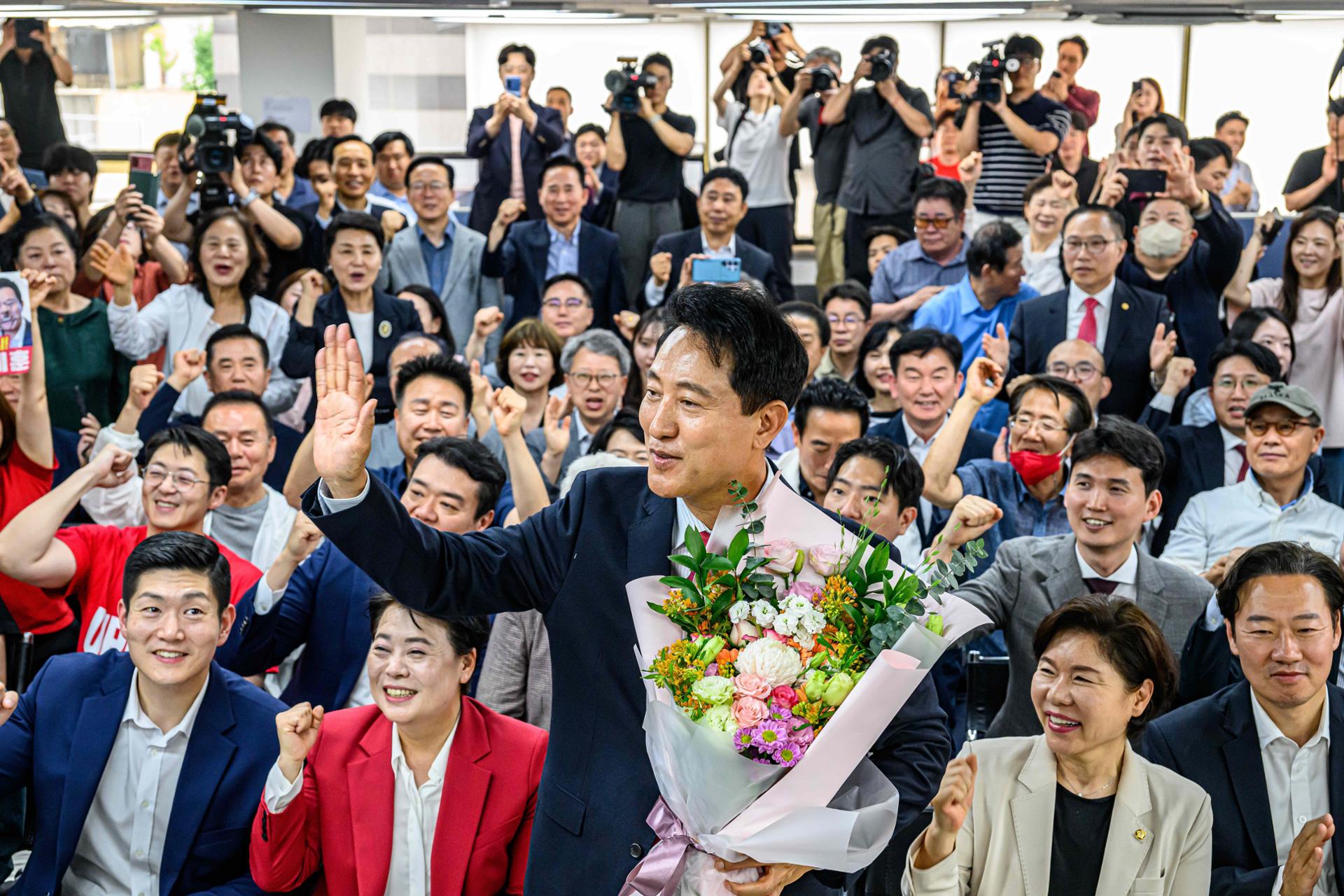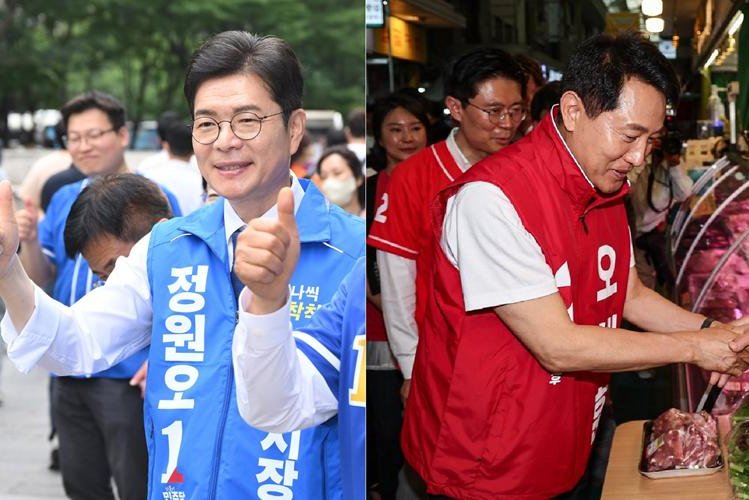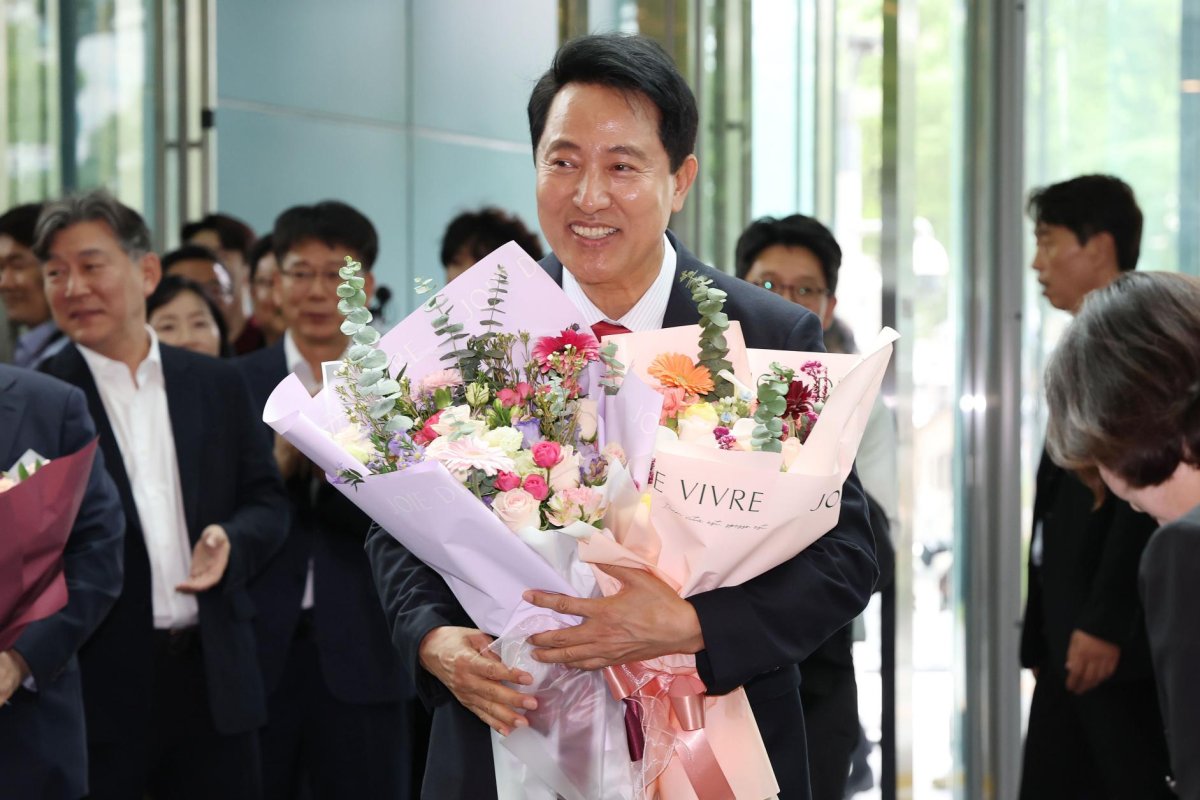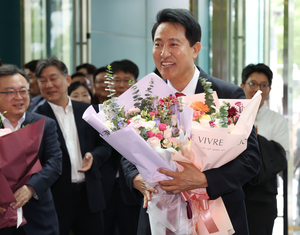
Conservative mayor says victory represents call for balance, pledges policy continuity at City Hall Seoul Mayor Oh Se-hoon is congratulated by officials of the metropolitan government at Seoul City Hall on Thursday, after winning his fifth term as mayor in the local elections on Wednesday. (Yonhap) Oh Se-hoon is set to become Seoul’s first five-term mayor, giving the conservative politician an unmatched chance to set the capital’s course for years beyond a single election cycle.His new term, to begin July 1, is expected to extend the agenda he has built since returning to City Hall in 2021: expanding housing supply, improving support for vulnerable residents, strengthening transport links and raising Seoul’s profile as a global city.Oh touted his narrow reelection victory as a sign of voters' resolve to “keep democratic balance” in the country, while pledging to continue policies he says are aimed at easing the daily burdens of Seoul residents.“I believe this is a win for all the ordinary and diligent citizens, those waiting for this hellish rent crisis to be over, working parents looking for a place to entrust their children and residents waiting in worn-down homes for reconstruction,” Oh said in his victory speech.The milestone adds another chapter to a political career closely tied to the Korean capital. Oh first became mayor of Seoul in 2006 aged 45, becoming the youngest person elected to the post, and secured reelection in 2010.His career was derailed in 2011, when he stepped down after staking his office on a referendum over free school lunches, which he opposed. He spent nearly a decade outside the political spotlight before returning to City Hall through a 2021 by-election, before winning a fourth term the following year in a landslide.This time, Oh returns with a record unmatched by any of his predecessors. By the time his new term ends, he will have served as mayor for 14 years and six months, the longest tenure in municipal history.Housing issues at forefrontHousing remains the most urgent challenge facing Oh as he begins another term.The issue was central to his campaign, reflecting Seoul’s persistent affordability crisis and a broader policy divide between conservative calls for deregulation and the Lee Jae Myung administration’s push for tighter oversight of the property market.Oh has argued that Seoul needs greater private-sector housing supply to ease pressure on home prices.He has pledged to provide 310,000 homes by 2031 under his “Rapid Integrated Planning 2.0” initiative, which is aimed at speeding up redevelopment and reconstruction projects.The city has already eased some development rules under Oh, including removing the 35-floor height limit for residential buildings in 2023. He has also opposed a possible abolition of special deductions for long-term homeowners, saying such a move would increase tax burdens and discourage homeowners from putting properties on the market.For Seoul voters, housing is both a local and national issue.While the mayor oversees zoning, redevelopment approvals and public housing programs, the central government has greater control over taxes, mortgage rules and anti-speculation measures. Seoul Mayor Oh Se-hoon shakes hands with members of the public in front of Seoul City Hall on Thursday. (Yonhap) Cost of living, childcare and jobsBeyond housing, Oh has sought to present his city government as focused on the everyday pressures facing Seoul residents, from childcare costs to job insecurity and care burdens among middle-aged households.His pledges include expanding childcare services and providing meals for underprivileged students during school breaks.In April, the Seoul Metropolitan Government announced a plan to expand its childcare network through 2030, including nearly doubling the number of city-run kids’ cafes by the end of 2027.The meal program for school breaks is set to begin as a pilot project this summer for 4,000 students, with the goal of extending to 12,000 by 2030. Oh also plans to increase funding for meals at childcare programs and to hire a cumulative 1,000 workers dedicated to caring for preschool-age children.Oh has pledged to create around 1 million jobs annually from 2027 to 2030, mainly through city-backed projects to attract overseas investment and support tourism. His tourism plan aims to draw 30 million foreign visitors to Seoul.He also plans to support people in their 40s and 50s, a group often caught between childcare, elder care and retirement planning before they become eligible for national pension benefits at 65. His pledges include vouchers for households caring for both their children and older parents.Transport and daily convenienceOh additionally pledged to expand Seoul’s transportation infrastructure, focusing on better connections between northern Seoul and the western and southern parts of the city.The plan reflects one of the capital’s long-running urban challenges: Although Seoul has one of the world’s most extensive public transport networks, access remains uneven across districts, especially between older residential areas and newly developed business or housing zones.Oh said he would reduce subway waiting times and improve cross-city connections. He also pledged to link the Climate Card, which offers unlimited public transportation for a fixed fee, with the central government’s K-Pass program for broader use.“Right now, the ladder that allowed people to move up through hard work is broken in Korea, as is the society that rewards effort,” Oh said. “I will lay the foundation for young people in Seoul to grab that ladder again and make the city a land of opportunity.”
Oh Se-hoon wins record fifth term as Seoul mayor
Oh Se-hoon is set to become Seoul’s first five-term mayor, giving the conservative politician an unmatched chance to set the capital’s course for years beyond a
877 words~4 min read