Story audio is generated using AI
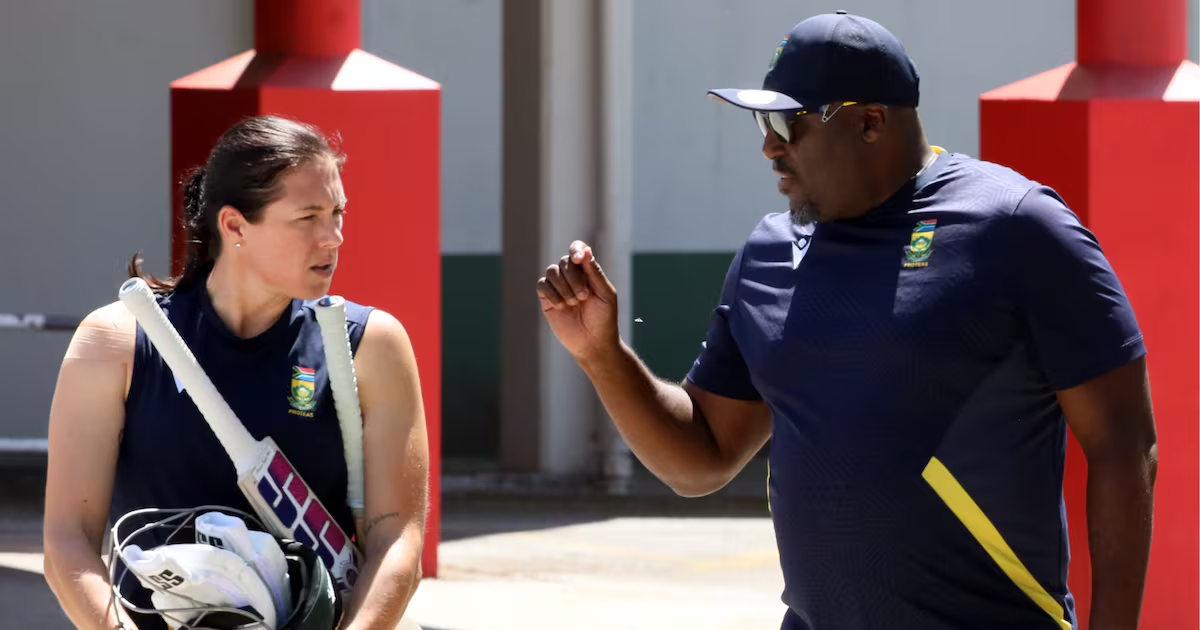
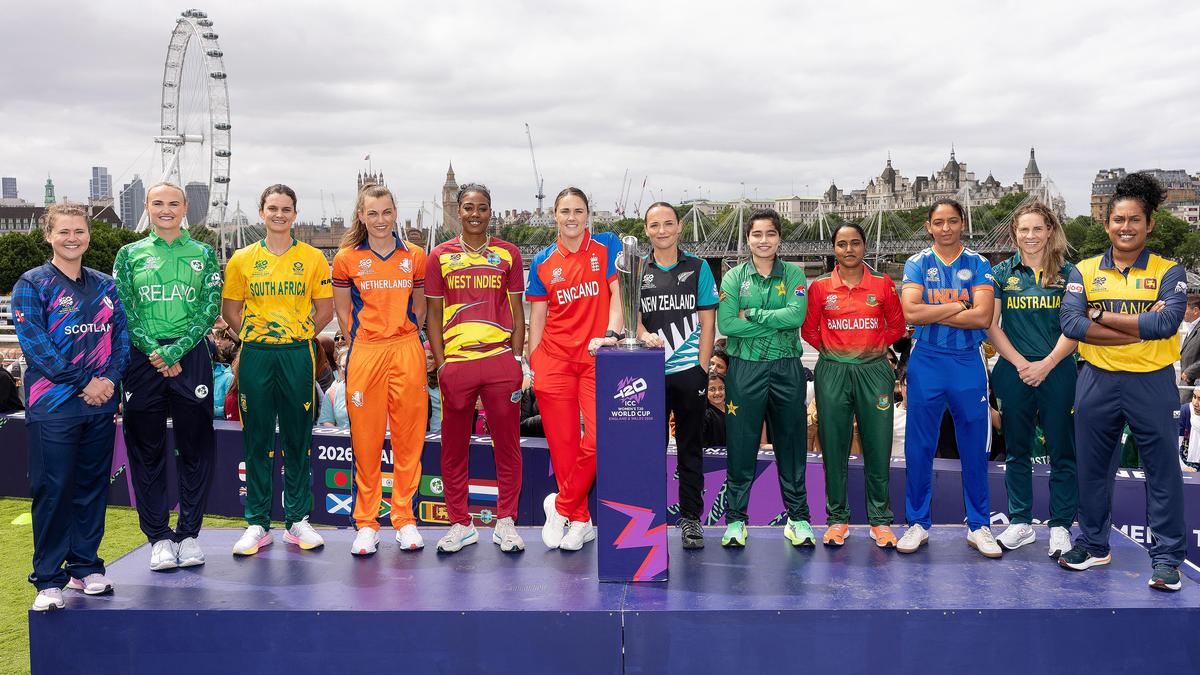
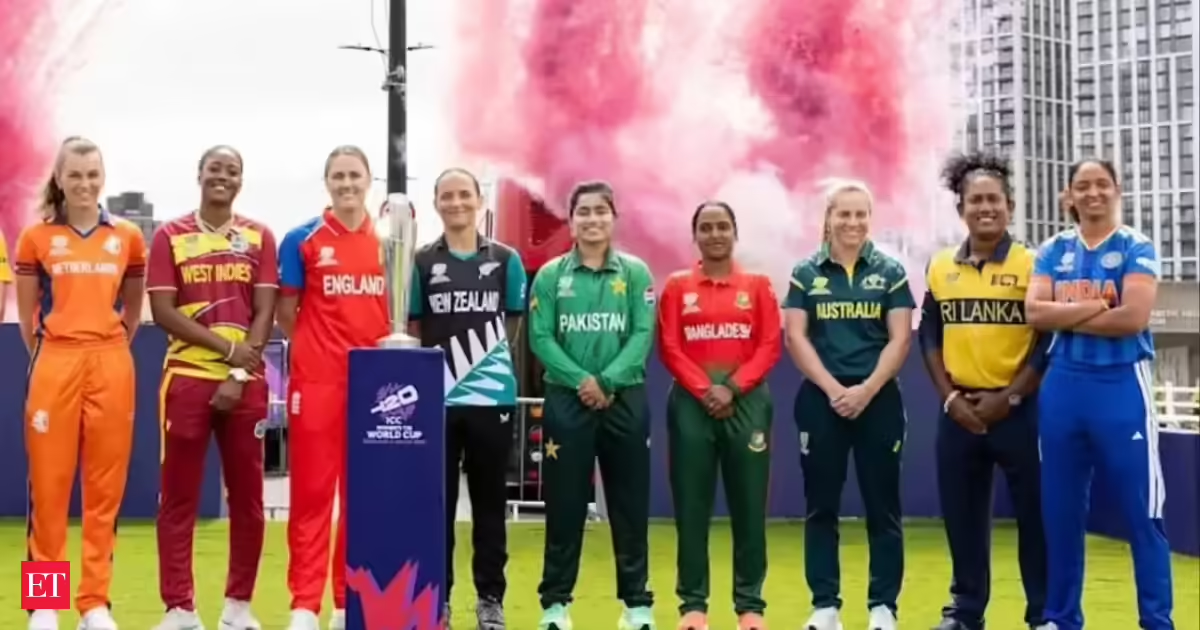
The prevailing forecast about the T20 Women’s World Cup, which starts in the UK next week, is that it will be a battle between Australia, England and India.From Michael Vaughan to Michael Atherton and Alex Hartley, there is very little mention of potential winners beyond the “big three”. Until the Proteas named their squad and included Shabnim Ismail, there had been virtually no talk of Laura Wolvaardt’s team — one that has played in the final of the past three International Cricket Council (ICC) events. If England had done that instead of South Africa, there is no doubt Hartley, a World Cup winner with England in the 2017 50-over competition, would have been waxing lyrical about the Brits and how this had to be their year. But such is the discourse in cricket, including for the men’s competitions. The sport, already so insular despite the men’s T20 World Cup expanding to 20 teams this year, while the women’s tournament has also gone up from 10 to 12 participants for its 10th edition, can’t seem to project its view beyond the “big three”. “Cricket is so dominated by England, Australia and India — they have the money and the three big leagues,” said Proteas player Sune Luus. “We go about our business slowly; no one thinks about us until we get to the final, and then it’s ‘Oh ja, South Africa, they must definitely win’.” The Proteas have established a level of consistency in the past decade that really should make them automatic contenders for ICC tournaments. They reached the semifinals at the 2017 and 2022 ODI World Cup tournaments and last year finished runners-up against hosts India. In the T20 format, they followed a narrow semifinal loss to Australia (also hosts) in 2020 with runners-up finishes in the next two tournaments. Perhaps coming short of winning the whole thing has meant it’s easy to ignore South Africa, but over that span they’ve also been more consistent than England (beating them in two semifinals), beaten Australia in a semifinal and won against India in the group stages of last year’s ODI tournament. “Actually, we don’t care what the world thinks. If people can’t see that this is a serious team, then I don’t know what is wrong with them. But that’s OK. We must focus on what we must do,” said Dané van Niekerk.The former Proteas captain oversaw the important step the side had to make from being competitors to contenders and instilling the belief that beating the “big three” was well within their grasp, as was winning a World Cup. She and Luus think it’s no bad thing that they are going into this year’s tournament with none of the experts rating their chances. “It’s better that they don’t talk about us,” said Luus. “You don’t want to go into a tournament as favourites,” Van Niekerk added. However, it is a reflection of how little insight there is about the game beyond England, Australia and India and just how lazy former players with big media platforms are when it comes to providing proper analysis. Hartley, who hosts a popular podcast alongside former England teammate Kate Cross, made a passing mention that Ismail’s selection showed that South Africa are taking a step backwards. In a very shallow sense, that might be the case, but Ismail’s selection also shows that coach Mandla Mashimbyi can recognise an area of weakness and that Ismail can galvanise it. She remains one of the world’s most potent fast bowlers, hence her continued presence in the premier franchise competitions in the women’s game.The Proteas are definitely a major contender for this year’s T20 World Cup and are even among its favourites. They have the world’s best batter, a potent “finishing” batting core led by Nadine de Klerk, a legend in Marizanne Kapp, a thrilling young bolter in Kayla Reyneke and, with Ismail’s inclusion, a well-rounded and versatile bowling unit. That so many experts don’t see that is bizarre. To change that narrative, however, South Africa must go out and win the thing.