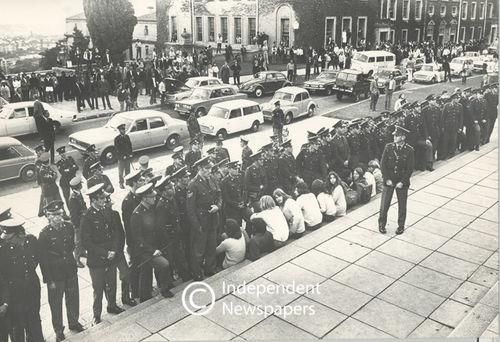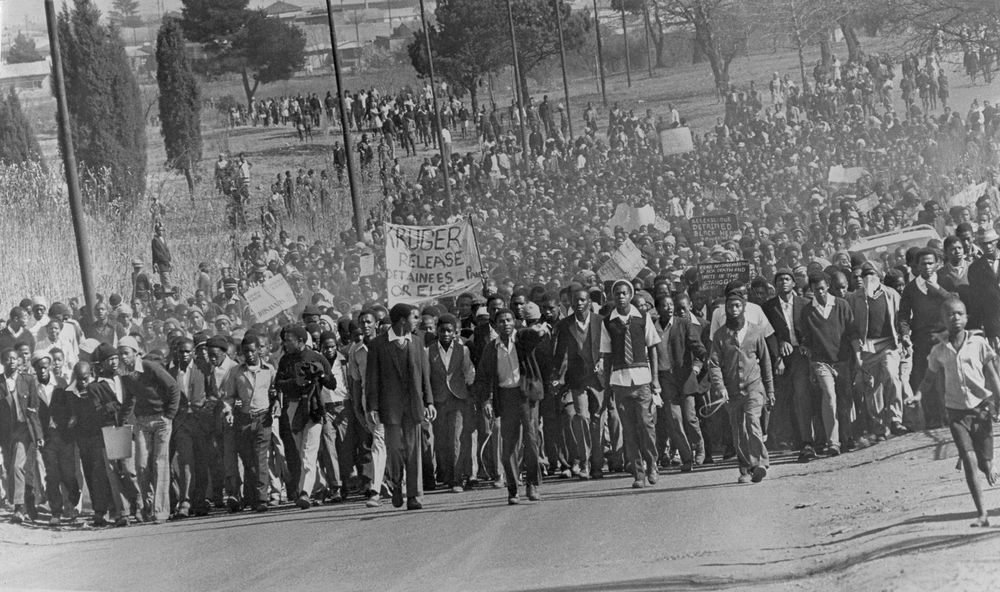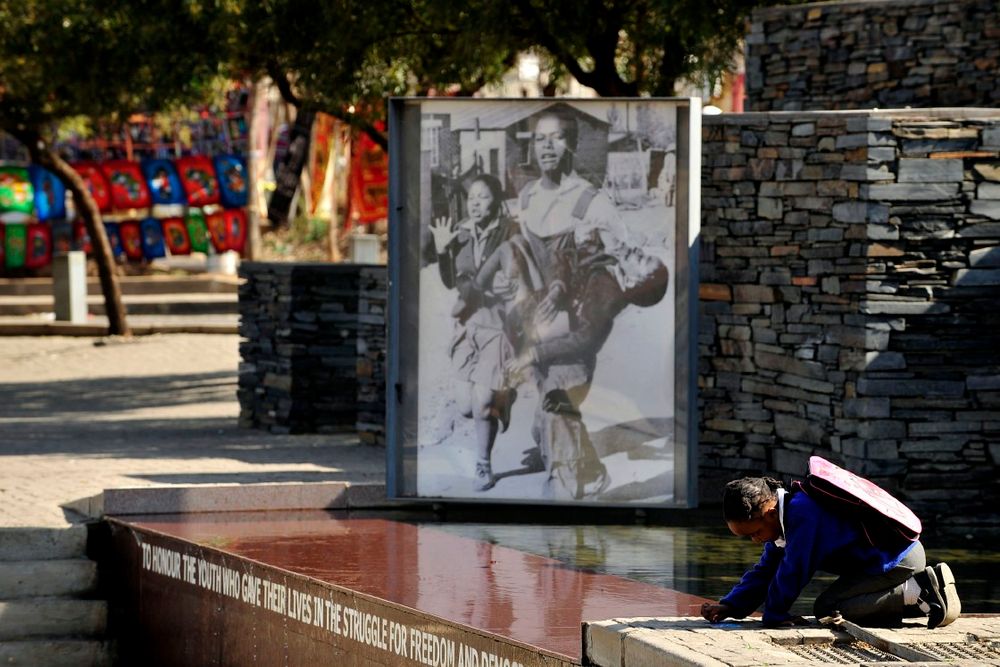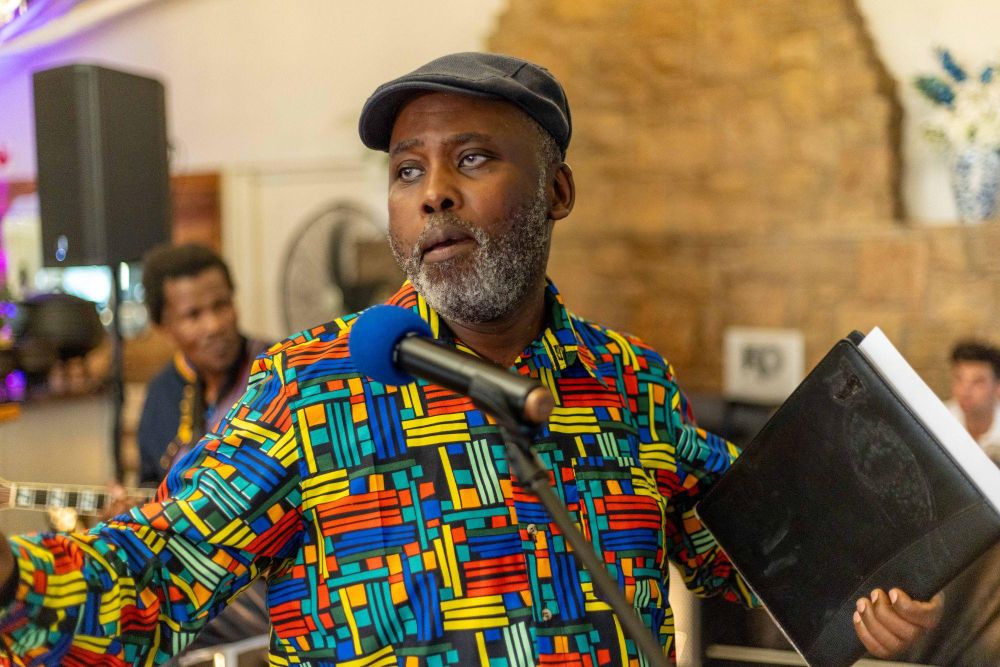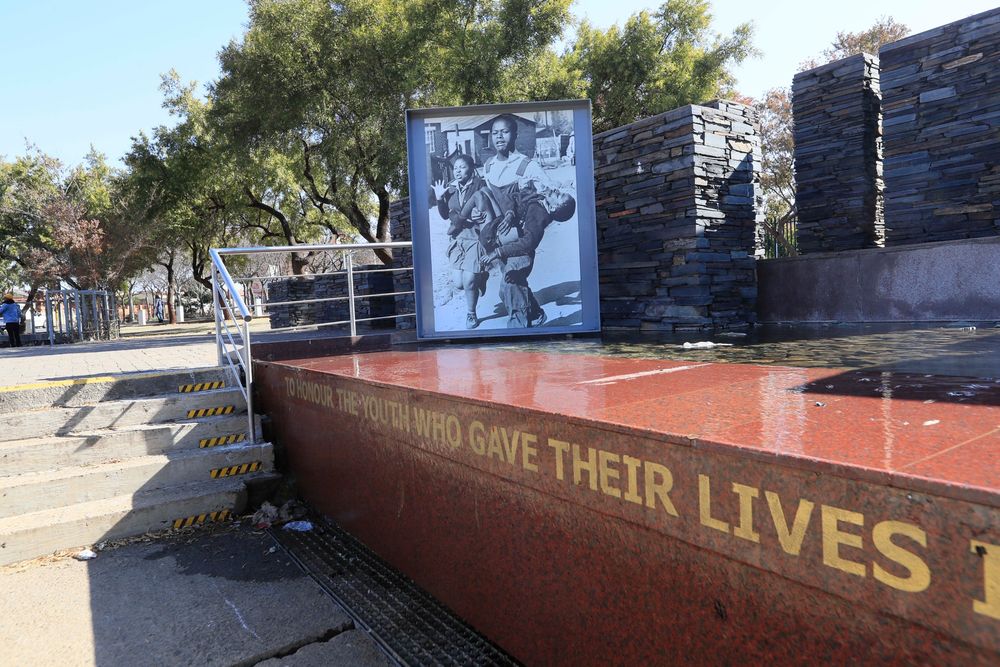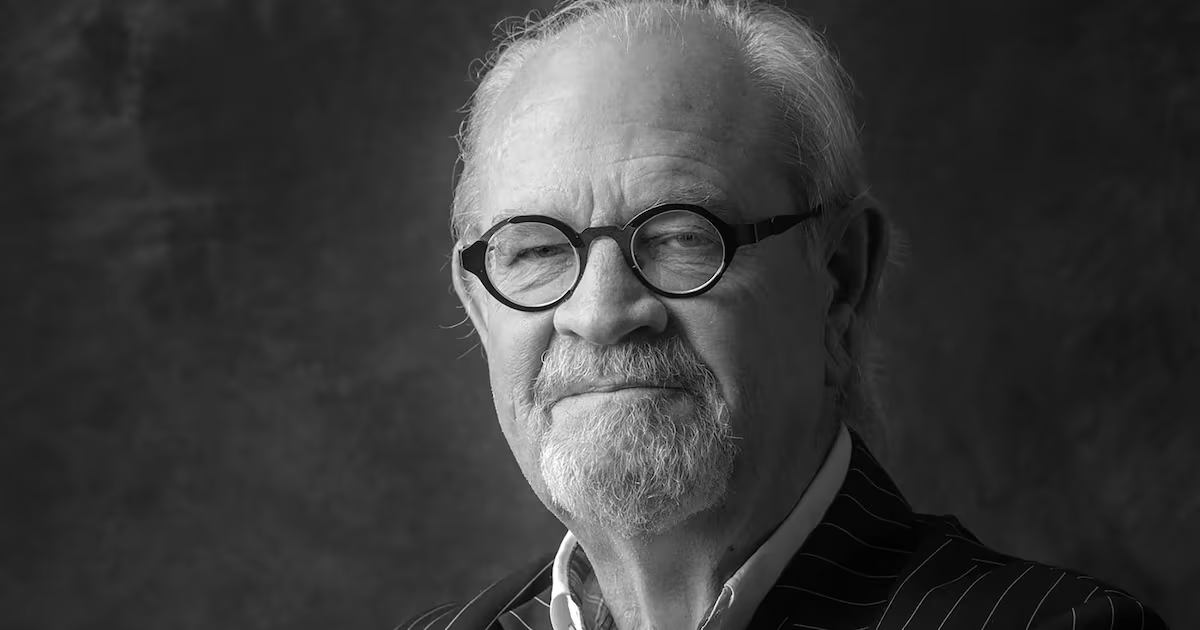
As South Africa approaches the 50th anniversary of June 16 1976, Max du Preez returns to the day that changed his life and career. In The End of Normal, he looks back on the Soweto uprising as the young white Afrikaner reporter who witnessed it first-hand.Why this book now?The End of Normal refers to that first bullet fired at 9 o’clock on the 16th of June 1976. I was there as a 23-year-old reporter. There was a South Africa before June 16 and a South Africa after June 16.But I also realised I can’t write the definitive book on June 16. It’s inappropriate. I’m a middle-aged white Afrikaner man. What I can do is say who I was on that morning, where I came from, what I thought, how I lived and how that moment changed my life.I quote Virginia Woolf in the book, saying, “If you can’t write the truth about yourself, you can’t write it about anybody.” I thought it would be authentic to take you along on my journey of 50 years and show you what I experienced first-hand.How do people justify an unjust system to themselves?One of the questions I had to confront when I started writing this book was, “Are my people evil?” Were my people evil because apartheid was evil? Apartheid was a crime against humanity. It’s a very uncomfortable question. One thing I did was go to my father, who was an Afrikaner nationalist. He supported apartheid. He supported the National Party. He was not an evil man. In a bizarre sense, he was a very just man who cared about the underdog.That’s a schizophrenia I needed to get my head around. We cannot judge those people according to today’s sensibilities. I understand my ancestors’ unhappiness with British colonialism and then going on the Great Trek, looking for their own little piece of land. Constantly, you have to say, “Don’t judge them according to what we think now. Judge them according to what they might have felt and how they might have thought.”But then came 1913, and they stole the majority’s land. After that, nothing could work again. I would defend my ancestors, saying they wanted to develop separately. We’re an Afrikaner volk with our own language. For that era, I would say, yes, I can live with that. But then you can’t steal their land and limit the majority to 7% of the land. You cannot do that. After that, it was downhill. Absolutely downhill. Then came 1976, the beginning of the end of apartheid.What is driving the white grievance narrative?I spell out how AfriForum and Solidarity started. Flip Buys had this vision, based on Zionist nation-building organisations in the 1920s. He started with the idea of a trade union and built that into a nationalist force.He was successful beyond belief. It’s the most powerful group of organised Afrikaners. They claim 600,000 members. If I judge according to the reaction to my book, or generally on social media, it seems as if most Afrikaners have positive views of Solidarity and AfriForum.It was very clever. They zoomed in on land. I’m not saying farm murders and farm attacks are not a serious problem. They are. But they blew it completely out of proportion. People feel so emotional about farm murders because they understand them as an attack on Afrikanerdom and on whiteness. The idea is that these farmers are being attacked and murdered to drive them off the land, and then the Afrikaner will once again be homeless and stateless. That’s the psychology of it.'The End of Normal' by Max du Preez. (Supplied) Why are AfriForum and Solidarity so influential?They focused on the insecurity among Afrikaners after 1994, or rather after Nelson Mandela had gone. Afrikaners felt very much in love with Madiba and at home they waved the flag. Then Jacob Zuma came in and the state started falling apart, municipalities started falling apart. Corruption grew. Afrikaners became bewildered because they felt under threat, like all South Africans, but they also felt marginalised as Afrikaners, as white people. Without the collapse of infrastructure and governance in South Africa, Solidarity would be a small cultural movement today.What Solidarity does is genius. They build things in record time — a technical college, a university — with not a penny stolen. What they have achieved is formidable. The contrast between what they’re doing and what the state is doing is vast. That is the yearning I think most South Africans have. We want a capable state that can actually do things.Why does the white grievance narrative resonate with the American right?South Africa has been blessed or cursed as a sort of test tube for the world. Apartheid was so appalling to the rest of humanity that it gave the world the word itself and helped build a massive anti-apartheid movement. South Africa was the place where the world could see, very clearly, what was wrong with apartheid ― a white minority ruling over a black majority. Now the same racial numbers are being used to tell a different story. The argument is, “this is what happens when black people dominate and minority groups are marginalised.”That feeds directly into “the Great Replacement”, an American conspiracy theory that claims, falsely, that political or cultural elites are trying to replace white citizens with nonwhite immigrants to reduce white power and influence. The diversity, equity and inclusion (DEI) backlash is so big in Maga, and that is what people like Ernst Roets and Buys are tuning into. They go to Donald Trump and say, “What is happening to us Afrikaners will happen to you, white Americans, so come to our rescue.” They push the right buttons.What changed when Musk gave this narrative a large platform?Elon Musk and Trump have given the white right wing a massive boost based on a false narrative. As I say in the book, it’s as if Buys stood on the rooftop and said, “The Afrikaner is back on the world stage.” They see it as a licence to be racist. I’m a barometer for this kind of racism because I’m a dissident Afrikaner, so they like to target me. They’ve done that for 40 years. I’m a “useful idiot”, a “libtard”, a “volksverraaier”. I’m accused of “dubbelpratery”, of being aligned with a “clandestine state security project”. I see a marked difference from the time Trump was elected. The abuse has become much worse.How do we acknowledge apartheid as a crime against humanity?When we look at South Africa critically, we first have to acknowledge that we have the rule of law and a thriving democracy. The ANC didn’t seize power when it lost its outright majority in 2024. We have an active civil society. We have a free media. We are one of the most open societies in the Global South.Acknowledge that first. Then we get to the structural corruption, the cartels and the organised crime. It’s a reflection of bad governance on the ANC’s part. It’s not an ideology. It grew out of weak government. It can be fixed.What do you want younger South Africans to take from the book?Young South Africans should be proud of the generation of June 16 1976. I dedicate my book to them. The youth rose up, not the ANC, not the PAC, not the adults, not Winnie Mandela or Chris Hani. People aged 16, 17, 18 and 19 stood up, risked their lives and fundamentally changed our society. We owe them. And how do we treat that legacy? Youth unemployment is about 50%. It’s obscene.I am frustrated that June 16 stopped being Soweto Day and became Youth Day. It has become a day for having a braai, having a party and having a day off. Then the ANC comes with “Amandla! Awethu!”, and it’s a lot of political, ideological bullshit. We have forgotten the essence of what that day was.Hopefully, after 50 years, we can revive it and get back to the basics. We should honour those who risked their lives by making South Africa the country they dreamt of.
The June 16 uprising and return of white grievance politics
In ‘The End of Normal’ Max du Preez describes how the Soweto uprising changed him
1,342 words~6 min read