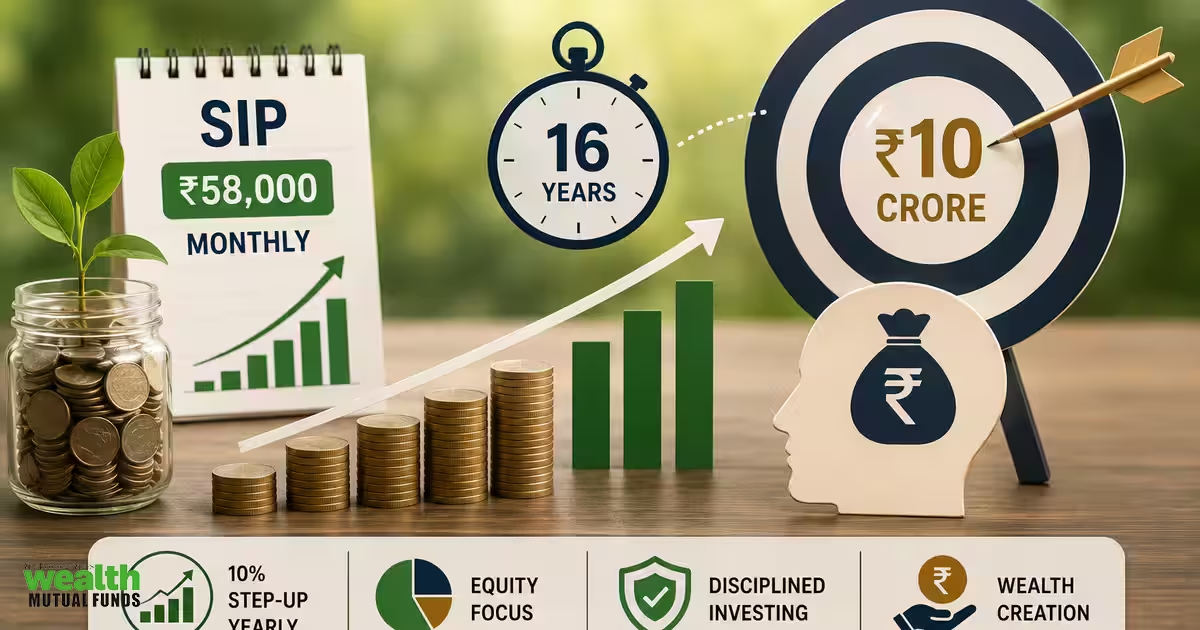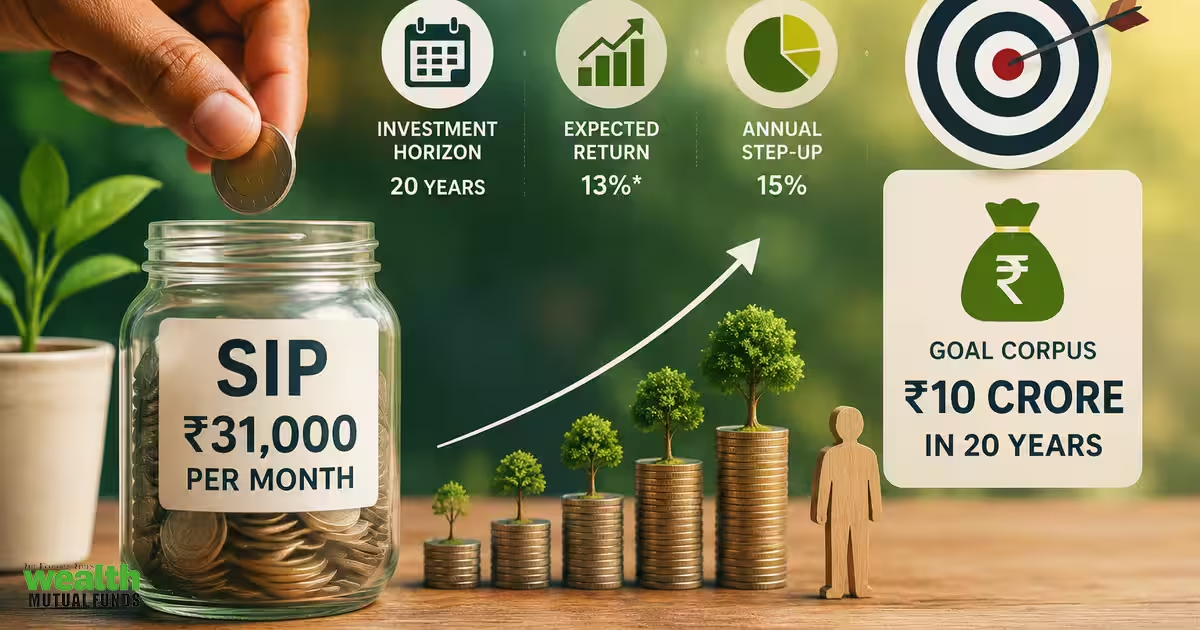
A Rs 5,000 monthly SIP is often marketed as the simplest path to long-term wealth. Countless calculators and investment illustrations show how a small amount invested consistently can grow into a sizeable corpus over time. But according to Bengaluru-based CA Nitin Kaushik, there is a crucial detail many investors overlook. While people focus on the power of compounding, they often ignore the equally powerful impact of inflation. His latest post highlights why increasing your SIP over time may matter far more than simply starting one.Taking to X, Kaushik argued that the investment industry often creates a misleading sense of comfort around small, fixed SIPs. According to him, investors are frequently shown attractive compounding charts that project impressive future wealth, but these calculations rarely emphasise how inflation steadily erodes purchasing power over the years.Kaushik clarified that there is nothing wrong with beginning small. In fact, he described a modest SIP as an excellent way to develop financial discipline and build a consistent investing habit. However, he warned that keeping the investment amount unchanged for decades can become a costly mistake.Rs 5,000 SIPTo illustrate his point, Kaushik shared an example involving a Rs 5,000 monthly SIP. Assuming an annual return of 12%, a fixed SIP maintained for 20 years could potentially grow into a corpus of around Rs 50 lakh.— Finance_Bareek (@Finance_Bareek) You Might Also Like:At first glance, the figure appears impressive. However, Kaushik said the picture changes significantly when inflation is taken into account. Using a realistic inflation rate of 6% per year, he explained that the purchasing power of that Rs 50 lakh corpus would be equivalent to only about Rs 15 lakh in today's money.Stagnant investment riskAccording to him, this is where many investors misunderstand wealth creation. If investments remain stagnant while salaries, expenses, and lifestyle costs continue rising, the investor may not actually be building meaningful wealth. Instead, they could simply be preserving a portion of their purchasing power.Kaushik believes the real driver of long-term wealth is not the initial SIP amount but the ability to systematically increase contributions over time.You Might Also Like:Increasing SIP every yearHe demonstrated this with a second scenario. If the same Rs 5,000 SIP is increased by 10% every year, roughly in line with annual salary hikes, the outcome changes dramatically. Under the same return assumptions, the final corpus after 20 years could grow from approximately Rs 50 lakh to more than Rs 1.07 crore.In other words, merely aligning investment contributions with career growth has the potential to more than double the final corpus.Kaushik argued that investors should approach their portfolios the same way businesses approach growth. Rather than treating a SIP as a set-and-forget activity, they should regularly review and increase their contributions as income rises.
Rs 5,000 SIP vs step-up SIP: CA shows the difference between Rs 50 lakh and Rs 1 crore
Starting a small monthly SIP builds discipline. However, experts advise against keeping contributions fixed for decades. Inflation erodes purchasing power significantly. Increasing your SIP annually, aligned with salary hikes, can more than double your final corpus. This strategy ensures your investments genuinely outpace rising costs and build substantial wealth over the long run.
454 words~2 min read