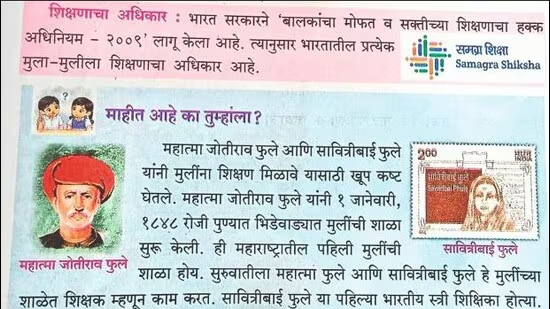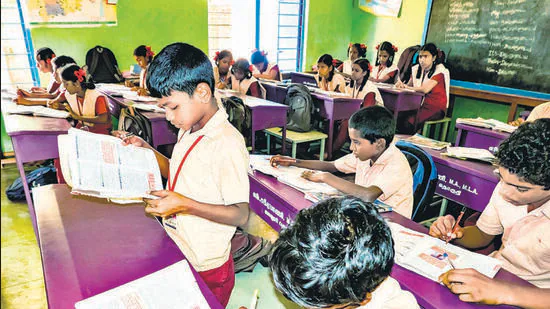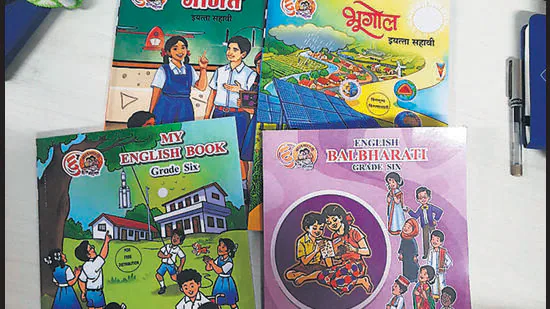
Pune: In a significant curriculum revision exercise, the Maharashtra State Bureau of Textbook Production and Curriculum Research (Balbharati) introduced newly revised textbooks for Classes 2, 3, 4 and 6 for the academic year 2026-27, aligning with the National Education Policy (NEP) 2020. This is the first time that textbooks of four classes are being revised and introduced simultaneously in a single academic year. The content structure aims to promote conceptual understanding rather than rote memorisation.Balbharati introduces revised textbooks for classes 2, 3, 4 & 6Balbharati director Anuradha Oak said on June 3 that nearly 78 % of the textbooks have already been distributed. Around six crore textbooks have been printed this year and the distribution process is expected to be completed by June 30.According to Oak, the textbook development process underwent several rounds of academic evaluation and quality assurance. Subject experts, curriculum specialists, SCERT representatives and independent reviewers examined the content to ensure alignment with educational objectives and national standards. Suggestions received from SCERT were incorporated before the finalisation of the textbooks.The textbooks also underwent legal vetting to ensure that no text or illustrations violated child rights or existing laws.Balbharati upgraded the physical quality of the textbooks by using 70 GSM paper for printing and 170 GSM laminated paper for covers. In a first-of-its-kind anti-piracy initiative, every textbook carries a watermark that helps identify authentic Balbharati publications.Oak said, “Textbook prices have increased by approximately 8 to 10 % this year owing to higher printing costs and an increase in the number of pages in several textbooks.”For the first time, each textbook also includes QR codes containing printer information and links to digital educational content. Students, teachers and parents can use the codes to verify authenticity and access supplementary learning resources.The textbooks also carry information about Tele-MANAS, Manodarpan, the National Commission for Protection of Child Rights (NCPCR) e-Box, and the Child Helpline 1098, providing students with access to mental health and child protection support systems.Every textbook begins with a table linking learning outcomes to the content covered in different chapters. Teacher guidance is integrated throughout the books, with specific suggestions accompanying lessons, activities and classroom exercises.A major innovation this year is the inclusion of district-specific content in geography textbooks, enabling students to relate classroom learning to their local surroundings and regional realities. As a result, Balbharati has developed 328 different textbook versions to address diverse educational needs across Maharashtra.A major highlight is the emphasis on inclusivity. The books feature illustrations representing children from different religions, cultural backgrounds, skin tones and socio-economic settings. Images also include children with disabilities, such as those using assistive devices, spectacles and hearing aids.Balbharati is also exploring the possibility of developing audio versions of textbooks in the future to further improve accessibility.
Balbharati introduces revised textbooks for classes 2, 3, 4 & 6
Subject experts, curriculum specialists, SCERT representatives and independent reviewers examined the content to ensure alignment with educational objectives and national standards.
455 words~2 min read