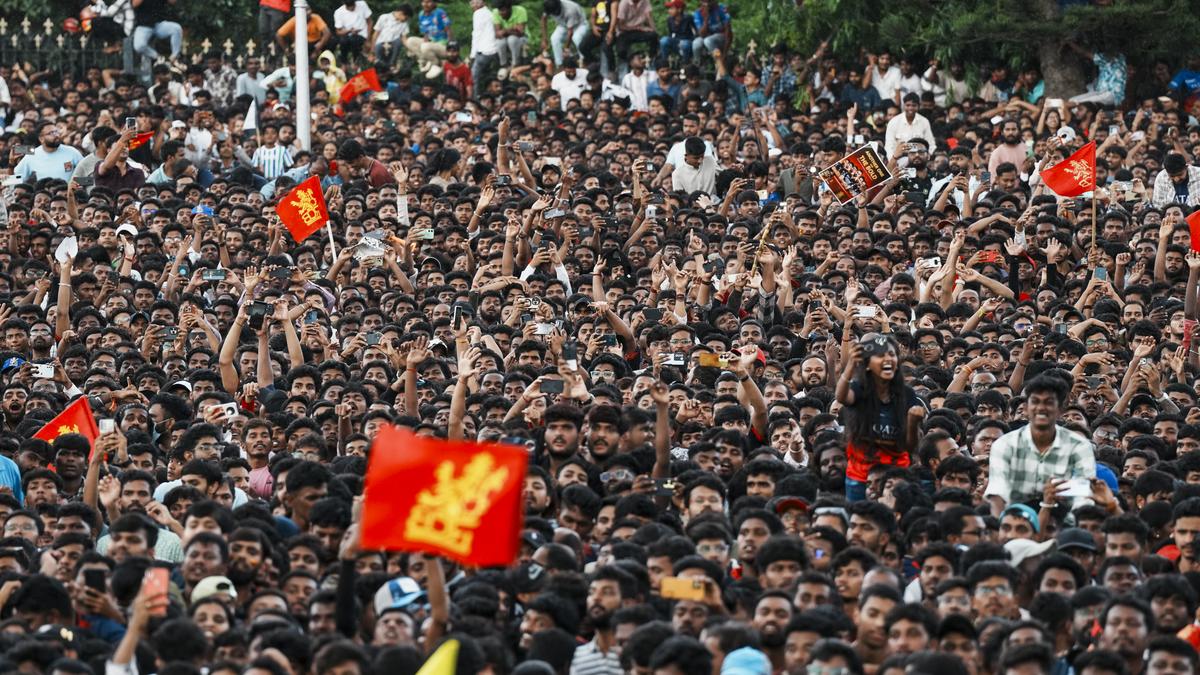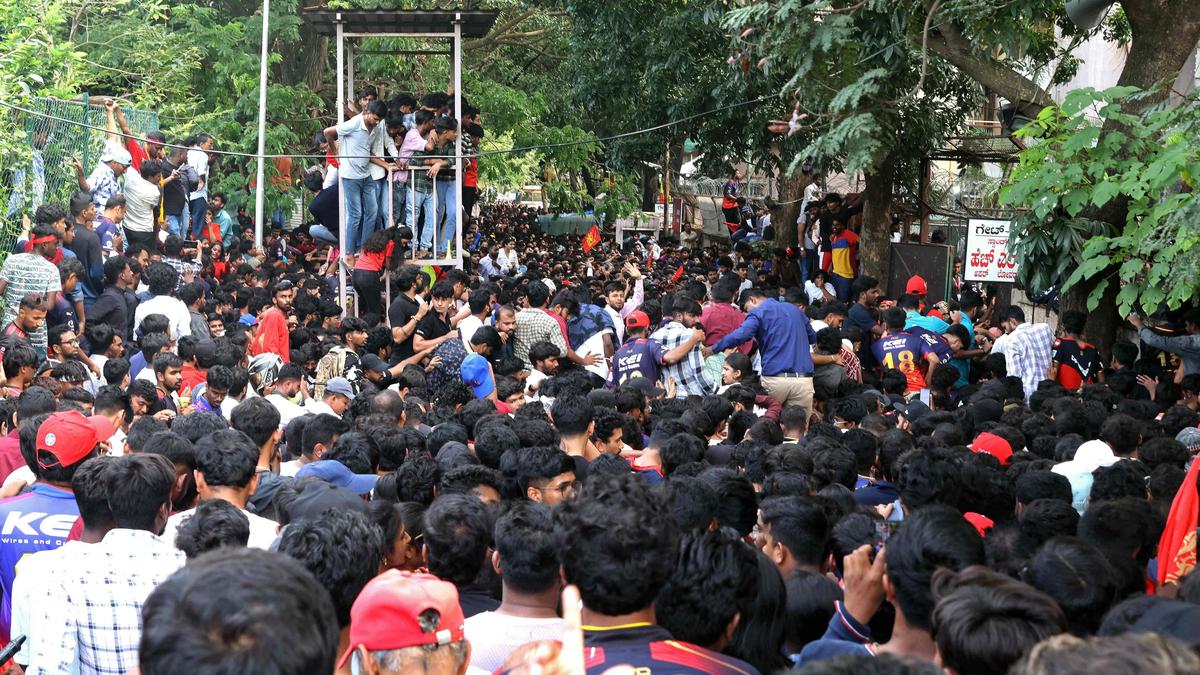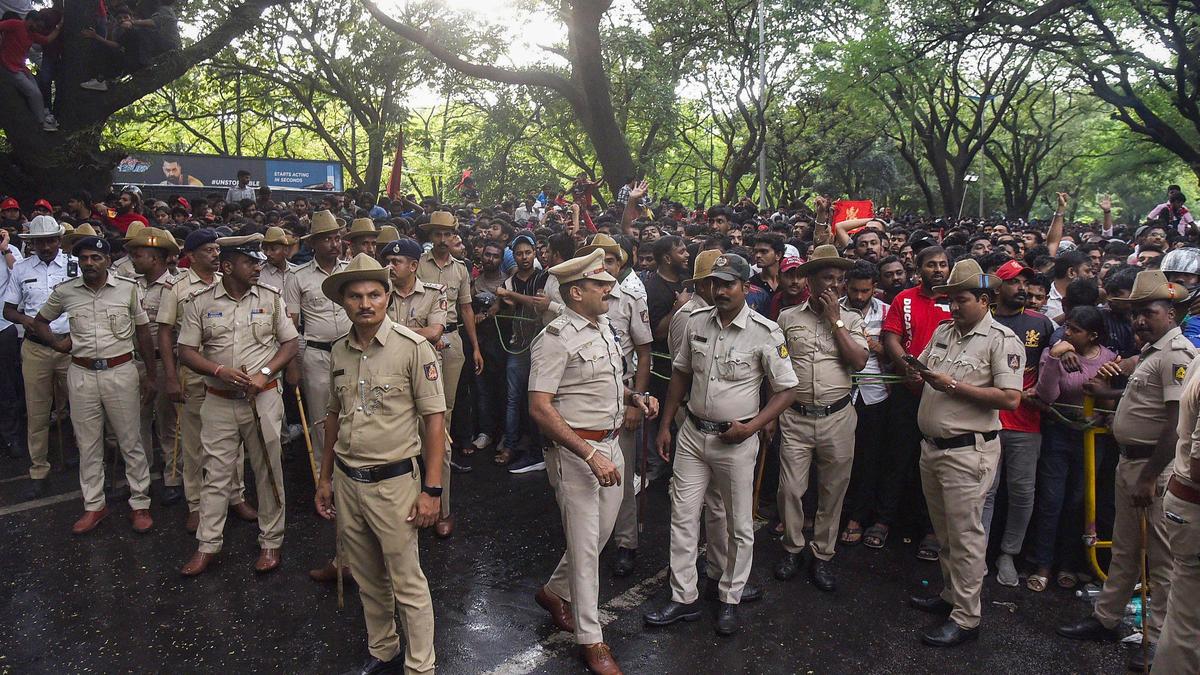
A file photo showing police officials standing in front of crowds outside the M. Chinnaswamy Stadium to celebrate Royal Challengers Bengaluru winning the Indian Premier League (IPL), in Bengaluru on June 4, 2025.
| Photo Credit: AFP
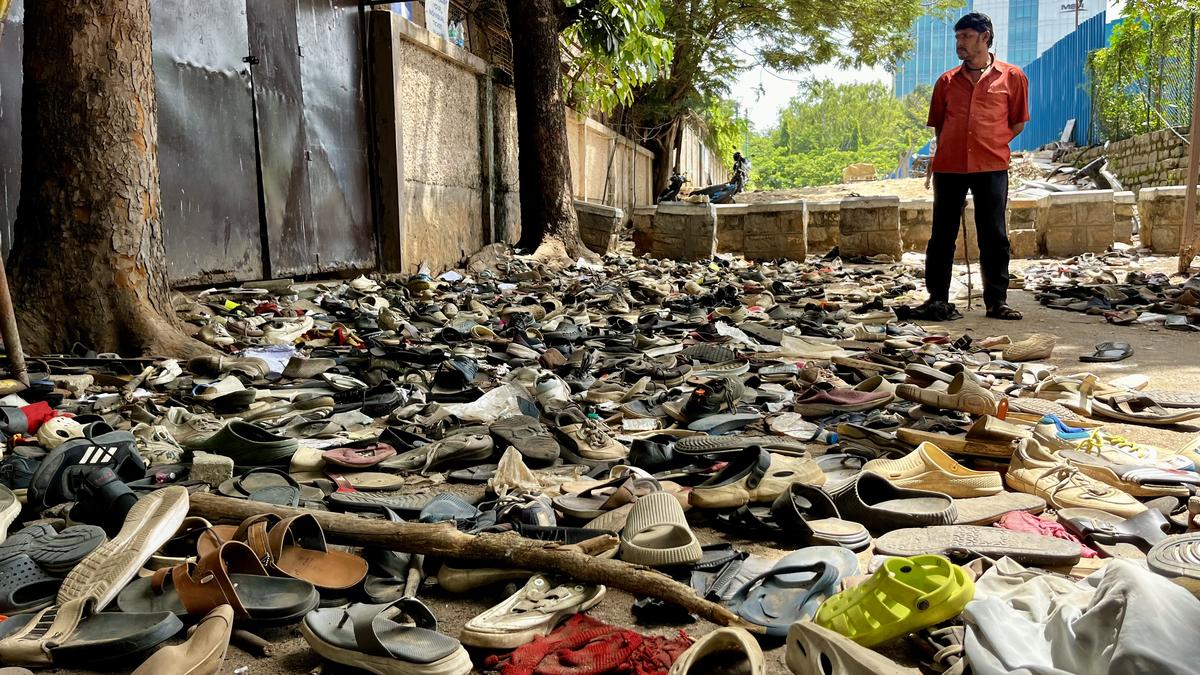
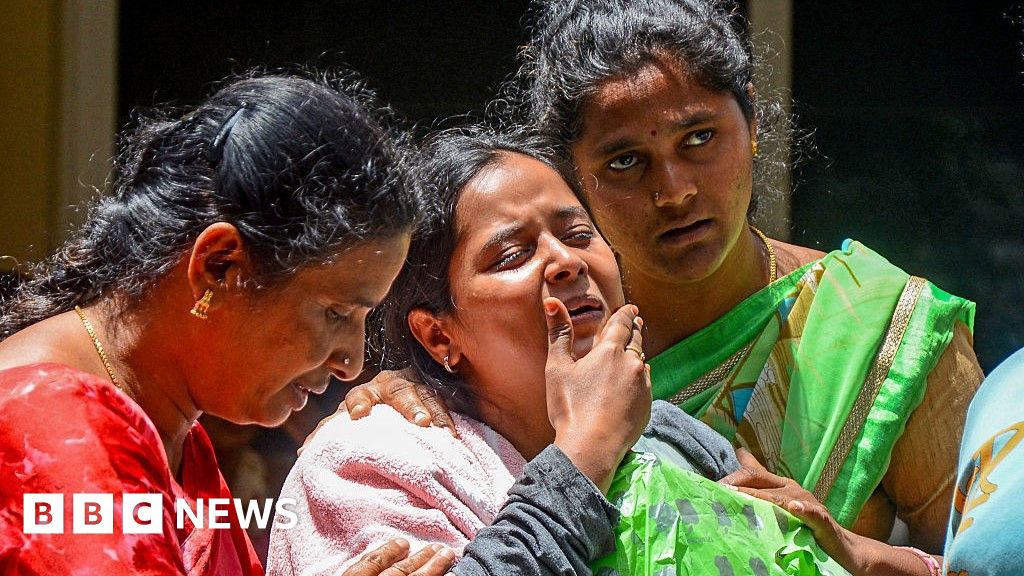
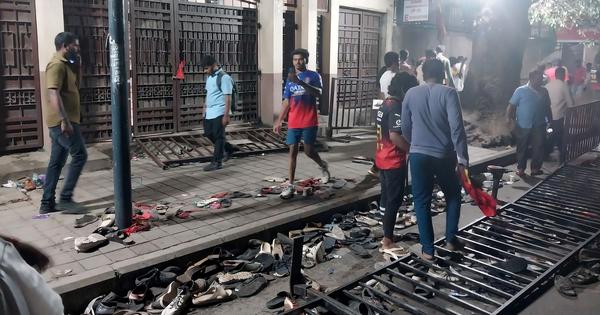
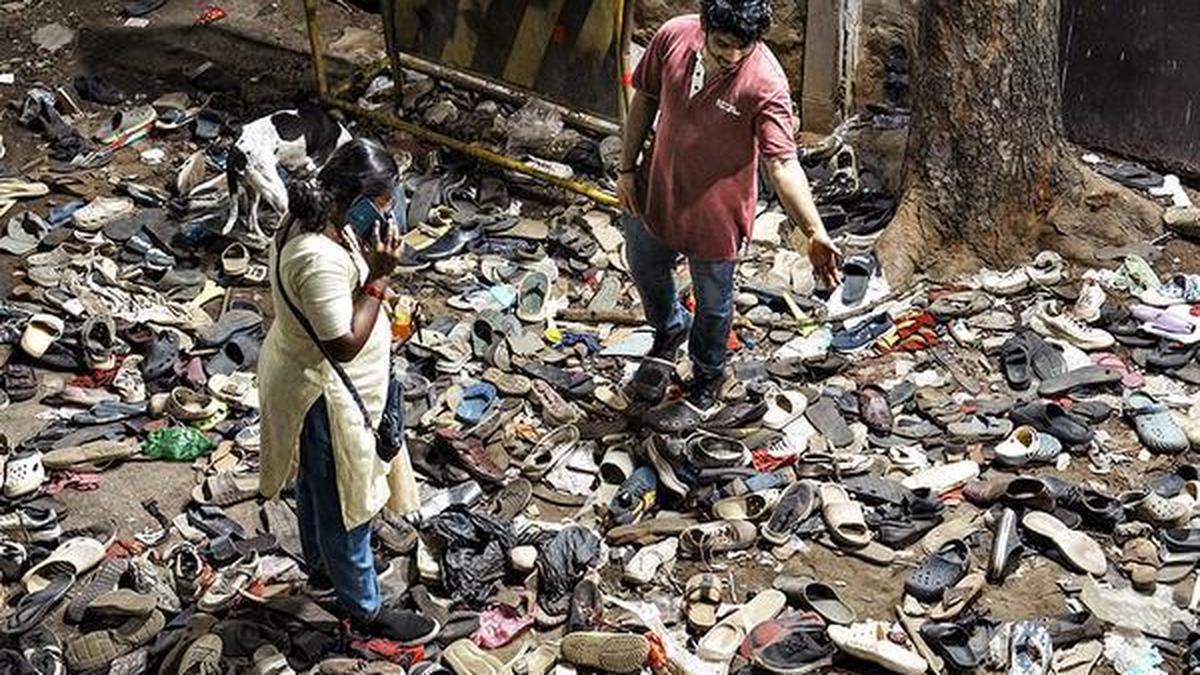
It took the deaths of 11 people in the tragic stampede outside Bengaluru’s Chinnaswamy Stadium on June 4, 2025, for authorities to acknowledge glaring lapses in crowd management. A year after the IPL celebration turned deadly, the Bengaluru City Police have introduced a series of measures aimed at streamlining the conduct of large-scale public events and preventing a repeat of such a catastrophe.For the city police, the tragedy was a wake-up call that prompted reforms in event preparedness, communication, intelligence gathering, and the use of technology for managing large-scale events.As a senior officer from the city police puts it, the department had always recognised the need to overhaul its approach to managing large crowds, but lacked a collective will to do so. However, the stampede incident sparked a debate on accountability, forcing the department to relook at its approach.Multiple levels of planning“The major change that you see today in the city is that no event, irrespective of whether it is big or small, begins without planning,” he said.The major overhaul, however, has happened in three areas. Earlier, planning for almost every event was handled primarily by the writer at the police station, who was a police constable, while higher-ups would verify and grant permission. This system has been completely dissolved. Now, all major events are planned at the Deputy Commissioner of Police (DCP) level, although small programmes are still planned at the local police station.C. Vamsi Krishna, Joint Commissioner of Police (West division), explained that the planning now begins with assessing the place of occurrence, followed by gathering intelligence on the approximate number of attendees, the nature of the event, and conducting threat and risk analyses, after which a report is prepared. It is mandated that event organisers and stakeholders subsequently attend a meeting with the police to address any missing links. Thereafter, deployment and ground-level operations are planned.Integration and institutionalising ideasMr. Krishna explained that once a plan is drafted, officials revisit previous events that were similar to the current one and adopt ideas from past events that proved successful. “We are also experimenting with newer ideas now, for which we brainstorm and discuss plans by dedicating time to it,” he said.For example, during IPL matches at Chinnaswamy this year, the concept of “holding areas” inside the stadium was introduced, which proved to be a game changer. Now, at mega events, police are identifying spaces to create holding areas to ensure the smooth movement of attendees.Technology and policy gapsThe officer said that while they have long adopted technology, its on-ground use was limited. The police now uses AI cameras, heat maps, drones and the ASTraM system to gather real-time intelligence during event management.“During the first IPL match, we busted a gang that had gone on a mobile phone theft spree. The case was solved through the successful integration of technology and classic policing techniques,” a senior police officer explained.However, what still remains lacking is a law that fixes accountability. “Although we establish clear roles for officers, there is no law to hold someone accountable. We should have legislation on this because always taking the heads of police officers will be unfair, and accountability should be shared,” said a senior police officer. Published - June 04, 2026 06:01 am IST