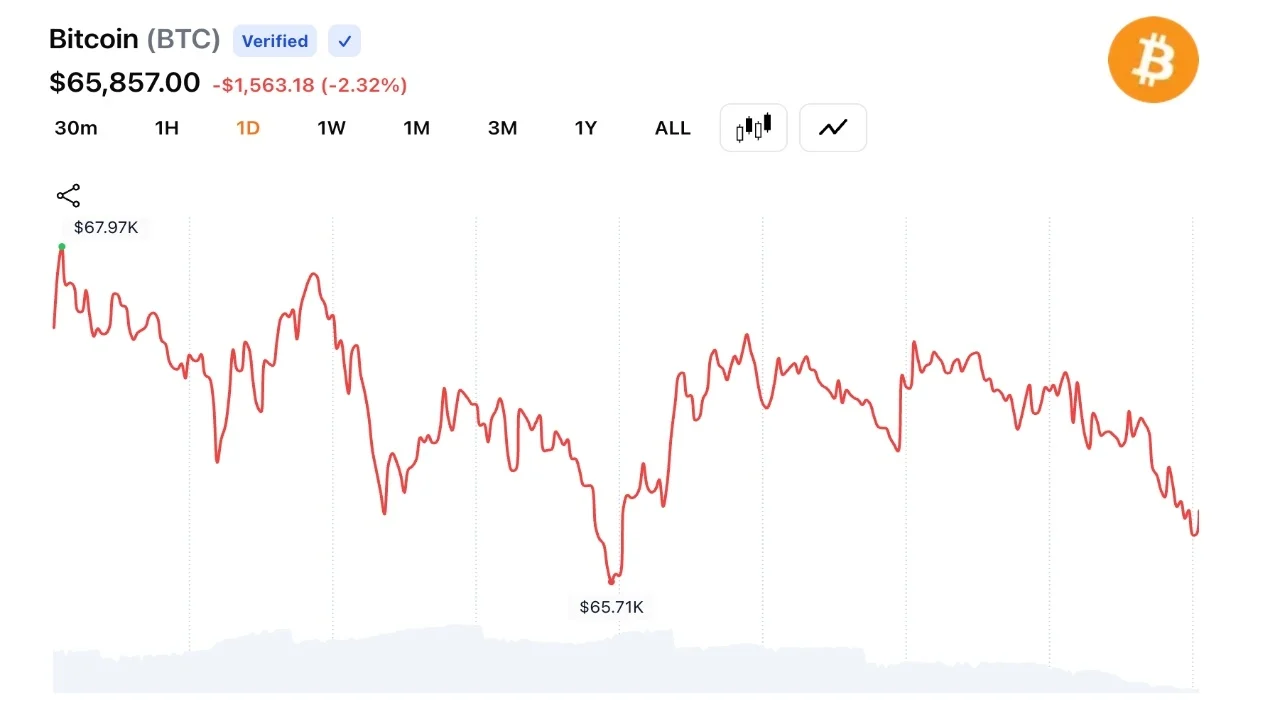
NEW YORK: Bitcoin fell by four percent on Wednesday to trade at $64,721.39 dollars, marking its lowest level since 28 February.The sharp decline forms part of a broader sell-off across the digital asset market, which has faced mounting pressure from institutional liquidations and shifting macroeconomic indicators over recent weeks.The downward momentum in Bitcoin is primarily triggered by record capital outflows from US-listed spot Bitcoin exchange-traded funds (ETFs), which experienced their worst monthly net redemptions of the year in May, reversing previous institutional demand.This capital flight has further been compounded by a broader rotation into traditional equities, as investors reallocated funds toward high-performing artificial intelligence and technology stocksBitcoin’s price swings are usually driven less by a single cause and more by a mix of macro pressure, market structure, and sentiment shifts. When it falls sharply, it’s typically one (or several) of these factors including risk-off mood in global markets, interest rate expectations, profit-taking after rallies, leverage liquidation.When investors become nervous about the broader economy — due to inflation concerns, interest rate expectations, or geopolitical tension—they tend to pull money out of “risk assets.” Bitcoin, despite being mainstreamed, still trades like a high-risk asset alongside tech stocks, so it often drops in those environments.Interest rate expectationsIf markets start pricing in higher-for-longer interest rates from central banks like the US Federal Reserve, that tends to hurt Bitcoin. Higher rates make safer assets (like bonds) more attractive and reduce liquidity flowing into speculative markets.Profit-taking after ralliesBitcoin often runs in strong cycles. After a big rally, some investors—especially short-term traders — lock in profits. That selling pressure can trigger a broader pullback.Leverage liquidation This is a big one in crypto. A large share of Bitcoin trading happens with borrowed money (leverage). If prices dip even slightly, exchanges automatically liquidate positions. That forced selling can accelerate declines quickly and sharply.
Bitcoin drops to three-month low after four percent slide
Bitcoin hits three-month low as ETF outflows trigger sharp sell-off
304 words~1 min read