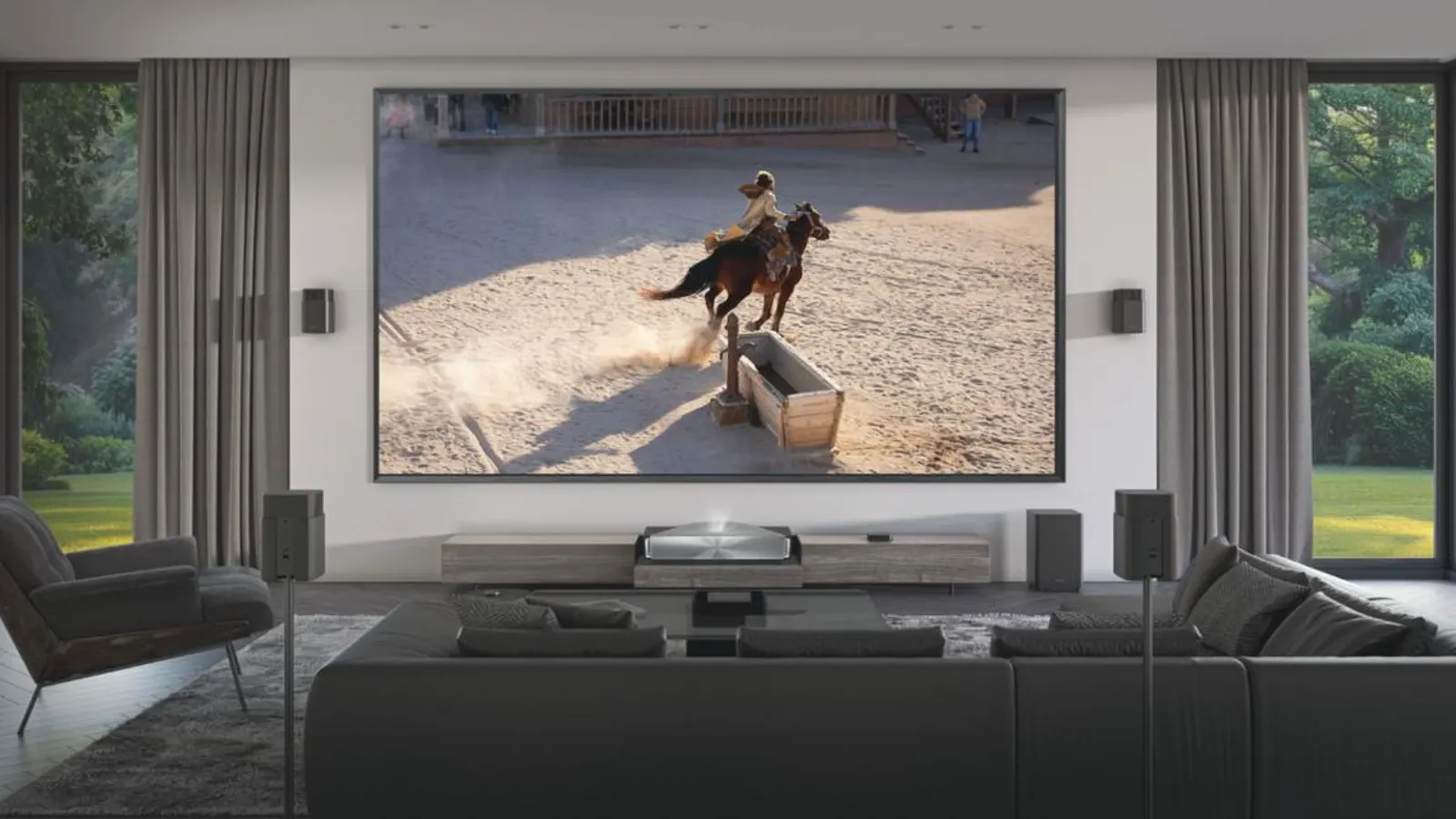
Coming off using the L9Q from Hisense for a while in my theater space, it’s clear that the theater experience is getting smaller and smaller, with little to no trade-offs.
The L9Q from Hisense brings a lot to the table, but it faces the same challenges that many ultra-short-throw projectors I’ve reviewed do. They aren’t new to the market, and a lot of the kinks have been worked out, for the most part. Hisense benefits from being one of the biggest UST projector brands, and the L9Q is proof that they keep getting better.
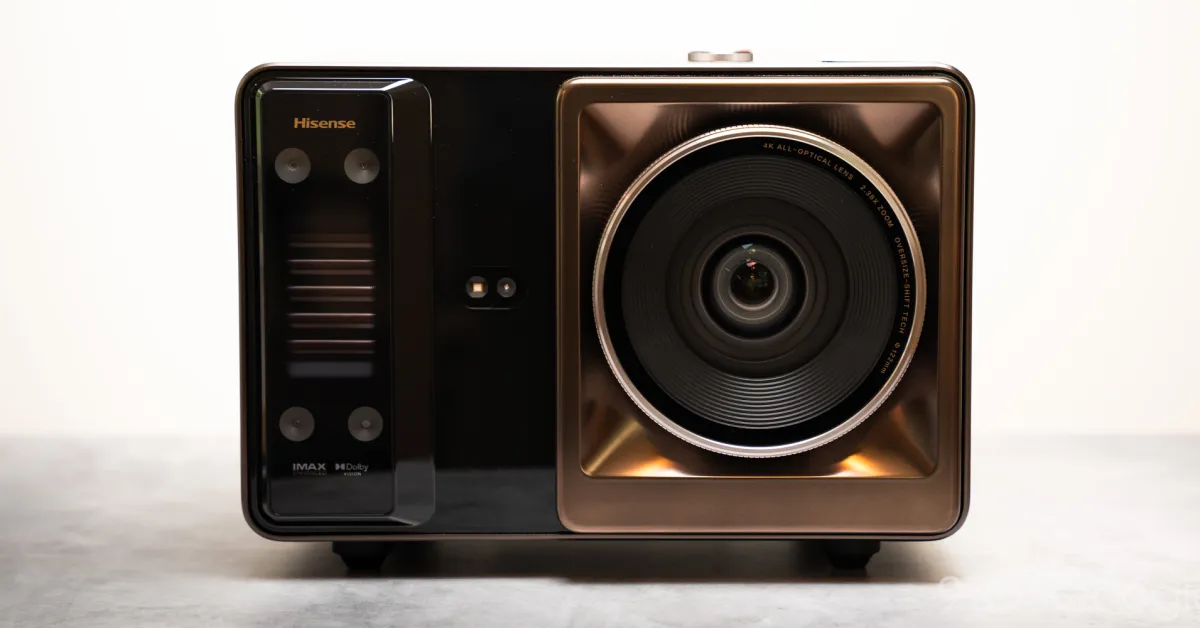
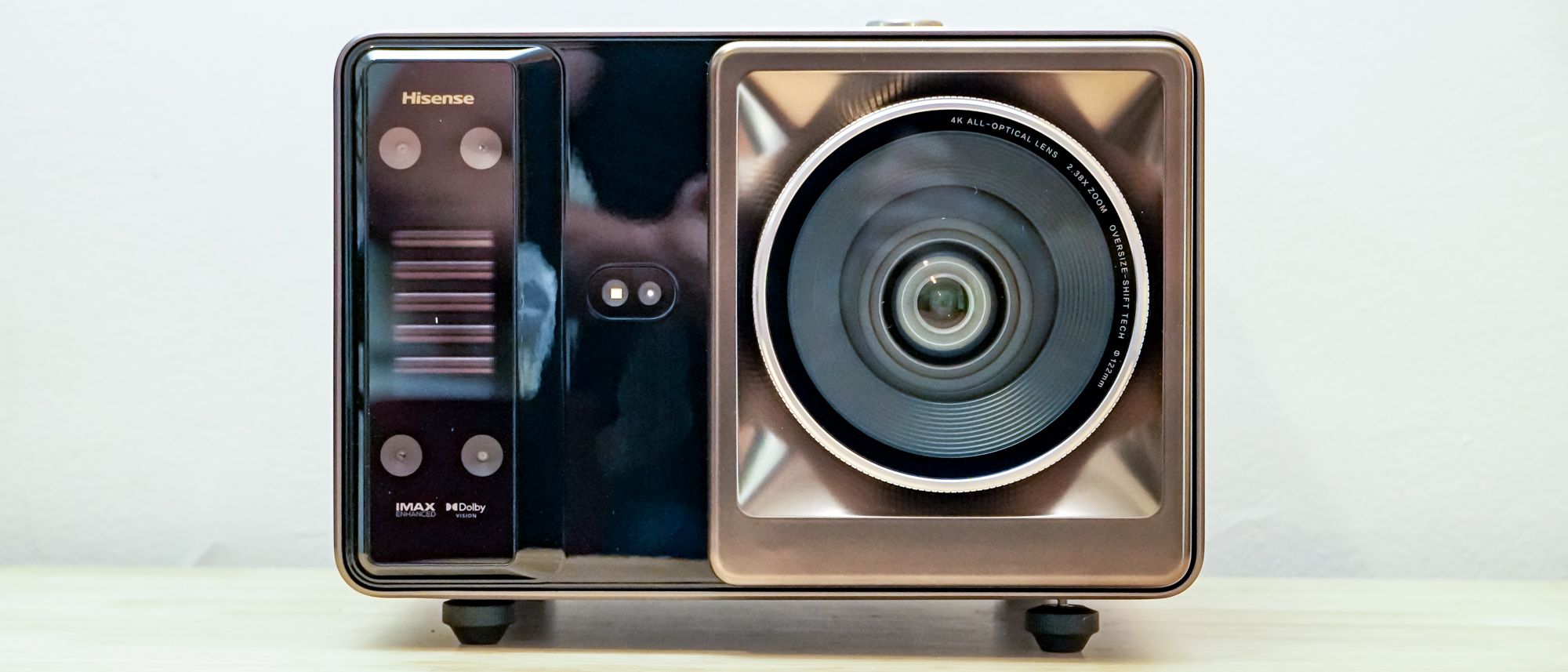
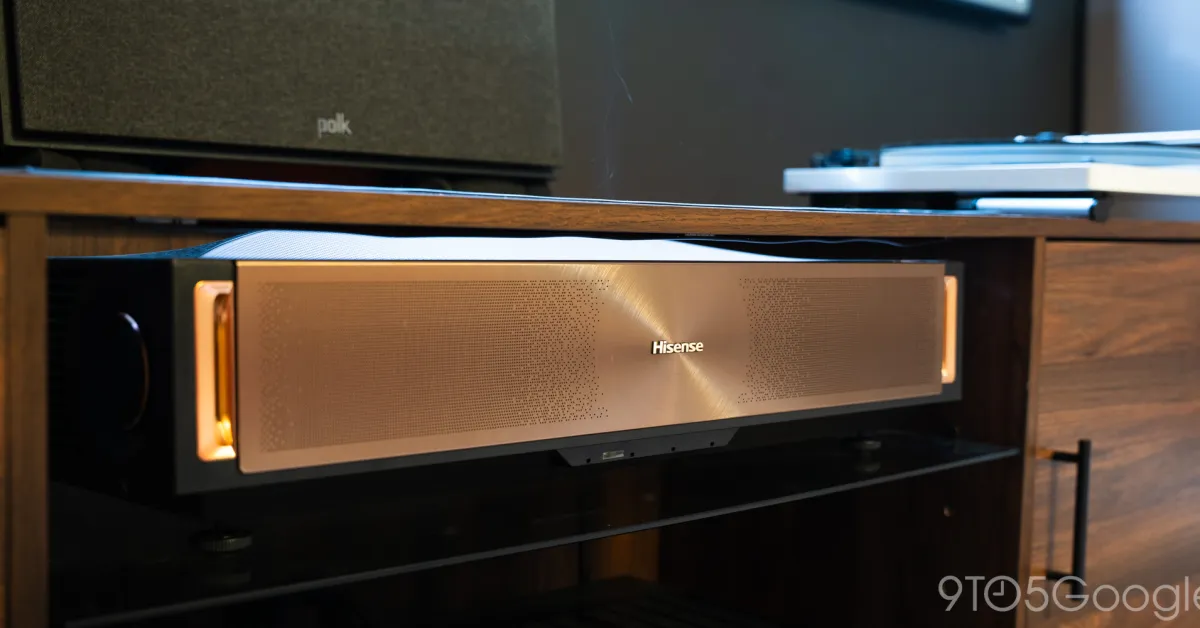
The L9Q comes in a nice little presentation. It has this gold facade with a textured faceplate that catches light. I’m not generally one for shiny materials on my media console, but it brings this nice warmth to the projector. It’s further accentuated by two orange LEDs on either side that glow when the projector is sleeping.
The rear of the Hisense L9Q carries an array of ports, including HDMI 2.1 and HDMI 2.0 with eARC. My setup consists of one outgoing HDMI connection to an AVR that handles all of my other devices, like an Nvidia Shield Pro and Xbox Series S. Hisense equipped the back of the L9Q with enough to cater to most users.
On either side and rear, Hisense added ventilation fans. It gets warm, but never hot. Obviously, the fans are doing their job because the amount of energy needed to shoot a 4K image is immense. The internal LPU Digital Laser Engine 2.0 is capable of an RGB triple light emission at 110% of the BT.2020 color space.