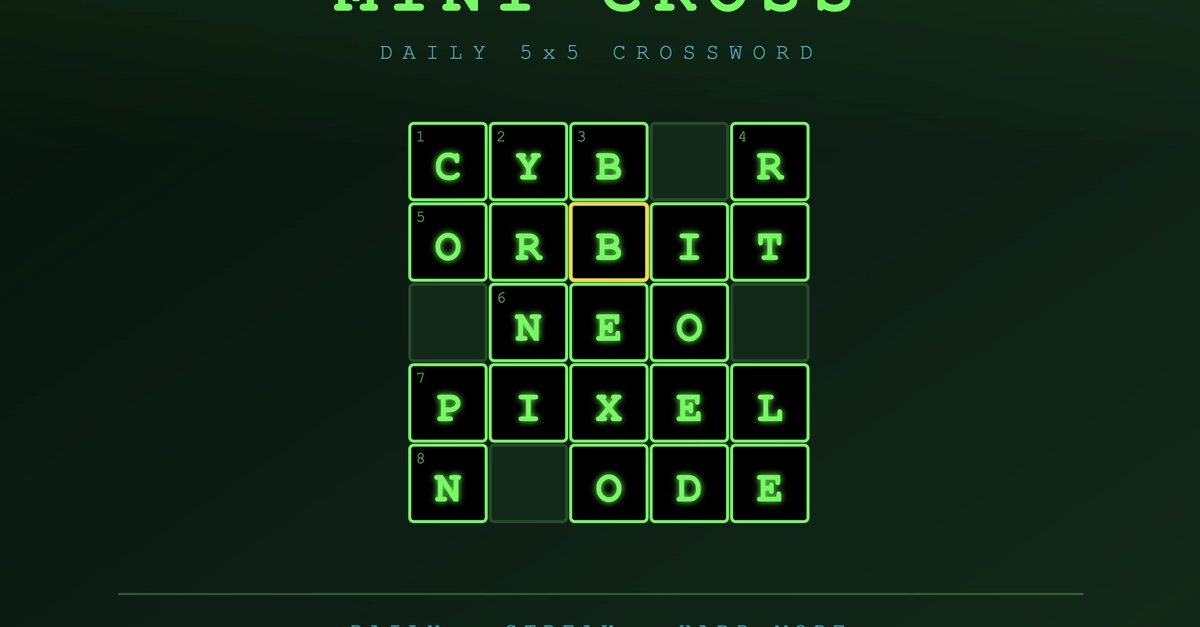
The NYT Mini popularized a specific shape of puzzle: small grid, single shared puzzle per day, streak tracking that compounds across weeks. Mini Cross takes that shape and renders it in a cyber-terminal aesthetic — phosphor green on near-black, monospace clue panel, scanline overlay. The game shipped at 59 out of 60 on our QA rubric across four iterations, and it's the first game in the catalog that was built across multiple cron fires of our remote build pipeline.
This post is the story of how it came together: the daily-only constraint that locked in before scaffold, the iterations that tuned feel before content, the streak ladder that emerged in iter-4, and the moment the pipeline crossed its own boundary mid-build.
Want to play first, then read the build story? ▶ Play Mini Cross Now
The Constraint That Locked Before Code
The first design call for Mini Cross was made before any scaffolding: every player gets the same puzzle on the same day, chosen deterministically from a date-seeded rotation. The spec described a 60-puzzle pack with the rotation indexed by daysSinceEpoch % 60.