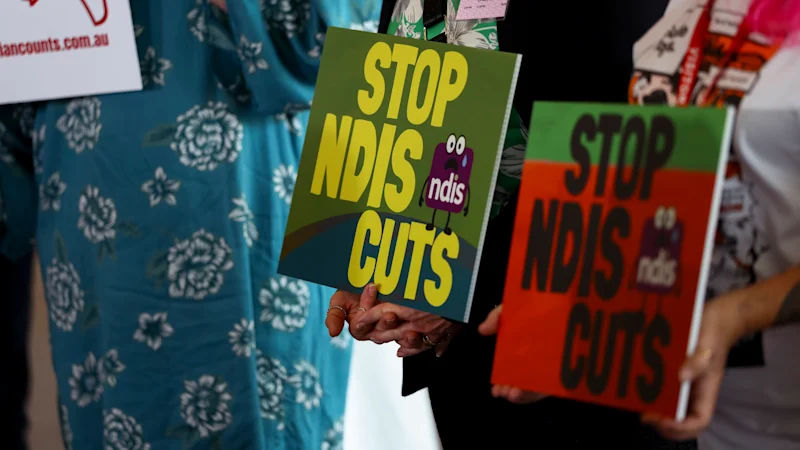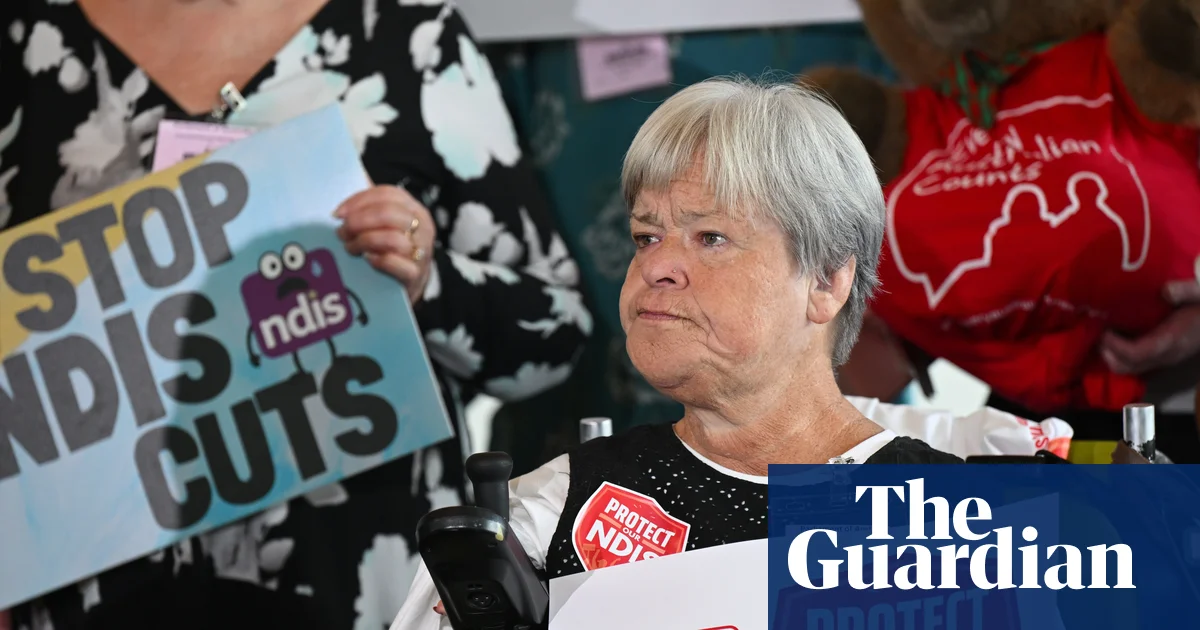
Labor’s plans to slash social participation budgets for NDIS participants in half is “blunt and inequitable”, “underpinned by dubious logic” and could lead to “absurd” outcomes, an influential thinktank says.It’s one of the latest scathing critiques levelled at the federal government’s proposal to return the national disability insurance scheme to its “original intent” by drastically overhauling who can access supports, and how much they can receive.The Albanese government’s NDIS bill is designed to dramatically curb the $50bn-a-year scheme’s growth by reducing category budgets from later this year and the number of Australians with disabilities who can access it from 2028.Without these changes, the government estimates it will cost $117bn a year in a decade’s time.Before the bill is voted on in parliament, it will go under the microscope of a Senate committee, due to report later this month.Greens senator says ‘immoral’ NDIS reforms are being rushed through Senate – videoIn a submission to the inquiry, the Grattan Institute acknowledged the importance of bringing the cost of the scheme under control but said the “case for such deep, early cuts has not been sufficiently made and is underpinned by dubious policy logic”.“There is a real risk of government hitting the growth-reduction target while missing the point: relying on blunt cost reductions that worsen outcomes for people on the NDIS while underlying design issues take more time to resolve,” it said.Sign up for the Breaking News Australia emailAmong the focus of the thinktank’s criticism is the introduction of ministerial powers to reduce a category of funding by up to 99%. The NDIS minister, Mark Butler, has already outlined a proposed 50% reduction in budgets for social, civic and community participation.Those budgets are designed to reduce isolation and build independence for NDIS participants, and can include teaching a person how to cook or catch public transport, or attend skill-building group activities.A spokesperson for Butler said the 50% reduction on social participation budgets would not necessary result in a reduction for all as some participants don’t use the full funding allocation in the plan’s time period. The latest National Disability Insurance Agency quarterly report showed participants with the funding used about 86% of it in the quarter to March 2026.The institute’s submission said supporting social participation for participants was integral to the NDIS.Quick GuideContact us about this storyShowThe best public interest journalism relies on first-hand accounts from people in the know.If you have something to share on this subject, you can contact us confidentially using the following methods.Secure Messaging in the Guardian appThe Guardian app has a tool to send tips about stories. Messages are end to end encrypted and concealed within the routine activity that every Guardian mobile app performs. This prevents an observer from knowing that you are communicating with us at all, let alone what is being said.If you don't already have the Guardian app, download it (iOS/Android) and go to the menu. Select ‘Secure Messaging’. SecureDrop, instant messengers, email, telephone and postIf you can safely use the Tor network without being observed or monitored, you can send messages and documents to the Guardian via our SecureDrop platform.Finally, our guide at theguardian.com/tips lists several ways to contact us securely, and discusses the pros and cons of each. Illustration: Guardian Design / Rich CousinsThe submission said the proposed funding cuts would result in the “absurd possibility that someone could qualify for the NDIS because an impairment substantially limits their social interaction … only for the funding for that support to be cut in half, despite it addressing the very – perhaps only – need for which access was granted in the first place”.The government’s proposal will also introduce a standardised tool to determine someone’s “functional capacity”, changing who can access the NDIS from January 2028.The Grattan Institute’s submission described this as “a striking inconsistency in policy design”.“The government proposes to assess disability using a framework that rejects distinctions between ‘physical’ and ‘social’ forms of impairment, while simultaneously introducing funding policies that implicitly prioritise physical functioning over social and community participation,” it said.“In effect, the scheme would measure disability one way, but fund it another.”According to the government’s own impact analysis last month, social participation was beneficial for Australians with disabilities as it gave them a sense of belonging, increased confidence, built skills and social networks, and reduced isolation.“However, the decision to reduce this budget was preferred over others because it does not impact the health and safety of participants,” the report said.Using NDIS data from six months in 2025, the analysis determined certain disability groups would be affected more by the funding cuts than others.An average of about 34% of plans for visually impaired Australians were set aside for social participation, with 30% for those with psychosocial disability and about 28% for Australians with Down syndrome.“The proposed reductions are blunt and inequitable,” the Grattan Institute’s submission said.“These savings won’t be achieved without shifting costs on to families and informal carers.”The National Aboriginal Community Controlled Health Organisation (Naccho), the peak body for Aboriginal health groups, said the changes would only widen the gap for disadvantaged Aboriginal and Torres Strait Islander people.In its submission to the committee, Naccho said social participation budgets were primarily used by Aboriginal and Torres Strait Islander people with disabilities to maintain cultural practices and connection to communities.Naccho recommended adding a sunsetting clause to ensure any reductions were not permanent and could be reviewed.Do you know more? Email sbasfordcanales@protonmail.com
Labor’s planned NDIS overhaul is ‘blunt and inequitable’, thinktank says
Proposed funding cuts ‘underpinned by dubious policy logic’, Grattan Institute says in scathing critique
899 words~4 min read