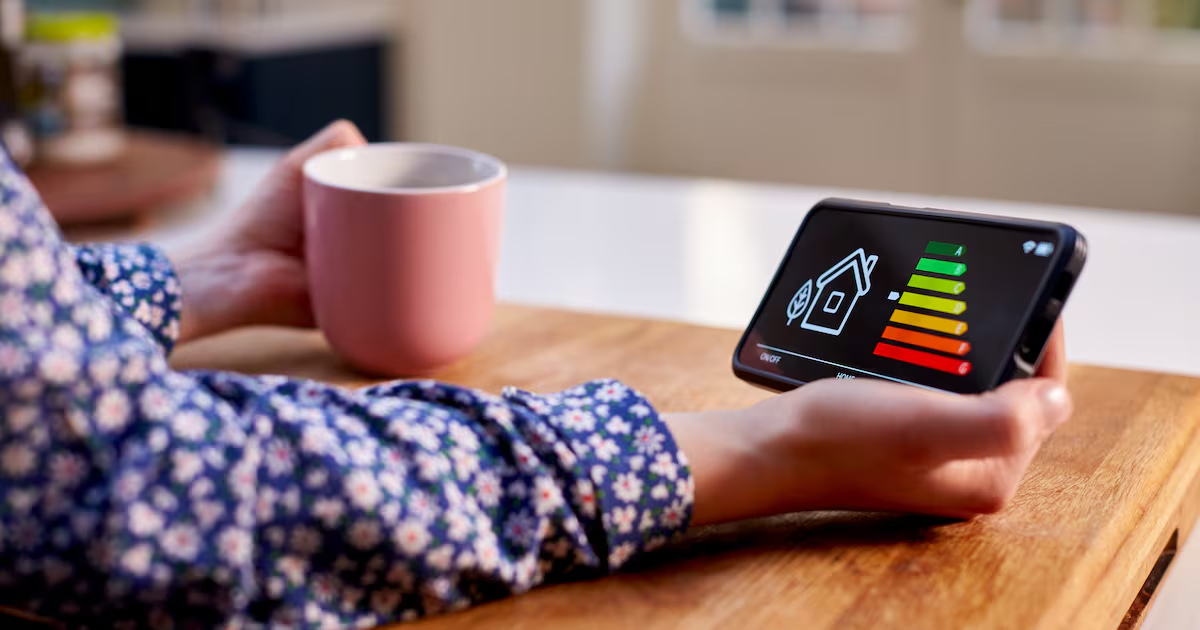
Last week the views of two Government Ministers diverged dramatically when they were talking about where energy prices might be heading. Minister for Enterprise Peter Burke said the cost of heating and lighting our homes and washing our clothes and cooking our food and watching the telly might jump by as much as 30 per cent as a result of the conflict in the Middle East.Minister for Energy Darragh O’Brien by contrast suggested that although prices would climb, they were more likely to go up by between 4 and 9 per cent. In cash terms, the difference is huge – with the worst-case scenario likely to cost the typical Irish household more than €1,000 a year, while the lower estimate would set us back about €300. It seems clear that while O’Brien was talking specifically about electricity, Burke was looking at all forms of energy. If we were to split the difference, we might be looking at paying about 15 per cent more for our energy over the next 12 months, which could see the annual cost climb by about €500.The truth is, neither Minister nor any of their advisers – nor indeed Pricewatch – knows for sure what is going to happen to prices. Much will depend on the trajectory of the conflict in the weeks ahead, so it could even be worse than that. The bottom line, however, is it seems inevitable that we are all going to have to pay dearly for the US-led war in the Middle East. We have been here before – and not too long ago. When Russia invaded Ukraine in 2022, oil and gas went through the roof and all the domestic energy companies pushed up their prices, with the average cost of heating and lighting an Irish home jumping from about €2,000 a year to close to €4,000. Prices fell back after the initial shock of war in Europe eased. The average annual price being paid by domestic customers in Ireland now is about €3,000.To manage our costs as this year continues, we will need to have a better sense of where our energy is going. We haven’t yet got to the stage where the glimmermen are policing our energy usage, but more and more people are likely to question why lights are being turned on and thermostats are being set too high. But how are we to monitor how much we use and keep the spending in check – if we can – when we don’t know how much the things we rely on every single day to keep us warm, clean, illuminated and fed actually cost?We all know how much a litre of motor fuel costs because there are signs screaming the prices at us from every forecourt in the State. It is easy to track how much home heating oil has climbed by, and most of us have a pretty good handle on how much we spend on groceries because we have to hand over the money before we can leave the shop.But how much does it cost to have a shower, or heat the livingroom, or have a cup of tea, or tumble dry a laundry load?Heating is the biggest expense, but how much it costs depends on many variables. Photograph: Yui Mok/PA Wire
The cost of running a home in Ireland: from one cup of tea to a 10-minute shower
Knowing how much it costs to heat the livingroom or have a cup of tea can help keep your spending in check
2,655 words~12 min read