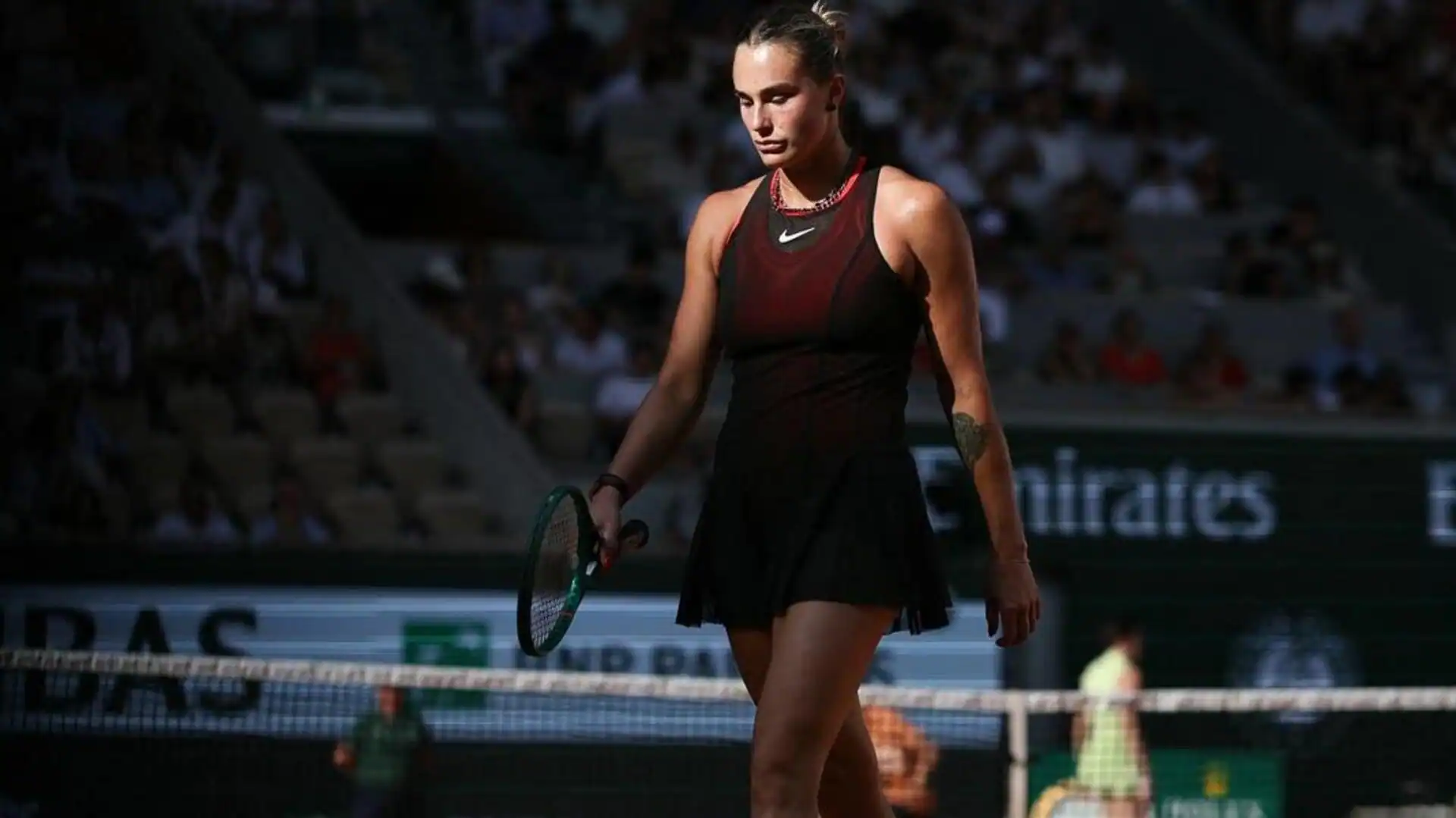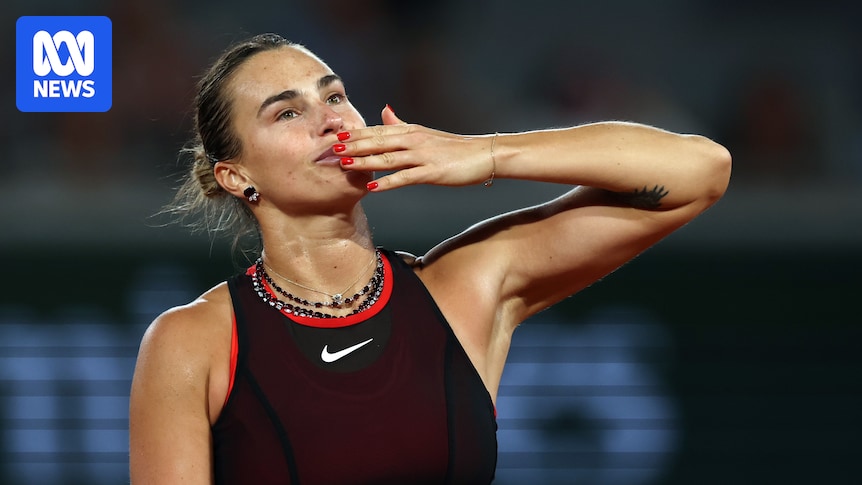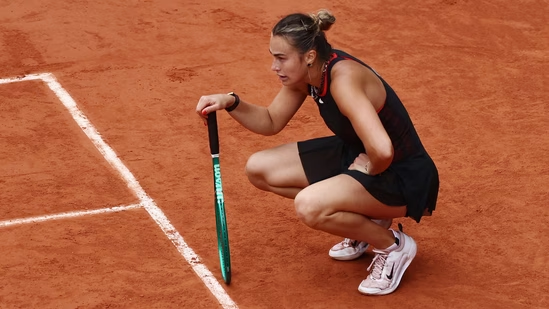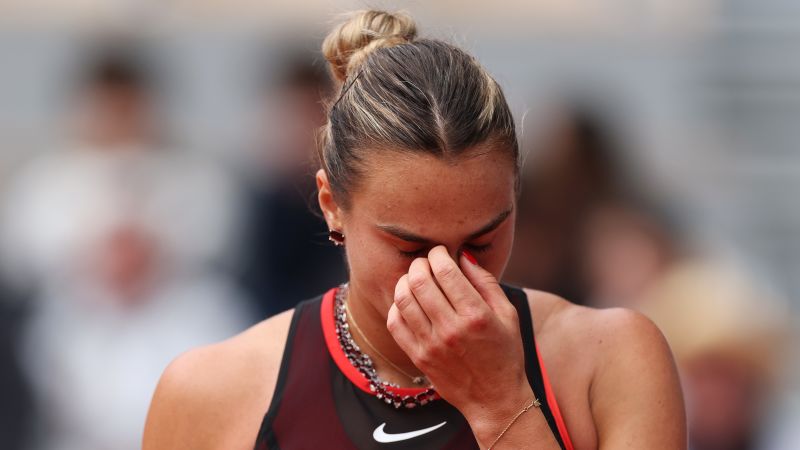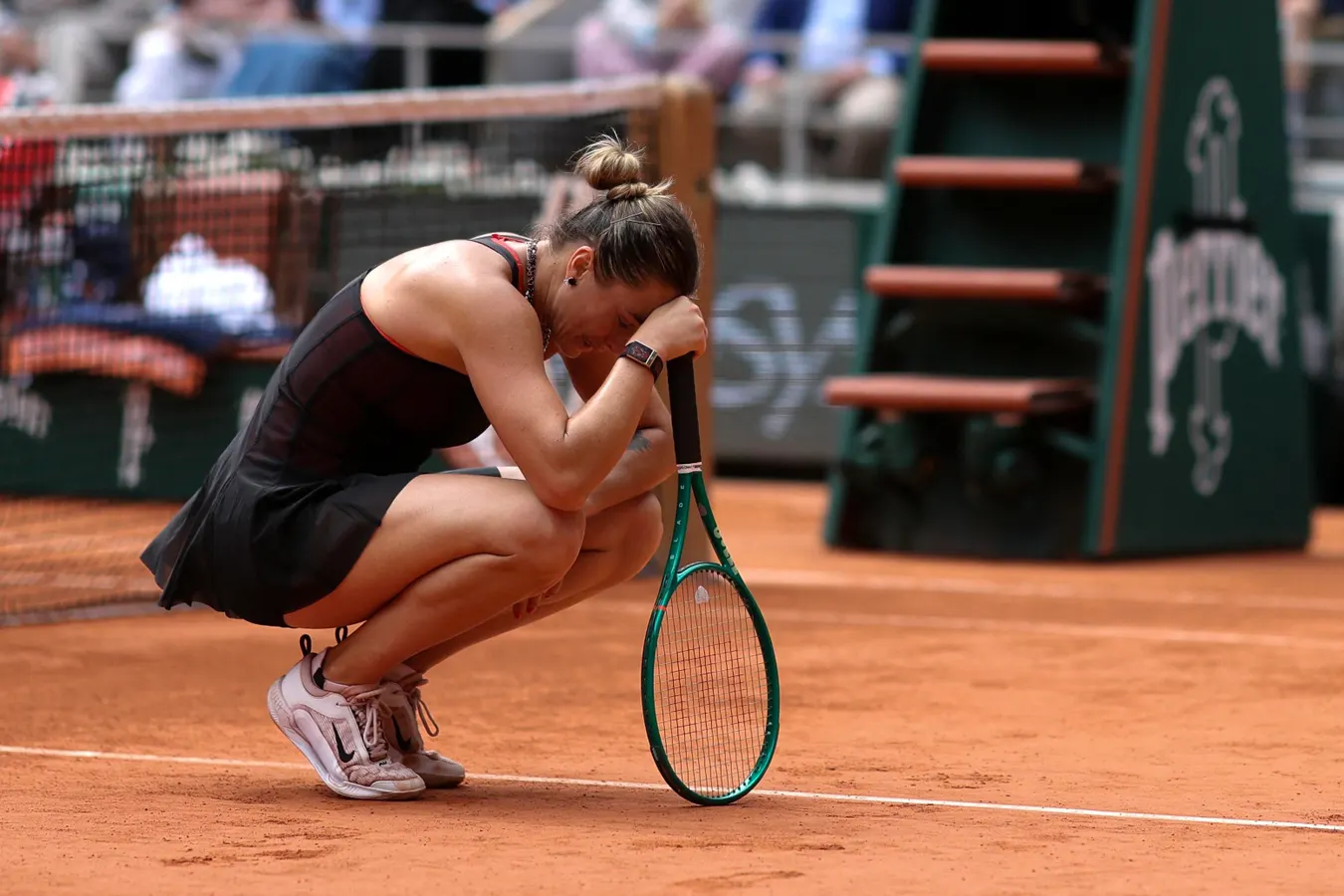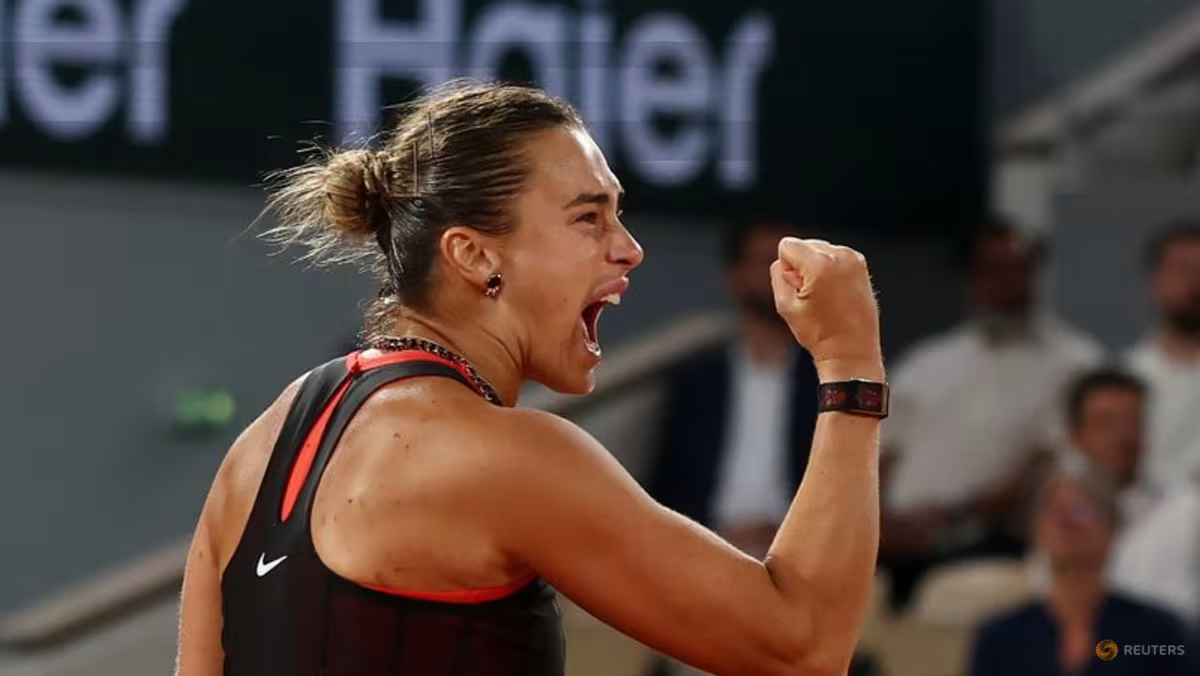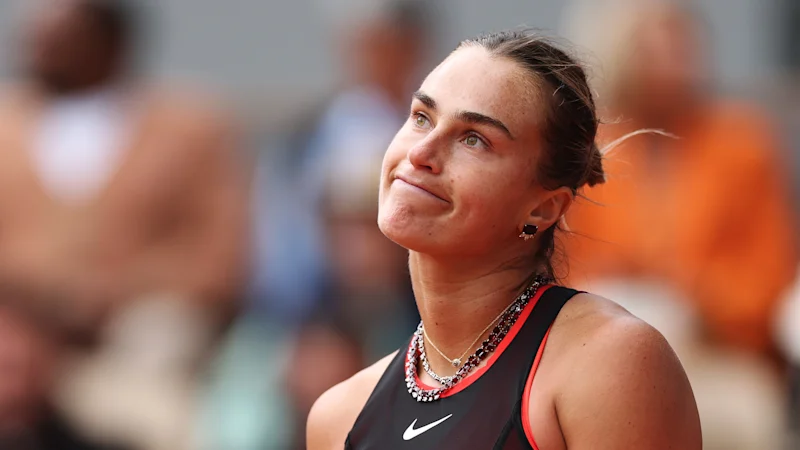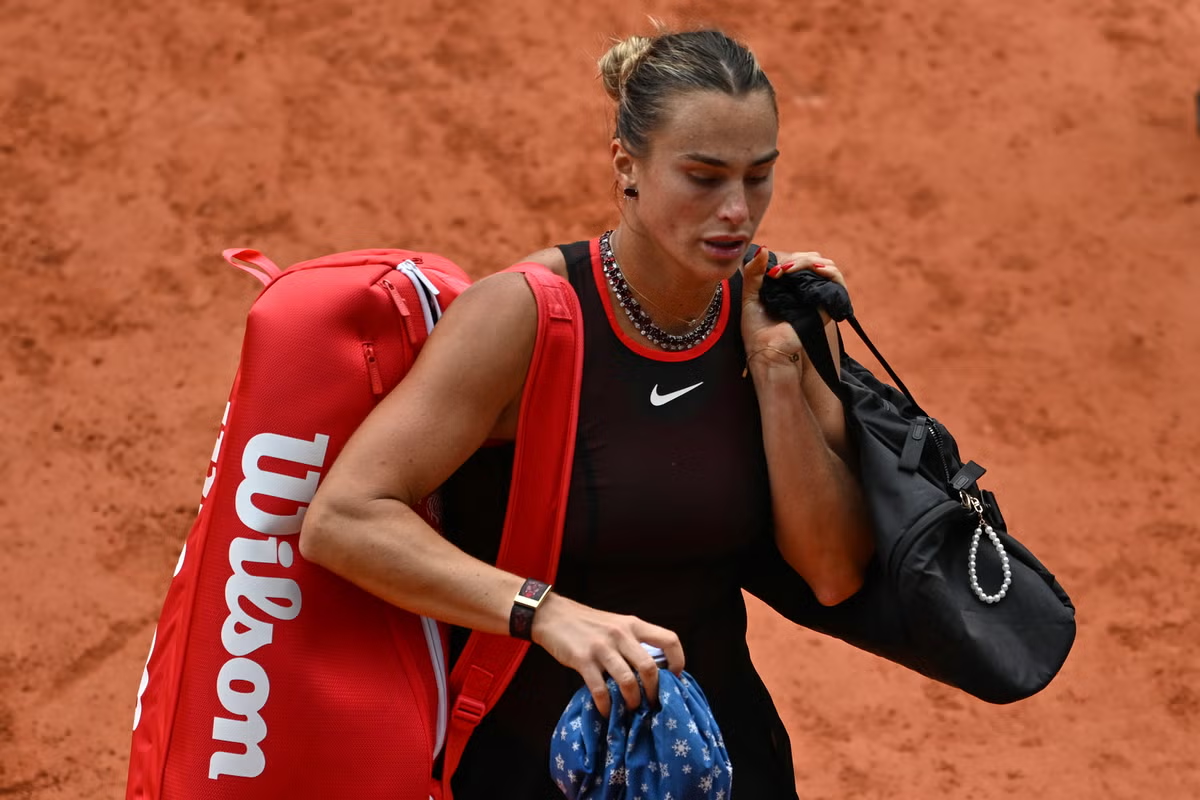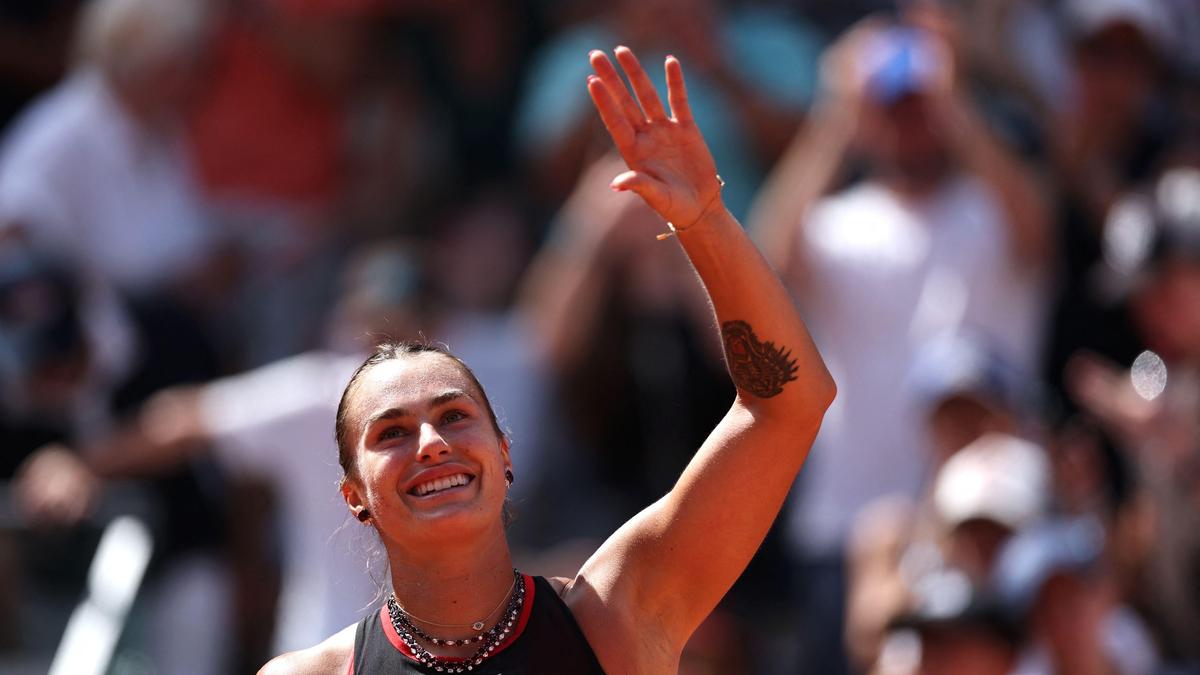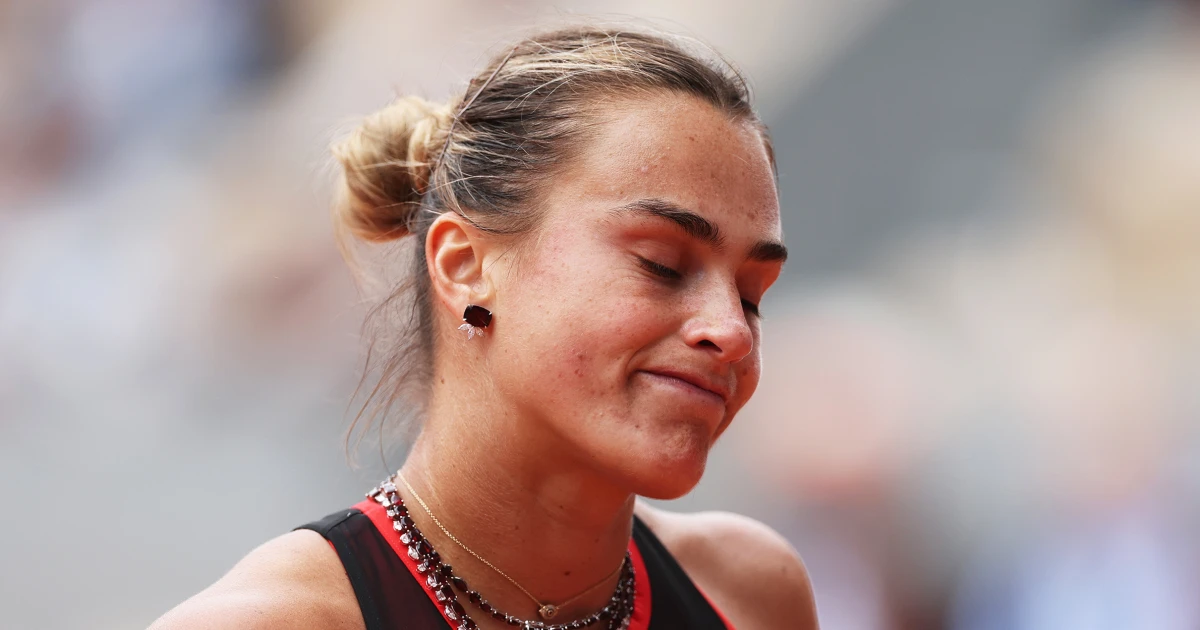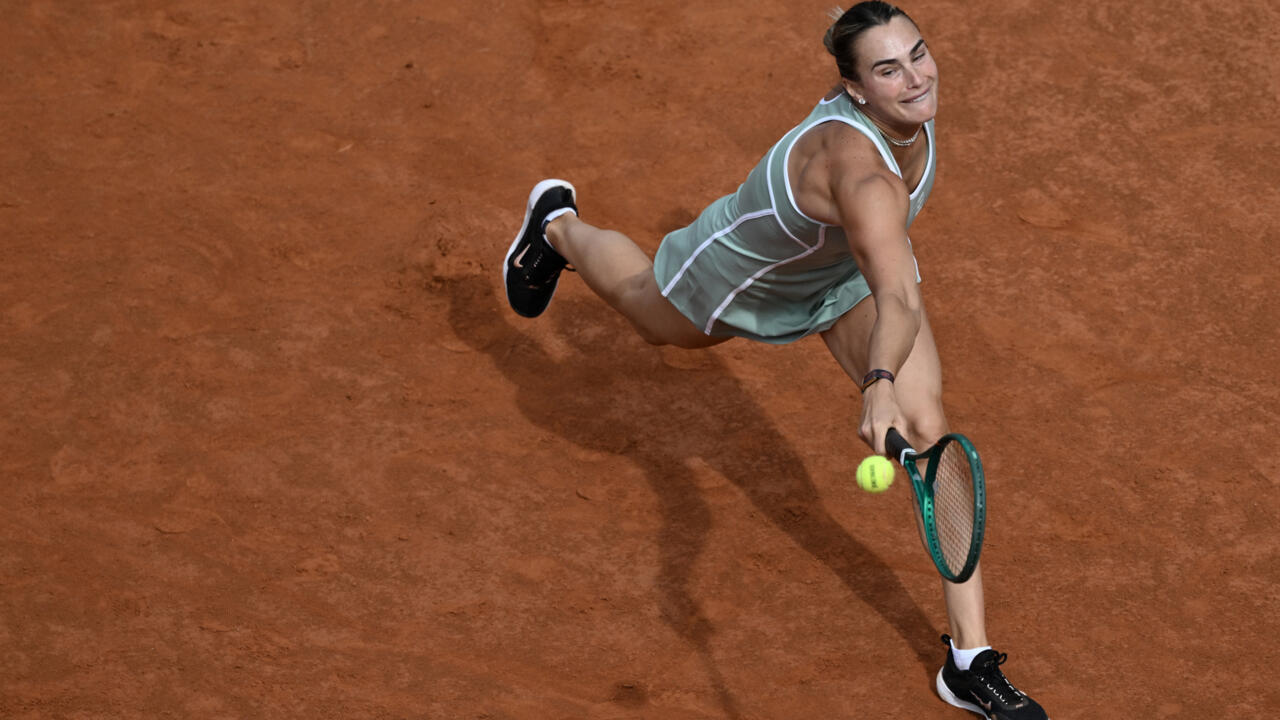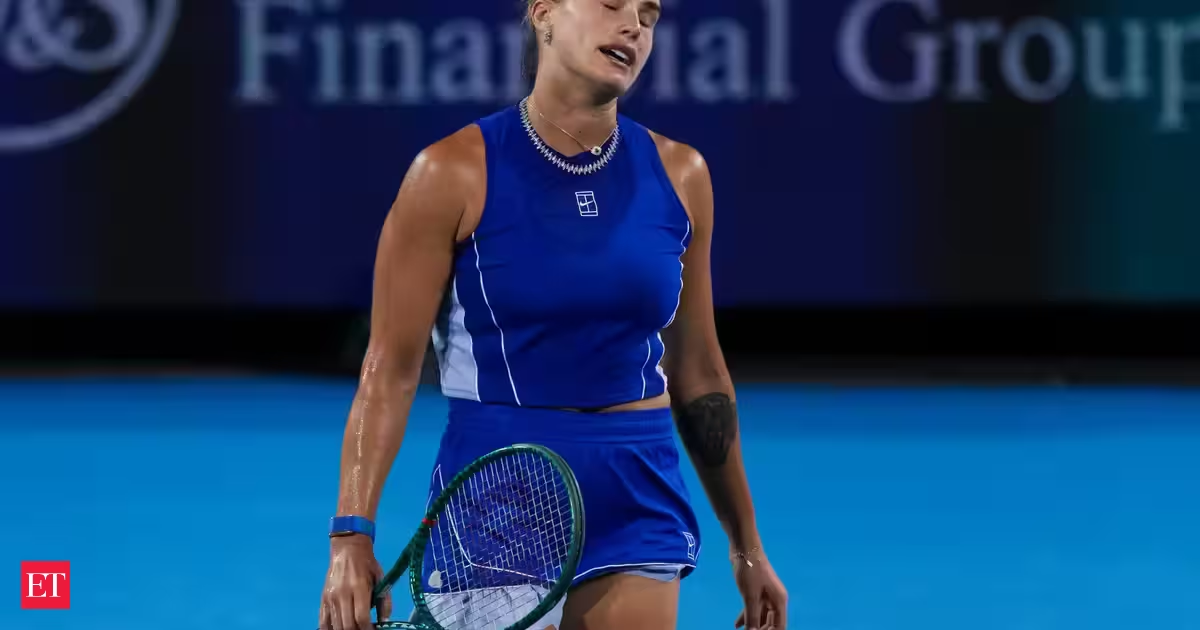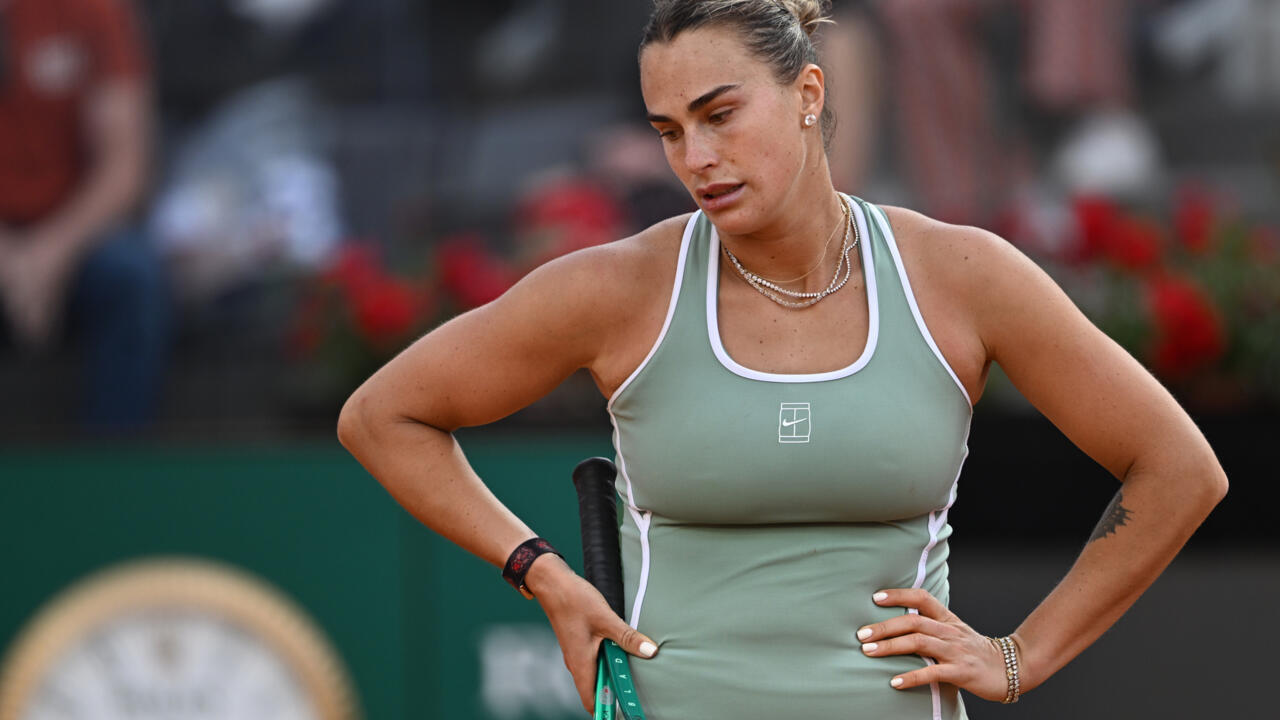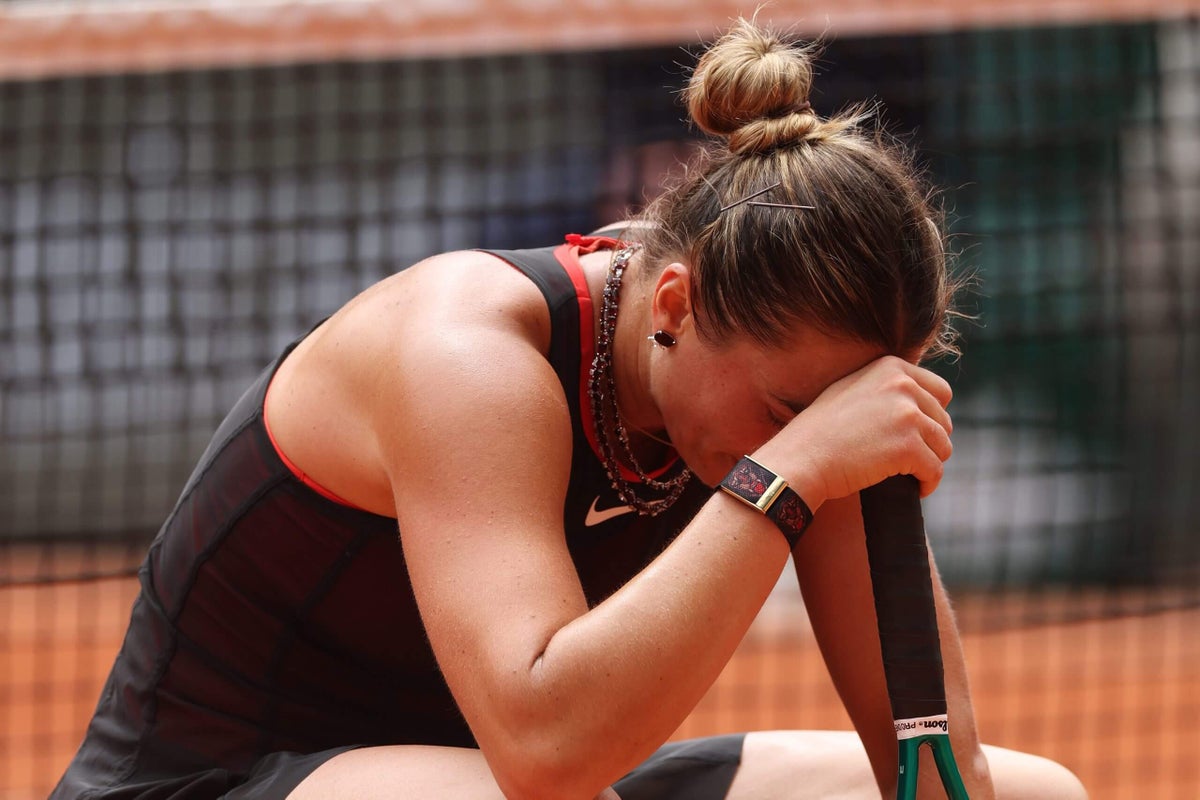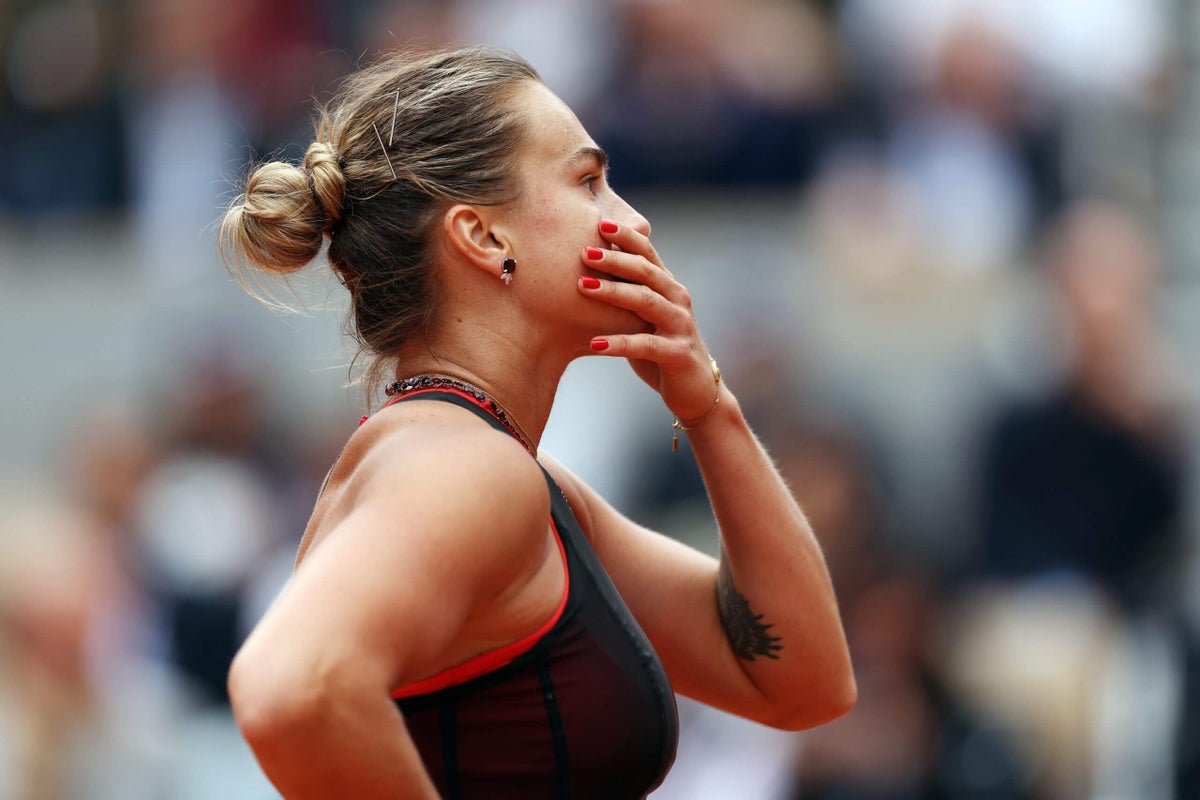
PARIS — Each time it happens, the same question rises: Will Aryna Sabalenka win a Grand Slam title on a court of grass or clay?Sabalenka, the world No. 1 and a leading force in women’s tennis the past two years, fell to Diana Shnaider of Russia in the quarterfinals of the French Open Wednesday. On a gray, blustery day on Court Philippe-Chatrier, Sabalenka endured a very similar experience to the one she did 12 months ago, when she lost the final to Coco Gauff on the very same court, in very similar conditions.On both occasions, Sabalenka won the first set but succumbed decisively over the final two. On Wednesday, Shnaider, the No. 25 seed, surged to a 3-6, 5-7 6-0 triumph, winning the final 11 games for her second top-10 win in 16 tries.It will go down as another Sabalenka stumble, or in this case, collapse, as the tennis season moves from hard courts to clay.Sabalenka started the year in pretty stellar fashion. She made the Australian Open final, losing to Elena Rybakina, and then won the “Sunshine Double” of the BNP Paribas Open at Indian Wells, Calif. and the Miami Open in imperious fashion. In the Indian Wells final, she avenged her defeat to Rybakina in Melbourne.Then came a rest. And then came a time of year that ultimately has never been especially kind to Sabalenka, as players move from the predictability of fast hard courts to the instability of clay and then grass. She lost to an in-form Hailey Baptiste of the U.S. in the Madrid Open quarterfinals, despite holding six match points. Then she fell to Sorana Cîrstea, the 36-year-old Romanian playing the tennis of her life in her farewell season, in the third round of the Italian Open. Then she came to Paris.She was won three clay-court titles, but they have all come in Madrid, which is played over 600 meters above sea level in typically hot, dry conditions, accelerating the ball through the red dirt more than at the Italian Open, in Rome, and at Roland Garros. Her career finals record, including Grand Slams and WTA Tour events, is 21-10 on hard courts and 3-8 on clay, with a 0-2 record on grass. Her most recent final on that surface was in 2022.Wednesday marked the end of Sabalenka’s ninth French Open main draw. It took her six tries to make it to the second week, more than at any other Grand Slam, even Wimbledon, where she blasted her way into the semifinals in 2021 before Karolína Plíšková defeated her in three sets.Some of this is just about the timing of Sabalenka’s ascent to the top of tennis. The first year she made the French Open second week, 2023, was also the year of her first Grand Slam title, at the Australian Open, and her first U.S. Open final. She won her first U.S. Open a year later, missing Wimbledon that year due to injury, and in 2025 she made the Australian Open, French Open and U.S. Open finals, winning the latter.Sabalenka has played Wimbledon six times without making a final. She was the No. 1 seed last year. Amanda Anisimova upset her in the semifinals, as Sabalenka tried to climb back, this time from a set down rather than from the cushion of a one-set lead that had been deflated.Aryna Sabalenka has reached finals on clay and won titles, but a French Open has eluded her. (Matthew Stockman / Getty Images)There is still time. Sabalenka just turned 28. She could play for another five or 10 years. She has said she is interested in starting a family with her fiancé, Georgios Frangulis, a Brazilian entrepreneur, so she may not stick around for all those years.“I really feel great on clay,” she said, still in a raw and foul but also darkly humorous and borderline philosophical mood, an hour after the loss to Shnaider.“I feel great on grass. I think just, I don’t know, maybe I’m focusing too much that I never won a Slam on each, you know, and maybe it kind of like makes me overthink stuff, makes me overemotional in some moments.”Sabalenka and her coaching team, which includes Anton Dubrov, Max Mirnyi and Jason Stacy, her mindset and fitness guru, have worked hard to help make Sabalenka as bulletproof as she can be for the unpredictability of clay and grass.Sabalenka has spent three years on making her strengths, including her serve and forehand, that much stronger, but she has also added finesse and unpredictability to her arsenal. She has a terrific drop shot. Her net game is much improved, letting her come in and finish points off the short balls that her overwhelming power can earn.She is a far better mover than she was five years ago, able to dig balls out of corners and sprint everywhere on the court.All of those skills are especially important on clay and grass, surfaces where players have to be more creative and improvisational. There are more bad bounces. The soft surfaces also make drop shots and off-speed spins far more effective, their backspin letting the ball slump into the court instead of bouncing high like it might on a hard surface.While grass is the sport’s fastest surface and keeps the ball low, and clay is the slowest and produces a high bounce, both of them give players a feeling of instability beneath their feet.“The slippery stuff,” is how Paul Annacone, the commentator and former pro, who has coached both Roger Federer and Taylor Fritz, refers to both of them.At her core, Sabalenka is a power player who likes to plant her feet behind the ball and swing as hard as she can as often as she can. Add in some unpredictability, whether from the wind that swirled around her Wednesday, the surface, or both, and her timing can quickly go off-kilter.And while her movement has improved, it was never a natural part of her game. Stacy, who has worked with other top tennis players and athletes in other sport, said during an interview two years ago that when he first met Sabalenka, she was as out of touch with her body and how it moved as any top athlete he had met.She is far different now. She has four Grand Slams to show for it. Improving her speed, her quickness and her ability to change directions and run diagonally has played a major role in her success. But no one will ever confuse Sabalenka with players like Gauff or Iga Świątek, whose foot speed, for Gauff, and footwork, for Świątek, let them glide and slide across the orange and green courts. Świątek, the four-time French Open champion who last year won Wimbledon to complete her set of all three surfaces, takes so many adjustment steps that her feet leave scurries of marks in the clay.Annacone said the most natural movers have a distinct advantage on the organic surfaces, as well as players who possess off-the-charts anticipation. Federer, Nadal, Djokovic, Alcaraz and Sinner are the prime examples among the men.Shnaider said there wasn’t much clay left on the court as the match wore on. The wind had blown most of it off. Sliding was difficult. But she knew she wasn’t playing the world No. 1 on a hard court, like at the U.S. and Australian Opens, where Sabalenka has reached the finals a combined six times, winning four.“We know Aryna is a big hitter and is a hard-court specialist,” Shnaider said. “I definitely, you know, knew that I could move better on clay courts. I was just trying to use it as an advantage today.”Sabalenka won’t like that assessment. She believes she is capable of winning anywhere, and on any surface. And like every champion, she is desperate for a Wimbledon title, and would love to complete a career Grand Slam, the mark of a true all-around player.Recent evidence suggests she is not far wrong. She just needs those last adjustment steps, physical and mental, to give her some surety under her feet.“I actually have to kind of, like, step back and kind of, like, try to find a solution,” she said Wednesday afternoon.“I am just so tired of me losing some matches, not in the best way, just because I was overemotional.”Then it was time to move on, to the grass.
Aryna Sabalenka’s quest for mastery of clay and grass courts takes another turn
Sabalenka, 27, is world No. 1 and a leading force in women's tennis. She is still figuring out two of its three surfaces.
1,385 words~6 min read