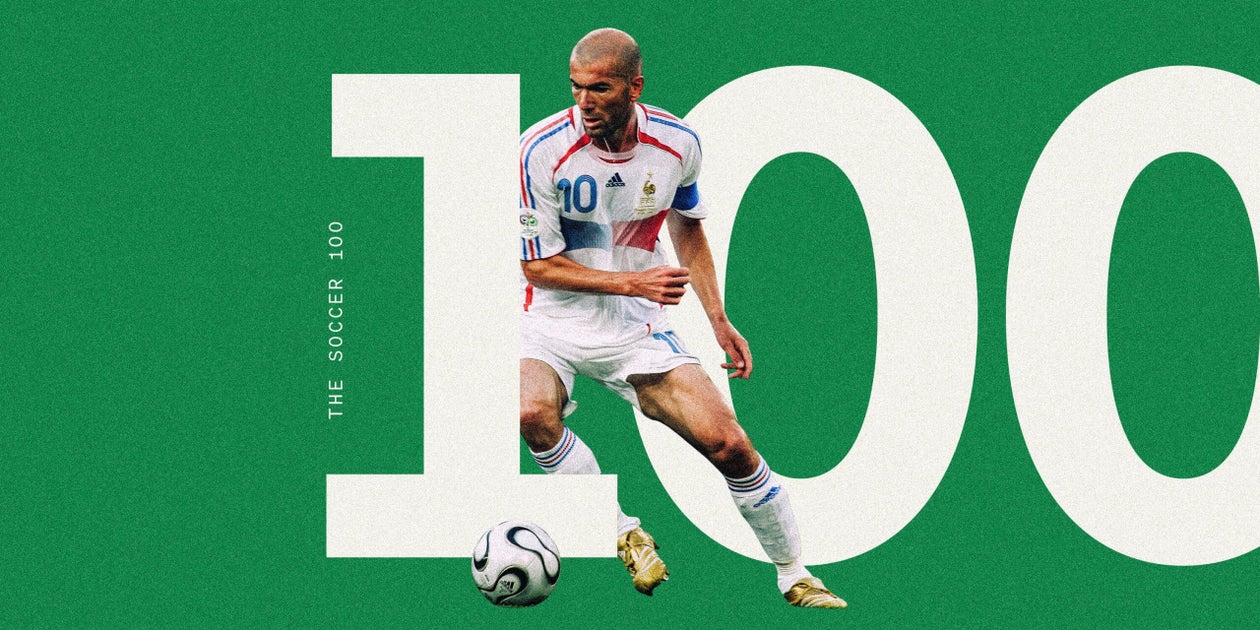
Drawing on the biography of one of France’s all-time greatest soccer players, Zinedine Zidane (affectionately known as “Zizou”), who is of Algerian descent, Stephane Beaud, sociologist and professor emeritus at Sciences Po Lille, uses it as a lens to examine the social progress made between 1980 and 2000. That period, he argues, enabled many children of African immigrants to find their place in French society. Beaud’s book, “Zinedine Zidane” (published by Editions La Decouverte) was released recently and is already sparking debate, especially ahead of the World Cup and the renewed hopes placed in Les Bleus.
You have dealt extensively with immigrants of Algerian origin. Why did you choose Zinedine Zidane as the subject of your latest book, given that he himself had no particular connection with Algeria?
Don’t be mistaken: As the son of Algerian immigrants (specifically Kabyle), Zinedine Zidane maintains a fairly close connection to Algeria, though this connection has evolved over time. During his youth (1972-1990), given his parents’ limited financial means (his father was a warehouse worker earning the minimum wage) and the size of his family (five children), he was only able to visit his father’s village in Kabyle once, in the summer of 1986 at the age of 14. This did not prevent his parents from passing on their family history in Kabyle to him during his childhood. Zidane then rediscovered Algeria following his retirement from sports and his triumphant tour of Algeria (December 2006), where he was welcomed by the Algerian people as a true “national hero.” In my view, Zidane embodies all the sociological characteristics of a child of Algerian immigrants, and for that reason, he was of particular interest to me. In fact, in 2018 I wrote a 400-page book about an Algerian immigrant family with eight children (“La France des Belhoumi: Portraits de famille 1977-2017”).