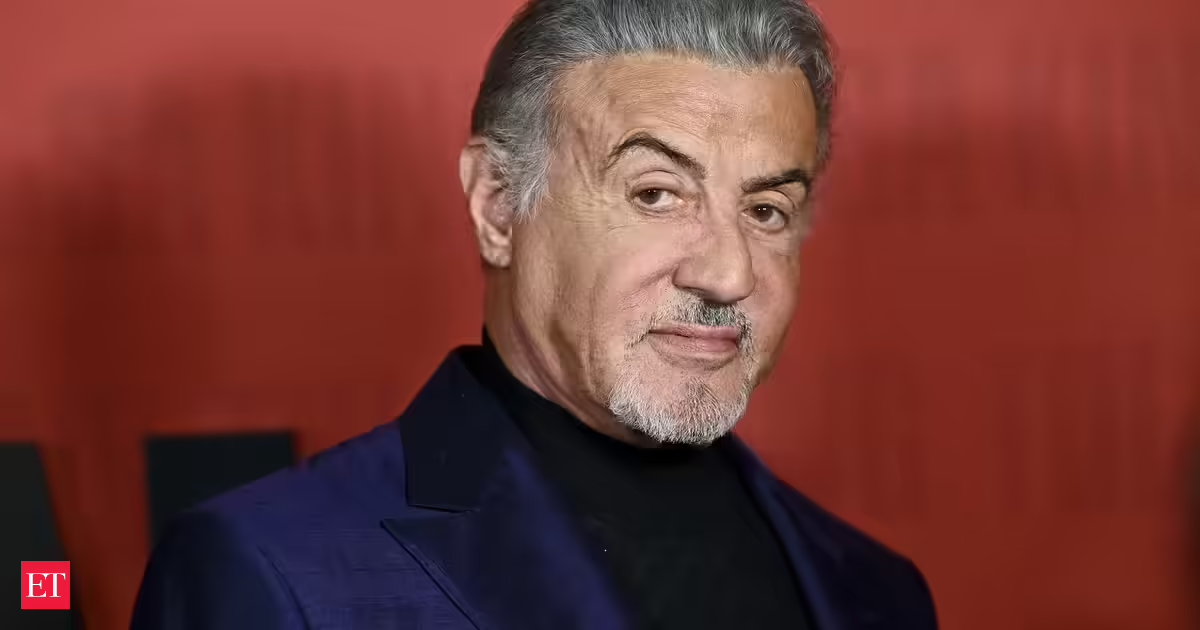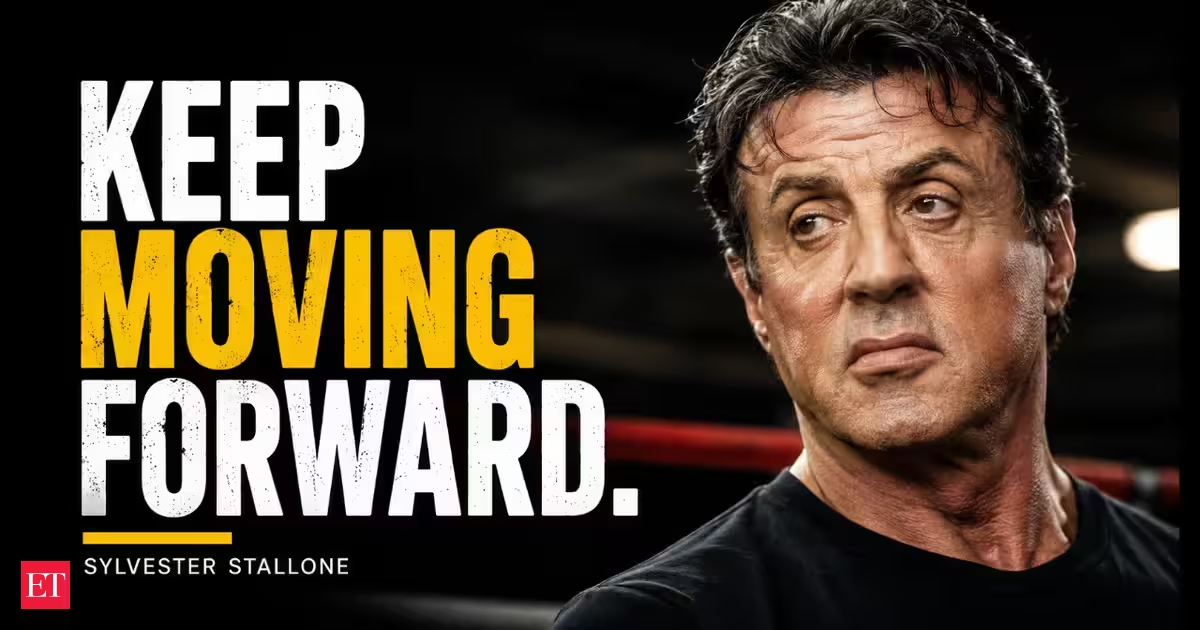
Quote of the Day: Sylvester Stallone’s life story reads like the script of one of his own movies. Long before he became a global superstar, he faced rejection, financial struggles and countless obstacles that would have convinced many people to quit. Yet through persistence and belief in himself, Stallone transformed from an aspiring actor struggling to find work into one of Hollywood’s most recognizable icons. Best known for bringing Rocky Balboa and John Rambo to life, he built a career around characters who endure hardship without losing their determination. Along the way, Stallone also developed a reputation for sharing blunt, practical observations about life, success and human nature. One of those observations forms the basis of today’s quote, a reminder that the way we treat others often shapes our own future.“There’s a natural law of karma that vindictive people, who go out of their way to hurt others, will end up broke and alone.”It is a striking statement because it speaks directly to a behavior that many people encounter throughout life. Whether in workplaces, friendships, families or public life, there are individuals who seem driven by resentment, revenge or the desire to bring others down. Stallone’s quote suggests that such behavior carries consequences, even if they are not immediately visible.You Might Also Like:Rather than focusing on punishment from external forces, the quote points toward the long-term effects of negativity itself. In Stallone’s view, people who consistently act out of spite may eventually damage the very relationships and opportunities they need most.Who Is Sylvester Stallone?Born in New York City in 1946, Stallone’s path to success was anything but easy. A birth injury left him with facial paralysis that contributed to his distinctive speech and appearance. He struggled academically, faced numerous setbacks and spent years trying to establish himself as an actor.His breakthrough came when he wrote the screenplay for Rocky after being inspired by a boxing match between Muhammad Ali and Chuck Wepner. Refusing to sell the script unless he could play the lead role, Stallone took a tremendous gamble. The decision paid off. Rocky became a cultural phenomenon, earning Academy Award nominations and transforming Stallone into a household name.He later cemented his status as an action legend through the Rambo franchise, Cliffhanger, Demolition Man, The Expendables and more recently the television hit Tulsa King. Yet behind the larger-than-life characters was someone who understood struggle, resilience and the importance of character.You Might Also Like:Quote of the Day MeaningAt its core, Stallone’s quote is about karma, not necessarily in a mystical sense, but as a practical reality of human behavior.When people become consumed by revenge, bitterness or the desire to hurt others, they often sacrifice trust and meaningful relationships. They may achieve short-term victories, but over time those victories can come at a significant cost. Friendships fade, professional opportunities disappear and reputations suffer.The quote suggests that negative intentions have a way of circling back. People who regularly create conflict may eventually find themselves isolated because others no longer wish to be around them. In that sense, karma becomes less about fate and more about the natural consequences of repeated actions.Stallone’s observation is also a reminder that success built on resentment is rarely fulfilling. Material achievements may come and go, but genuine happiness often depends on healthy relationships, respect and integrity.You Might Also Like:The Life Lessons Hidden in Stallone’s WordsOne of the most important lessons in this quote is that kindness is a long-term investment. People often underestimate the value of treating others with respect, especially when competition or conflict enters the picture. Yet those who consistently show fairness and empathy tend to build stronger networks and deeper connections.Another lesson is the danger of allowing bitterness to take control. Everyone experiences disappointment, betrayal or unfair treatment at some point. The challenge is deciding how to respond. Holding onto anger for years can consume emotional energy that could otherwise be directed toward growth, creativity and personal goals.The quote also encourages accountability. It is easy to blame circumstances or other people when things go wrong. Stallone’s words suggest that individuals should examine their own actions as well. The habits we cultivate today often determine the quality of our future relationships and opportunities.Perhaps the most powerful takeaway is that success and character are deeply connected. Stallone’s greatest movie heroes are not remembered simply because they win fights. Rocky Balboa, in particular, resonates because he remains decent, loyal and determined even when life is difficult. The quote reflects that same philosophy. Strength is not measured by how effectively someone can hurt others. True strength lies in resisting the urge to do so.Why This Quote Still Resonates TodayIn an age of online arguments, public feuds and constant competition for attention, Stallone’s message feels remarkably timely. Social media often rewards outrage and encourages people to respond to negativity with even more negativity. Yet the long-term effects of that approach can be damaging.The quote reminds us that our actions create ripple effects. Every interaction contributes to the reputation we build and the relationships we maintain. People may forget specific words or disagreements, but they often remember how someone made them feel.Sylvester Stallone’s life is a testament to perseverance, discipline and self-belief. His quote adds another dimension to that legacy by emphasizing the importance of character. Success is not only about achieving goals; it is also about the kind of person one becomes along the way.That is why today’s quote remains so powerful. It encourages readers to choose compassion over revenge, growth over bitterness and integrity over spite. In the long run, those choices may prove far more valuable than any temporary victory.
Quote of the Day by Sylvester Stallone: ‘There’s a natural law of karma that vindictive people, who go out of their way to hurt…’ Powerful karmic lessons about kindness, revenge and success
Quote of the Day: What makes todays quote so enduringly powerful is that it encourages people to choose compassion over retaliation, personal growth over resentment, and integrity over pettiness. In the end, those decisions often deliver rewards that are far more meaningful and lasting than any short-lived sense of triumph.
932 words~4 min read