The Hook: The 48-Hour Re-Infection Nightmare
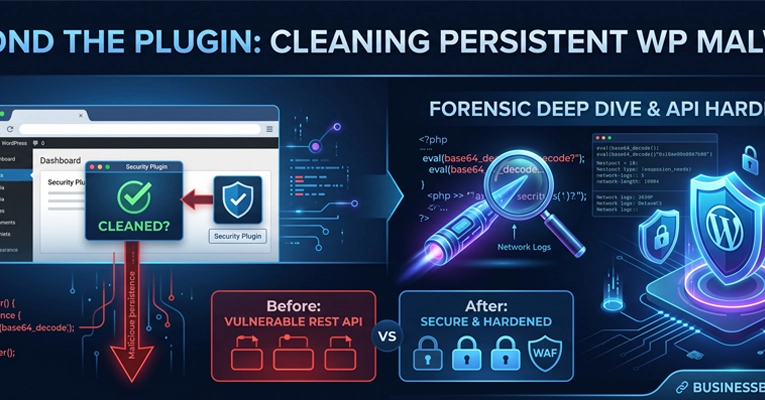
It’s a scenario that keeps e-commerce founders and agency directors awake at night: You wake up to a critical alert that your flagship WordPress site is redirecting users to a spam domain. You immediately deploy a premium security plugin, run a deep scan, quarantine three suspicious files, and breathe a sigh of relief. The scanner gives you a green checkmark. You're safe.
Then, exactly 48 hours later, the redirects return.
What went wrong? The automated scanner checked the surface, but the attacker had already established a foothold deeper in the architecture. They didn't rely on a loose PHP file in your uploads directory; instead, they weaponized an overlooked, unauthenticated WordPress REST API endpoint to re-inject the payload the moment your scanner turned its back.
When high-value enterprise sites are compromised, treating the symptoms with standard security plugins is like putting a band-aid on a structural fracture. To truly remediate a persistent infection, you must think like a forensic analyst, hunt down hidden persistence mechanisms, and harden the application perimeter.