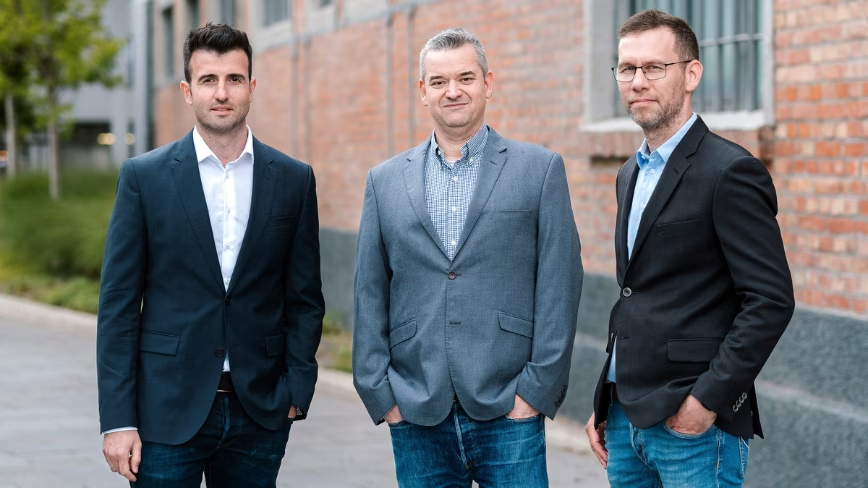
Igor Fedulov is CEO of Intersog.gettyAs the CEO of a company that helps organizations modernize complex technology environments, I’ve sat across from too many tech leaders who look exhausted. One line from a CTO has stuck with me: “Half of our team wasn’t even born when our system was written. Now, we’re spending almost six months fixing one bug.”You shouldn’t be maintaining code older than your developers. Yet, for many enterprises, that’s exactly the reality. In many enterprises, up to 70% of IT budgets are still consumed by maintenance rather than innovation.The pain runs deeper than just costs. Outdated systems create security vulnerabilities, slow down decision making and frustrate talented engineers who joined to build the future, not patch the past. Meanwhile, the global legacy software modernization market continues to grow rapidly.COBOL, a programming language from the 1950s, still processes an estimated $3 trillion in financial transactions every day. The average COBOL programmer is 55 to 58 years old, and roughly 10% of that workforce retires each year, with replacements nearly impossible to find. Several major banks and insurers have experienced painful disruptions while attempting to modernize or scale their decades-old COBOL systems, resulting in locked-out customers, frozen payments, delayed claims and millions in added costs.I’ve heard CTOs describe the quiet dread of knowing a single failure in an undocumented mainframe could cascade into millions in lost revenue or regulatory penalties. Engineers burn out maintaining spaghetti code, while competitors ship in weeks what takes them months. The result is higher turnover, stalled digital transformation and boards asking tough questions about competitiveness.The Hidden Costs No One Talks AboutBeyond raw dollars, legacy systems create a silent drag that compounds over time. Young developers quickly lose enthusiasm when they realize their days will be spent deciphering and patching code written before they were born. Instead of building innovative features or experimenting with AI, they find themselves trapped in maintenance cycles that offer little professional growth. Top engineers leave.At the same time, when the majority of the IT budget disappears into keeping aging systems operational, there is precious little left for meaningful innovation. Initiatives around customer experience, data-driven insights or new revenue streams get perpetually delayed. Every update to the legacy core feels like a high-stakes gamble because of brittle integrations, unsupported hardware and known vulnerabilities that have lingered for years. Legacy modernization removes these underlying costs. One vivid example comes from Capital One. After migrating its legacy systems to a cloud-native architecture, the company significantly improved developer productivity, reduced critical incidents and accelerated innovation, helping attract and retain modern engineering talent.Why 'Big Bang' Modernization Often Fails—And What Works InsteadMany organizations hesitate because they’ve seen or heard about massive “rip and replace” projects that promised transformation but delivered budget overruns, operational disruptions and disappointing results. When everything must change at once, the complexity of intertwined business logic, undocumented dependencies and years of custom tweaks quickly overwhelms even the best teams. The smarter path is incremental, pragmatic and AI-augmented. Treating modernization as an ongoing capability rather than a single dramatic project solves many of these challenges. Step 1: Understand The SystemStart by using generative AI tools to analyze large legacy codebases, automatically map dependencies, extract business rules and generate clear documentation. This step alone dramatically reduces the time needed to understand decades-old systems and surface risks that humans might miss.Step 2: Contain The RiskAdopt a strangler fig approach (named after a vine that slowly envelops and replaces its host tree) and gradually wrap legacy components with modern APIs and microservices so new capabilities can be built on the edges without immediately touching the stable core. Step 3: Selectively Replatform High-Value AreasExamples include claim processing in insurance or transaction layers in banking to the cloud environments. AI-assisted refactoring tools can propose cleaner code structures, automate translation from older languages and even generate test cases, cutting manual effort and risk.Step 4. Design Every Step With An AI-Driven Future In MindModernized systems should expose clean data and APIs so AI models can run real-time analytics, predictive underwriting, fraud detection or personalized offerings without fighting brittle integrations. This turns modernization from a cost center into the foundation for intelligent operations.Focus on small, high-impact wins first; measure business outcomes like speed-to-market and system resilience at each stage; and iterate continuously. Enterprises following this path often achieve meaningful reductions in total cost of ownership, significantly faster feature delivery and fewer outages while building platforms ready for the next wave of AI innovation.The difference comes from approaching modernization as a thoughtful evolution, and leveraging today’s AI capabilities to de-risk the journey and create systems that support, rather than hinder, tomorrow’s intelligent business.A Better Future Is Within ReachAs modernization takes hold, you will be able to walk into your next board meeting and say, “We’ve reduced maintenance spend, our teams are shipping features weekly instead of quarterly and we’re leveraging AI on clean, accessible data.” This is what it feels like when your technical debt turns into a competitive advantage.Forbes Technology Council is an invitation-only community for world-class CIOs, CTOs and technology executives. Do I qualify?
Why Legacy Modernization Fails
Beyond raw dollars, legacy systems create a silent drag that compounds over time.
843 words~4 min read