BOTTOM LINE: GitHub's move from flat-rate "requests" to metered usage is forcing many developers to confront something they had largely ignored: how many tokens their everyday coding habits consume and what that usage actually costs. As the new credit-based pricing exposes the expense of long chats, large context windows, and frontier models, many are rethinking how – and how often – they rely on AI in their day-to-day work.
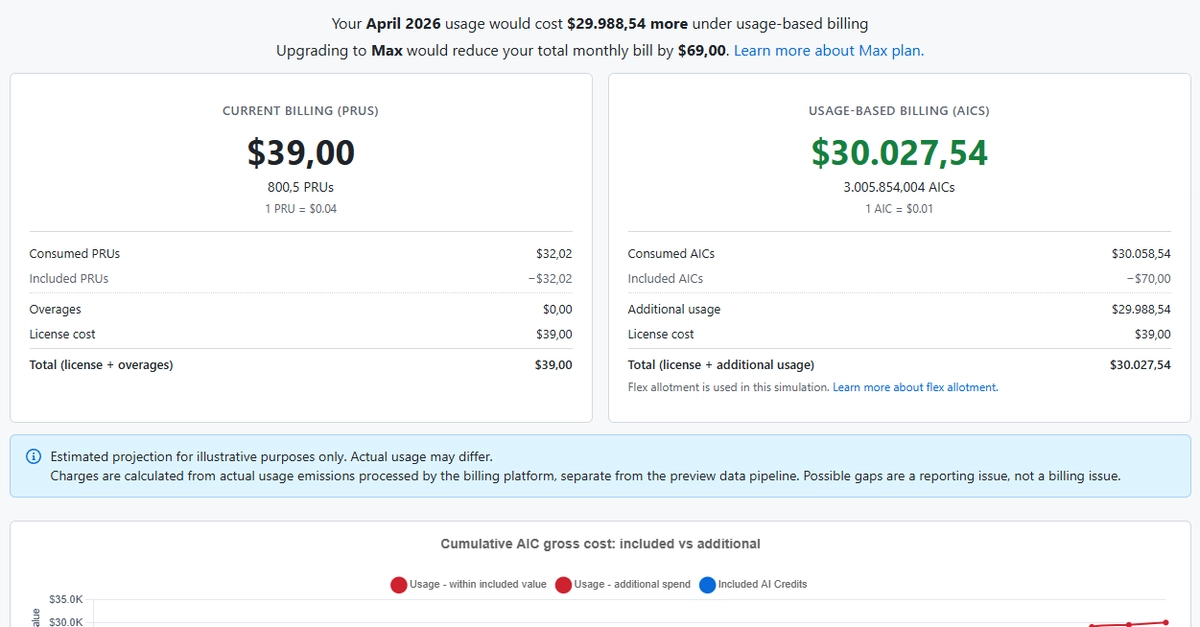
Back in April, the company said it would move all Copilot plans to a usage-based system that bills users based on actual AI consumption, measured in tokens, starting June 1. Under the old setup, subscribers worked from a pool of "requests" and "premium requests," whether they were asking a quick question or letting Copilot grind away for hours on a complex refactor.
GitHub said that model meant the service was absorbing "much of the escalating inference cost" from heavy users. That cross-subsidy is now over. Instead, users are faced with a meter tied directly to the size of their prompts, the length of Copilot's responses, and, crucially, the model they choose.
On paper, the new pricing structure looks simple enough. Each paid plan comes with a bundle of AI credits, with one credit representing one cent of usage. The $10-per-month Pro tier includes 1,500 credits, or $15 worth of AI usage. Pro+ costs $39 per month and includes 7,000 credits, while the top-tier Copilot Max plan costs $100 and comes with 20,000 credits, equivalent to $200 in usage.