In 2025, the default assumption was: if you want an AI agent, you build one. Pick a framework, wire up your tools, own the stack. The instinct was to build — almost automatically, regardless of whether it was the right call.
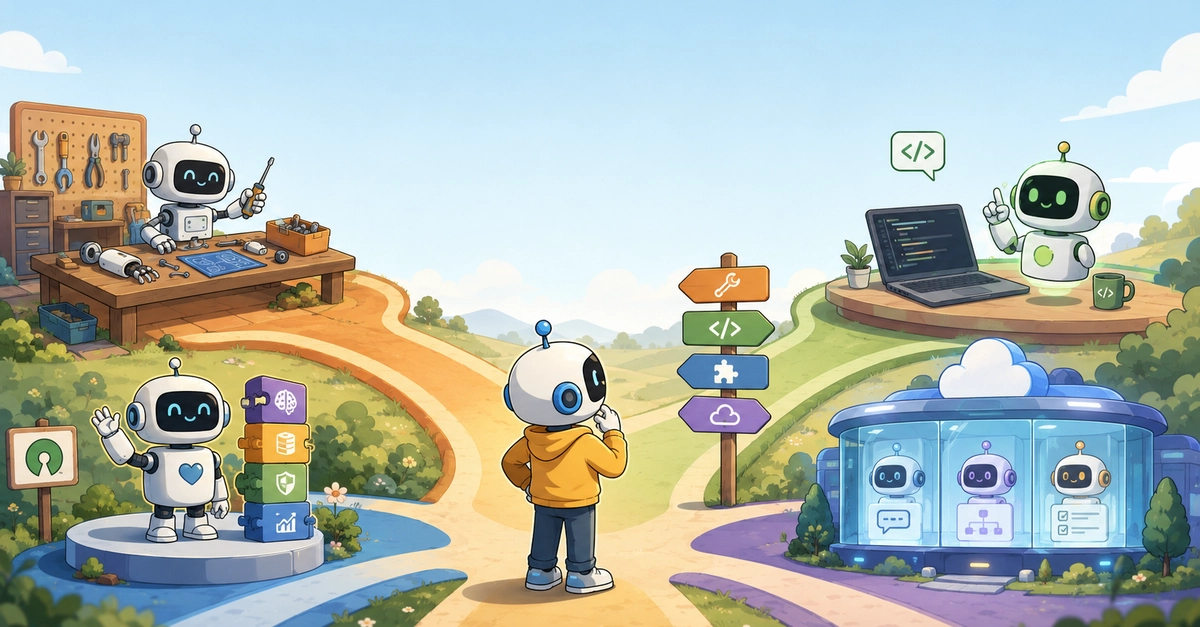
That assumption is worth questioning in 2026. Not because building is wrong, but because it's now one option among four. And defaulting to it without asking which path actually fits your situation is how teams spend weeks on infrastructure that didn't need to be theirs.
The four paths below are not a ranking. They're different tools for different jobs, and they can combine. The goal is to give you enough of a framework to ask the right question before you commit to an approach.
Path 1: Build It Yourself
This is the original answer to the question: you write the agent. You own the full stack: the model calls, the tool wiring, the memory system, the orchestration loop, the deployment, the monitoring. Frameworks like LangGraph and the OpenAI Agents SDK give you building blocks, but the architecture is yours.